
Ses-Sterling 03700002004ALP Pliotex PT-V+ 30 A - Z (500) YE
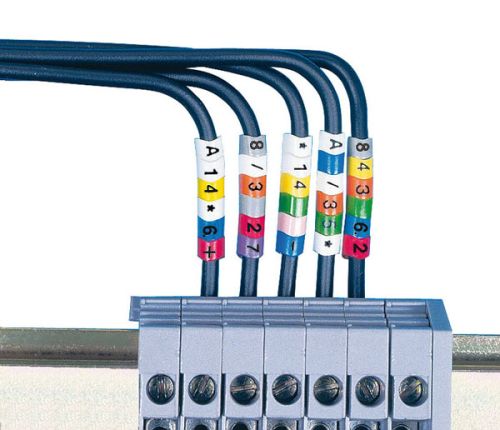
Ses-Sterling 03700002004ALP Pliotex PT-V+ 30 A - Z (500) YE
| Lieske Part No. | 800722 |
|---|---|
| Mfg Part No | 03700002004ALP |
| EAN-Code | 3597470375877 |
| Manufacturer | Ses-Sterling |
| Here only | 239,26 EUR
284,72 EUR incl. VAT
|
Further information for Ses-Sterling 03700002004ALP Pliotex PT-V+ 30 A - Z (500) YE
| General | |
| Colour | Yellow |
Applications
These identification rings are used in electrical installations, automation technology, building automation, and industrial and machine engineering. They are particularly suitable for marking cables in enclosures, controls, distribution boxes, and other electrical equipment where clear and permanent labelling is required. The colour Yellow supports visual differentiation within an identification system, while the letter labelling enables precise assignment.
Functions and Features in Detail
The rings are designed as self-adhesive identification ring systems that can be easily and quickly wrapped around cables or lines. Labelling is done with letters A to Z, ensuring clear, unambiguous, and quickly recognisable identification. The colour Yellow ensures good visibility, especially when combined with other colours within an identification system. The rings are made from a flexible yet durable material that provides long-lasting adhesion and resistance to mechanical stress, such as bending or pressure. The packaging contains 500 individual rings, ensuring high cost-efficiency for larger projects or when labelling complex installations.
Technology Explained Simply
The identification rings use a self-adhesive system that allows for easy installation without additional tools. The rings are placed around the cable and fixed by the adhesive layer, achieving a secure and permanent attachment. The material choice ensures high flexibility, allowing the rings to be used even with different cable diameters without tearing or deforming. Labelling with letters A to Z enables systematic and logical identification, which integrates well into existing labelling systems. The colour Yellow supports visual differentiation and can be used within a colour code for specific functions, systems, or areas.
Compatibility and Accessories
The rings are suitable for marking cables and lines with a diameter within the technical specifications of the PT-V+ 30 system. The rings are designed as individual components for direct application and require no additional tools or aids for installation. Use is independent of other products or systems, with the identification system (A–Z) and the colour Yellow being the only specific features relevant for application.
Installation and Mounting
Mounting of the identification rings is done by simply wrapping them around the cable and then securing them with the adhesive. The self-adhesive surface ensures secure fastening without additional tools. The rings can be easily adjusted to fit different cable diameters. The labelling is pre-printed (A–Z), so no additional marking or labelling is required. Installation is done directly on the cable, with positioning according to the specific requirements of the installation or installation guidelines.
Operational Advantages
Using these identification rings provides clear, unambiguous, and durable cable marking, significantly simplifying maintenance, servicing, and fault diagnosis in electrical installations. The systematic labelling with letters A to Z enables quick identification and assignment, reducing error sources and increasing work efficiency. The colour Yellow supports visual differentiation and can be used in combination with other colours for a structured identification system. The robust material quality ensures long service life and resistance to mechanical stress, securing the reliability of the identification during operation.

This is an offer of:
79279 Vörstetten
https://industry-electronics.com
Tel. 07666/88499-0
Fax. 07666/88499-111
Diesen Artikel finden Sie unter:
industry-electronics.com/artikel/800722

Lieske Elektronik e.K.
Reutener Str. 1079279 Vörstetten
https://industry-electronics.com
Tel. 07666/88499-0
Fax. 07666/88499-111
Diesen Artikel finden Sie unter:
industry-electronics.com/artikel/800722