
Ses-Sterling 03640005004N Silavia Twin ST-4 N YE
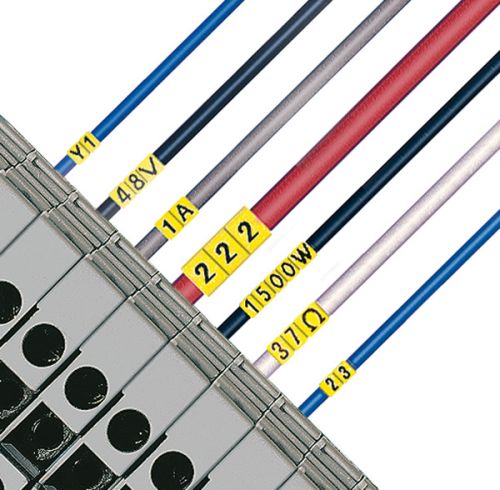
Ses-Sterling 03640005004N Silavia Twin ST-4 N YE
| Lieske Part No. | 799825 |
|---|---|
| Mfg Part No | 03640005004N |
| EAN-Code | 3597470051924 |
| Manufacturer | Ses-Sterling |
| Here only | 13,41 EUR
15,96 EUR incl. VAT
|
Further information for Ses-Sterling 03640005004N Silavia Twin ST-4 N YE
| General | |
| Colour | Yellow |
Cable identification rings made of rubber offer a flexible and dimensionally stable solution for marking cables. The material choice ensures high resistance to mechanical stresses, such as bending or pressure, as well as environmental influences like moisture and temperature fluctuations. The yellow color with black print provides high contrast, enhancing the readability of the marking even under low light conditions. The rings are suitable for indoor use and protected outdoor areas, as rubber exhibits good weather resistance.
Identification is achieved through the permanently embossed letter N on the surface of the rings. This print is durable and resistant to abrasion, ensuring long-term cable identification. The print size of 3.7 mm allows for clear visibility, even on smaller cable diameters. The rings are dimensioned to slide easily over the cable and then securely fit without slipping or shifting.
Technology explained simply: The Silavia Twin ST-4 rings are designed as closed rings that are slid over the cable and positioned at the desired location. The elastic properties of the rubber material ensure a secure hold on the cable after installation. The width of 4.9 to 6.5 mm provides sufficient surface area for marking without significantly increasing the cable diameter. The use of rubber also offers high flexibility, ensuring the rings remain securely in place even on cables with irregular surfaces or slight deformation.
Compatibility and accessories: The rings are specifically designed for cables with an outer diameter of 7.5 to 10 mm. They are therefore suitable for a wide range of installation cables, such as electrical wiring, data cables, or control lines. They can be used in combination with other Silavia Twin series identification rings to ensure a uniform marking system throughout the entire facility. The rings do not require additional tools or adhesives for installation — they are simply slid over the cable and positioned.
The rings are supplied in a pack of 100 pieces. The packaging is designed to prevent damage during transport and storage. The weight specification of 0.14 g per ring and 0.014 kg per pack is intended for logistical planning but is not relevant for the user during operation.
Advantages in operation: The clear identification with the letter N enables quick and error-free cable identification, especially in complex systems or during maintenance work. The high readability and durability of the marking reduce error sources and increase safety during work. The elastic fit ensures the rings do not slip even under mechanical stress, securing the reliability of the marking over time. The pack of 100 pieces offers an economical solution for larger projects or regular maintenance tasks.
Installation and mounting: Installation requires no tools. The rings are simply slid over the cable and placed at the desired position. Due to the elastic properties of the rubber material, they fit securely and do not slip. Installation is quick and requires no additional tools. The rings are suitable for indoor use and protected outdoor areas, as the material is resistant to moisture and temperature fluctuations.
Applications: The cable identification rings are used in electrical installation, IT infrastructure, building automation, and industrial systems. They are particularly useful in environments where clear and durable cable marking is required to avoid errors during installation or maintenance. The yellow color with black print is established as a standard in many industries for specific functions or systems, allowing the rings to be integrated into existing marking systems.

This is an offer of:
79279 Vörstetten
https://industry-electronics.com
Tel. 07666/88499-0
Fax. 07666/88499-111
Diesen Artikel finden Sie unter:
industry-electronics.com/artikel/799825

Lieske Elektronik e.K.
Reutener Str. 1079279 Vörstetten
https://industry-electronics.com
Tel. 07666/88499-0
Fax. 07666/88499-111
Diesen Artikel finden Sie unter:
industry-electronics.com/artikel/799825