
Ses-Sterling 036002070061 Plio-V-MARKERS V-37 1 brown
Installation > Isolation / Identification > Labeling, marking
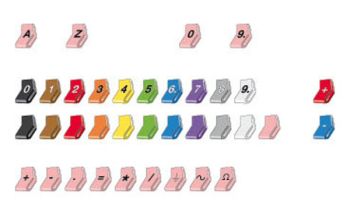
Ses-Sterling 036002070061 Plio-V-MARKERS V-37 1 brown
| Lieske Part No. | 506319 |
|---|---|
| Mfg Part No | 036002070061 |
| EAN-Code | 3597470040898 |
| Manufacturer | Ses-Sterling |
| Here only | 8,06 EUR
9,59 EUR incl. VAT
|
Further information for Ses-Sterling 036002070061 Plio-V-MARKERS V-37 1 brown
| General | |
| Colour | Brown |
Identification rings are pre-cut in strip form and can therefore be quickly and easily slid onto cables without additional tools. The packaging unit contains 500 pieces, enabling economical and efficient handling for larger projects or series installations. The rings are designed for cables with an outer diameter of 2.3 to 3.4 mm, making them suitable for a wide range of standard cables in electrical installations. The specified cable cross-section coverage includes the values 1 mm², 1.5 mm², and 2.5 mm², ensuring suitability for commonly used cable cross-sections in residential and commercial construction.
Soft PVC as material offers good flexibility and elasticity, allowing the rings to adapt to the cable surface without cracking. The surface is smooth and resistant to dirt, preserving the readability of the white print 1 over time. The colour brown is designated in the international colour code for specific cable functions, with the exact assignment varying according to standards and project requirements. The combination of colour and digit enables quick visual differentiation in cable harnesses.
Cable identification is an essential component of any professional installation to avoid errors during assembly, maintenance, or repair. The PLIO-V-MARKERS V-37 1 rings provide a reliable, durable, and easily readable identification solution. The use of pre-cut rings reduces installation time and minimizes the risk of errors during manual labelling. The packaging unit of 500 pieces is suitable for installers and electricians working on larger scales who require continuous availability of identification elements.
The strip form of the rings enables easy handling and quick installation. The rings can be slid onto the cable without tools, with the pre-cut shape ensuring uniform length and consistent execution. The use of soft PVC ensures that the rings adapt elastically and do not easily slip off, even under mechanical stress or temperature fluctuations.
The compatibility with cables in the diameter range of 2.3 to 3.4 mm makes the rings suitable for a wide range of applications, particularly in electrical installations for residential and commercial buildings. The specified cable cross-sections (1, 1.5, 2.5 mm²) cover the most common cable cross-sections used in practice. Identification is carried out according to the international colour code, with the colour brown and the digit 1 serving as unique identification features. The use of such identification systems is stipulated in many standards and regulations for electrical installations to ensure unambiguous assignment of cables.
The installation is performed by simply sliding the rings onto the cable. The pre-cut shape and the flexibility of the soft PVC material allow for quick and secure attachment without additional tools. The rings fit securely and remain in place throughout their service life, ensuring durable identification. The packaging unit of 500 pieces is designed for professional users working in larger quantities who require continuous supply.
The operational advantages lie in the reliability, longevity, and efficiency of the identification. The rings are easy to recognize, remain readable over long periods, and reduce error rates during installation and maintenance. The use of pre-cut rings saves time and reduces the need for additional tools or manual labelling. The material quality ensures high resistance to environmental influences such as moisture, temperature fluctuations, and mechanical stress.

This is an offer of:
79279 Vörstetten
https://industry-electronics.com
Tel. 07666/88499-0
Fax. 07666/88499-111
Diesen Artikel finden Sie unter:
industry-electronics.com/artikel/506319

Lieske Elektronik e.K.
Reutener Str. 1079279 Vörstetten
https://industry-electronics.com
Tel. 07666/88499-0
Fax. 07666/88499-111
Diesen Artikel finden Sie unter:
industry-electronics.com/artikel/506319