
Ses-Sterling 03520007004ALT Helavia Twin HT-1bis A.C. YE
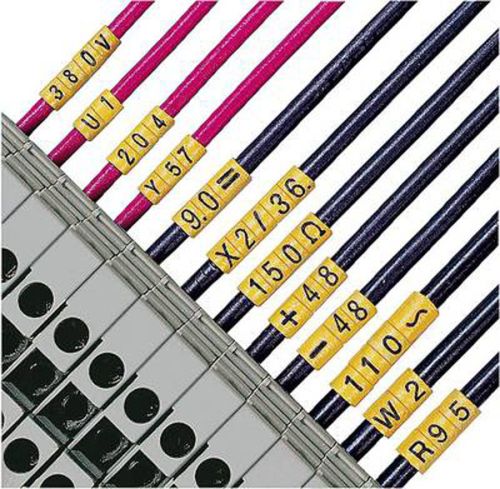
Ses-Sterling 03520007004ALT Helavia Twin HT-1bis A.C. YE
| Lieske Part No. | 794606 |
|---|---|
| Mfg Part No | 03520007004ALT |
| EAN-Code | 3597470260258 |
| Manufacturer | Ses-Sterling |
| Here only | 39,84 EUR
47,41 EUR incl. VAT
|
Further information for Ses-Sterling 03520007004ALT Helavia Twin HT-1bis A.C. YE
| General | |
| Colour | Yellow |
Applications
These rings are particularly suitable for marking cables in industrial electrical engineering, during the installation of control and automation systems, and in building and plant cabling. The colour Yellow enables quick visual identification, for example, to distinguish lines with specific functions or voltage levels. Due to their rubber material, they are flexible and can be easily placed around cables without damaging them.
Functions and Equipment in Detail
The Helavia Twin HT-1bis A.C. identification rings are designed as a simple but effective marking solution. They consist of an elastic rubber material that adapts to the shape of the cable and ensures secure fastening. The colour Yellow is consistently distributed across all individual pieces in the pack, enabling uniform marking. The rings are not labelled; they serve solely as visual identification, with the colour acting as the primary identification feature. The pack contains 1000 pieces, which is sufficient for larger projects or series installations.
Technology Explained Simply
The rings are made of a flexible rubber material, characterised by its elasticity and shape stability. The material allows for easy installation without tools and remains secure even under mechanical stress or temperature fluctuations. The colour Yellow is highly visible and is commonly used in practice for specific functions or systems, for example, for auxiliary lines or safety circuits. The rings are not self-adhesive; instead, they are stretched over the cable using the elastic material and held in place by friction.
Compatibility and Accessories
The identification rings are universally applicable and compatible with cables of various diameters, as long as they fall within the elastic stretch range of the rubber material. They can be used independently of other marking systems, with the colour Yellow serving as the visual identifier.
Installation and Mounting
Mounting requires no tools. The rings are simply slipped over the cable and held securely by elastic tension. No additional fastening or adhesive is required. Installation is quick and can also be performed in confined spaces or on existing cabling. The rings are not writable; they serve exclusively as colour-based identification.
Operational Advantages
The use of these identification rings provides fast and reliable visual identification of cables. The colour Yellow enables clear assignment, especially in systems where colour coding is standardised. The elastic rubber material ensures durable fastening without damaging the cable jacket. The pack of 1000 pieces is suitable for large projects or series installations and reduces the need for frequent reordering. The rings are robust and withstand normal operating conditions in electrical and automation technology.
The Helavia Twin HT-1bis A.C. identification rings are thus a reliable solution for visual cable marking in industrial applications, with the colour Yellow serving as the primary identifier. The pack contains 1000 pieces, sufficient for extensive projects. The rings are easy to install and require no additional tools or adhesives. The elastic rubber material ensures secure fastening and long-term durability under normal operating conditions.

This is an offer of:
79279 Vörstetten
https://industry-electronics.com
Tel. 07666/88499-0
Fax. 07666/88499-111
Diesen Artikel finden Sie unter:
industry-electronics.com/artikel/794606

Lieske Elektronik e.K.
Reutener Str. 1079279 Vörstetten
https://industry-electronics.com
Tel. 07666/88499-0
Fax. 07666/88499-111
Diesen Artikel finden Sie unter:
industry-electronics.com/artikel/794606