
Ses-Sterling 03520006004M Helavia Twin HT-5 M YE
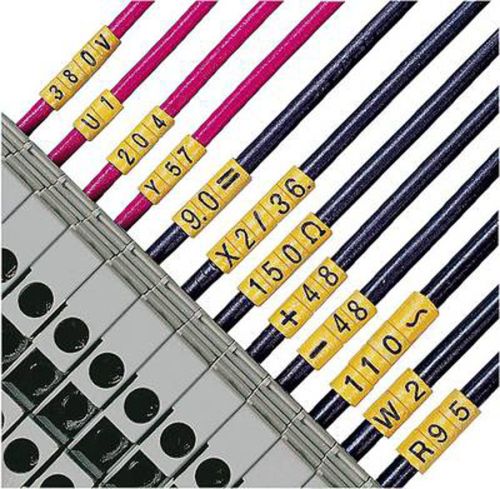
Ses-Sterling 03520006004M Helavia Twin HT-5 M YE
| Lieske Part No. | 794522 |
|---|---|
| Mfg Part No | 03520006004M |
| EAN-Code | 3597470259054 |
| Manufacturer | Ses-Sterling |
| Here only | 35,59 EUR
42,35 EUR incl. VAT
|
Further information for Ses-Sterling 03520006004M Helavia Twin HT-5 M YE
| General | |
| Colour | Yellow |
Cable identification is a central component in electrical and IT infrastructure, ensuring the correct assignment of lines to systems, devices, or functions. The Helavia Twin HT-5 M rings support this process through a robust, flexible, and durable marking. The use of rubber as material ensures good flexibility and adaptability to different cable diameters, achieving a secure and tight fit. The colour yellow is standard for certain functions or systems, such as in power supply or safety lines, although the exact assignment may vary according to the operator’s internal marking system.
Applications include particularly electrical engineering, automation technology, and IT infrastructure, where clear and durable cable marking is required. The rings are suitable for indoor use and environments with moderate mechanical stress, as they are made of an elastic material, although they do not feature specific protection ratings such as IP or UL certifications. Installation typically involves simply sliding the ring onto the cable, with the ring’s shape enabling secure fixation.
Functions and features in detail include uniform yellow colouring, enabling quick visual differentiation. The rubber material ensures high flexibility and durability under normal operating conditions. The rings are not equipped with additional markings, labels, or printed elements, serving solely as colour-based identification. The packaging unit of 1000 pieces is designed for large-scale users and projects with high marking requirements.
Technology explained simply shows that the rings do not perform any electrical or mechanical functions, serving purely as visual identification. The choice of rubber ensures good adaptation to round cable cross-sections and prevents slippage. The colour yellow is specified in many technical standards as an identification colour for certain systems or functions, although the exact assignment varies according to the operator’s internal system. The rings are not designed for use in damp or aggressive environments, as no specific protection ratings such as IP67 or chemical resistance are specified.
Compatibility and accessories relate to use with cables and lines of various diameters. The rings are not specifically designed for any particular cable type, but adapt to different cable diameters due to their flexible shape.
Installation and mounting is done by simply sliding the ring onto the cable. No tools or additional aids are required. Fixation is achieved through the elastic shape of the ring, which adapts to the cable diameter. Installation is quick and does not require any special cable preparation.
Operational advantages include easy handling, high visibility due to the yellow colour, and material durability. The rings enable quick and unambiguous cable identification, making maintenance and fault repair more efficient. The packaging unit of 1000 pieces is suitable for projects with high marking demands and reduces the cost per unit compared to smaller packages.
The Helavia Twin HT-5 M rings are thus a reliable aid for cable identification in technical installations, with yellow colour and rubber material being the key features. The rings are used without additional markings or printed elements, ensuring clear and uniform identification. The packaging unit of 1000 pieces is designed for large-scale users and projects with high marking requirements.

This is an offer of:
79279 Vörstetten
https://industry-electronics.com
Tel. 07666/88499-0
Fax. 07666/88499-111
Diesen Artikel finden Sie unter:
industry-electronics.com/artikel/794522

Lieske Elektronik e.K.
Reutener Str. 1079279 Vörstetten
https://industry-electronics.com
Tel. 07666/88499-0
Fax. 07666/88499-111
Diesen Artikel finden Sie unter:
industry-electronics.com/artikel/794522