
Ses-Sterling 035200050049 Helavia Twin HT-4 9 YE
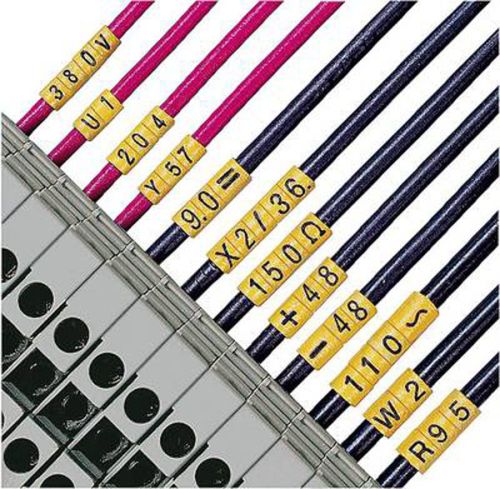
Ses-Sterling 035200050049 Helavia Twin HT-4 9 YE
| Lieske Part No. | 794359 |
|---|---|
| Mfg Part No | 035200050049 |
| EAN-Code | 3597470258811 |
| Manufacturer | Ses-Sterling |
| Here only | 30,96 EUR
36,84 EUR incl. VAT
|
Further information for Ses-Sterling 035200050049 Helavia Twin HT-4 9 YE
| General | |
| Colour | Yellow |
Cable identification is the primary application purpose of these rings. They enable visual differentiation of cables, particularly in complex systems where clear assignment is necessary. The color Yellow serves as a visual indicator and can be used in combination with other colors or labeling to create a uniform identification system. The rings are made of rubber, a material known for its flexibility, resistance to mechanical stress, and weather influences. These properties make them suitable for use in various environments, including industrial facilities and outdoor applications.
Application areas include especially electrical and IT technology, where precise cable identification is crucial for the safety and functionality of systems. The rings can be attached to cables, lines, switchboxes, or other electrical components to indicate their function, assignment, or origin. Their use in manufacturing, machine building, or building automation is also common, where quick and unambiguous identification of lines is required.
Functions and equipment in detail include simple installation by sliding the ring onto the cable, with the elastic structure of the rubber material ensuring secure fastening. The packaging unit of 1000 pieces is designed for large-scale users and industrial projects, with the packaging weight of 0.105 kg indicating a standardized industrial packaging.
Technology explained simply shows that the rings offer high durability and longevity due to their material selection and design. The rubber is resistant to mechanical stress, such as friction or pressure, and provides some resistance to moisture and temperature fluctuations. The yellow color is clearly visible and supports visual orientation within the cable network. The rings are not designed for electrical insulation, but solely for identification purposes.
The rings are universally applicable and can be combined with other identification systems, provided the color or labeling conventions match.
Installation and mounting are performed by simply sliding the rings onto the cable. No special tools or additional materials are required. The elastic structure of the rubber ensures the ring remains securely on the cable without damaging it. Installation is quick and can also be carried out in confined spaces.
Operational advantages include easy handling, high visibility due to the yellow color, and the durability of the material. The rings enable quick identification of cables, making maintenance and repair work more efficient. The packaging unit of 1000 pieces offers an economical solution for large projects and reduces the cost per individual piece.
The Helavia Twin HT-4 9 rings are thus a reliable aid for cable identification in technical and industrial applications. Their material quality, color, and packaging unit make them a practical solution for visual cable identification.

This is an offer of:
79279 Vörstetten
https://industry-electronics.com
Tel. 07666/88499-0
Fax. 07666/88499-111
Diesen Artikel finden Sie unter:
industry-electronics.com/artikel/794359

Lieske Elektronik e.K.
Reutener Str. 1079279 Vörstetten
https://industry-electronics.com
Tel. 07666/88499-0
Fax. 07666/88499-111
Diesen Artikel finden Sie unter:
industry-electronics.com/artikel/794359