
Ses-Sterling 03520005004 Helavia Twin HT-4 YE
Ses-Sterling 03520005004 Helavia Twin HT-4 YE
| Lieske Part No. | 794333 |
|---|---|
| Mfg Part No | 03520005004. |
| EAN-Code | 3597470258880 |
| Manufacturer | Ses-Sterling |
| Here only | 30,96 EUR
36,84 EUR incl. VAT
|
Further information for Ses-Sterling 03520005004 Helavia Twin HT-4 YE
| General | |
| Colour | Yellow |
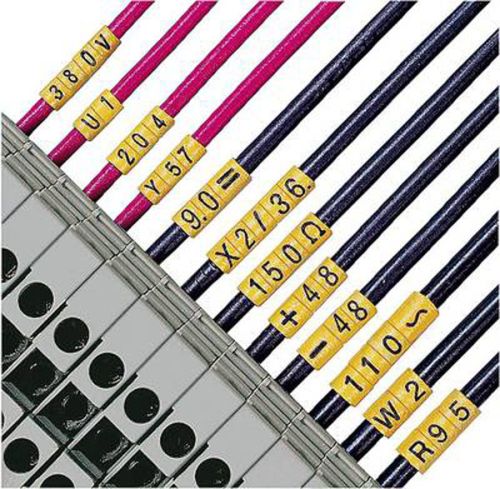
Cable identification is the primary application purpose of these products. The rings are slipped over cables or lines to visually distinguish them, for example, by function, voltage, system affiliation, or installation location. The colour yellow serves as a visual identifier, often specified in technical standards and corporate guidelines for particular systems or functions. The use of rubber as material ensures a flexible and dimensionally stable structure that adapts to different cable diameters while providing high resistance to mechanical stress.
Application areas include particularly electrical and IT infrastructure, where clear and durable cable marking is required. The rings are suitable for use in plants, factories, data centres, buildings, and other technical environments where structured cabling is necessary. Use in industrial environments often requires high mechanical robustness, which is achieved through the rubber material.
Functions and equipment in detail include simple installation by sliding the ring onto the cable. The rings are not self-adhesive and require no additional tools or adhesives. The yellow colour is consistent and visible, even under low lighting conditions, enhancing recognisability during operation. The packaging unit of 1000 pieces enables economical procurement for larger projects or ongoing maintenance work. The weight per piece (0.21 g) is provided for logistics and transport management, especially for bulk orders.
These are passive identification elements that convey only visual information. The choice of rubber material ensures a certain elasticity, allowing the rings to be slid over cables of different diameters without tearing or damage. The shape is ring-shaped, with an open or closed cross-section, not further specified, but designed for mounting on cables.
Compatibility and accessories refer to use with cables and lines of various diameters. The rings are not specifically designed for particular cable types or diameters, but are intended for universal use. Installation is done solely by sliding the ring onto the cable.
Mounting and installation are performed without tools. The rings are simply slipped over the cable and held securely in place by the elastic properties of the rubber. No additional fastening or adhesive is required. Installation is quick and can be carried out even in confined spaces or hard-to-reach locations, as no special tools are needed.
Operational advantages include easy handling, high visibility due to the yellow colour, and cost-effectiveness for large-scale use. The rings enable quick identification of cables, accelerating fault diagnosis, maintenance, and system inspection. The use of rubber ensures long service life and mechanical stability, preserving the marking even after prolonged use. The industrial pack of 1000 pieces is suitable for companies requiring continuous supply of identification elements.
The Helavia Twin HT-4 rings are thus a reliable aid for structured cabling in technical installations. The yellow colour, rubber material, and simple installation make them a practical tool for electrical and IT technicians as well as operators of technical systems.

This is an offer of:
79279 Vörstetten
https://industry-electronics.com
Tel. 07666/88499-0
Fax. 07666/88499-111
Diesen Artikel finden Sie unter:
industry-electronics.com/artikel/794333

Lieske Elektronik e.K.
Reutener Str. 1079279 Vörstetten
https://industry-electronics.com
Tel. 07666/88499-0
Fax. 07666/88499-111
Diesen Artikel finden Sie unter:
industry-electronics.com/artikel/794333