
Ses-Sterling 03520002004- Helavia Twin HT-1 YE
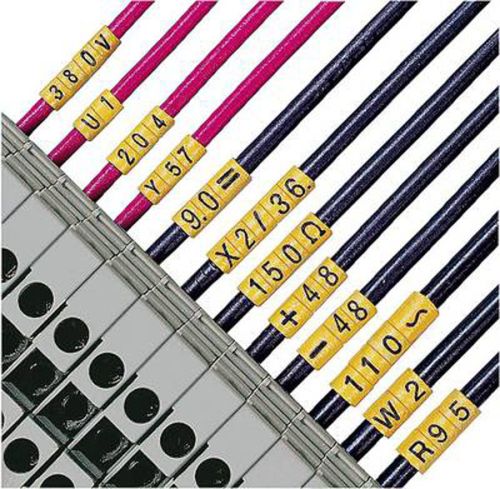
Ses-Sterling 03520002004- Helavia Twin HT-1 YE
| Lieske Part No. | 793941 |
|---|---|
| Mfg Part No | 03520002004- |
| EAN-Code | 3597470257418 |
| Manufacturer | Ses-Sterling |
| Here only | 32,95 EUR
39,21 EUR incl. VAT
|
Further information for Ses-Sterling 03520002004- Helavia Twin HT-1 YE
| General | |
| Colour | Yellow |
Applications
The Helavia Twin HT-1 identification rings are used in areas where clear and durable cable marking is required. This includes, among others, electrical installations in buildings, cabling of machines and plants, and line identification in automation technology. The rings are designed for indoor use and provide reliable marking that remains intact even after frequent inspection or maintenance. The use of rubber as material ensures flexible adaptation to different cable diameters and secure fastening without damaging the cable insulation.
Functions and Equipment in Detail
The Helavia Twin HT-1 rings are designed as a simple but effective identification solution. They are slipped over the cable and provide quick optical recognition due to their yellow color. The rubber material allows for an elastic fit, ensuring the rings securely stay in place even with slightly varying cable diameters. The packaging contains 1000 pieces, making them particularly suitable for large projects or series installations. The individual weight of 0.036 g per ring indicates that this is a lightweight yet robust product, still offering the required durability for industrial applications.
Technology Explained Simply
The technology of the identification rings is based on a simple principle: an elastic, colored band made of rubber, which is pulled over the cable and remains in place. The yellow color is not only a visual feature but also serves systematic assignment within a cable network. The choice of rubber ensures high flexibility and good adhesion to the cable without damaging the insulation. The rings are not self-adhesive but hold securely on the cable due to their shape and elasticity. The packaging with 1000 pieces enables efficient handling and distribution during larger installations.
Compatibility and Accessories
The Helavia Twin HT-1 rings are universally applicable and compatible with a wide range of cable types, particularly electrical lines and data cables used in electrical and IT technology. They are not specifically designed for certain cable diameters but adapt to various diameters due to their elastic structure. There are no specific accessories required for using the rings. Installation is performed without tools or additional aids.
Mounting and Installation
Mounting the identification rings is done by simply sliding them over the cable. Due to the elastic properties of the rubber material, the ring can be easily pushed over the cable and then sits securely. No special mounting equipment or tools are required. Installation can also be carried out in confined spaces or on already laid cables, as the rings are not glued but slipped over. This makes the use quick and easy, even for technicians without special tools.
Advantages in Operation
Using the Helavia Twin HT-1 rings offers several advantages in operation: The yellow color enables quick and unambiguous cable identification, speeding up maintenance and fault diagnosis. The material strength of the rubber ensures that the rings do not fall off or wear out even under frequent inspection or mechanical stress. The packaging with 1000 pieces reduces procurement and storage effort, especially for projects with high cable volumes. The simple handling without tools increases efficiency during installation and maintenance.

This is an offer of:
79279 Vörstetten
https://industry-electronics.com
Tel. 07666/88499-0
Fax. 07666/88499-111
Diesen Artikel finden Sie unter:
industry-electronics.com/artikel/793941

Lieske Elektronik e.K.
Reutener Str. 1079279 Vörstetten
https://industry-electronics.com
Tel. 07666/88499-0
Fax. 07666/88499-111
Diesen Artikel finden Sie unter:
industry-electronics.com/artikel/793941