
Ses-Sterling 033400020048 LASER-ONE 1 8 YE
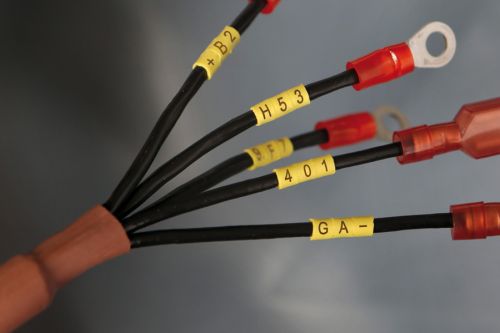
Ses-Sterling 033400020048 LASER-ONE 1 8 YE
| Lieske Part No. | 793668 |
|---|---|
| Mfg Part No | 033400020048 |
| EAN-Code | 3597470883907 |
| Manufacturer | Ses-Sterling |
| Here only | 3,83 EUR
4,56 EUR incl. VAT
|
Further information for Ses-Sterling 033400020048 LASER-ONE 1 8 YE
| General | |
| Colour | Yellow |
Applications
Rubber identification rings are intended for use in electrical and electronic installations where clear and durable identification of cabling is necessary. They support maintenance, servicing, and fault diagnosis by assigning a unique colour code to cables or lines. The colour Yellow is often used in technical systems to indicate specific functions, voltage levels, or system affiliations. Typical use cases include industrial electrical engineering, building management, or data centres.
Functions and Equipment in Detail
The identification rings are designed as simple, ring-shaped elements that can be placed around cables or lines. They are made of an elastic material that conforms to the shape of the cable and ensures secure fastening. The colour Yellow is clearly visible and enables quick visual identification. The packaging contains 100 pieces, which is sufficient for larger projects or series installations. The individual weight is 0.035 g per ring, indicating low material thickness and thus easy handling.
Technology Explained Simply
Rubber identification rings are not electronic or active components, but passive marking elements. Their purpose is to provide a visible colour identification for cables or lines that can be easily recognised by technicians, installers, or maintenance personnel. The material is flexible and can be placed around the cable without tools. The colour Yellow is often specified in technical standards for certain functions, such as protective conductors or special systems, although the exact assignment may vary depending on the project or company guidelines. The rings are not self-adhesive but hold in place due to elastic tension on the cable.
Compatibility and Accessories
The identification rings are universally applicable and can adapt to various cable diameters as long as they are within the elastic stretch range of the material. They are not specifically designed for a particular cable type or application, but serve as a general identification aid. In combination with other identification rings in different colours, complex cabling systems can be clearly structured. Use in conjunction with cable markers, labelling devices, or manual labelling is possible, but not intended or required.
Installation and Mounting
Installation requires no tools. The rings are simply slid over the cable and hold securely due to their elastic shape. No additional fastening or adhesive is required. Installation is quick and can also be performed retroactively on already installed cables. The rings are not reusable, as they may be damaged when removed. They are used directly from the packaging, which contains 100 pieces.
Operational Advantages
Rubber identification rings offer a simple, cost-effective, and reliable method to provide visual identification for cables. The colour Yellow enables quick recognition and assignment, especially in complex installations. The low weight of 0.035 g per ring does not affect cable mechanics. The packaging with 100 pieces is suitable for larger projects and reduces the need for frequent reordering. The rings are not waterproof or dustproof, as they do not provide protection against environmental influences, but serve exclusively for identification. They are intended for use in indoor or protected environments where no mechanical or chemical stresses could damage the material.

This is an offer of:
79279 Vörstetten
https://industry-electronics.com
Tel. 07666/88499-0
Fax. 07666/88499-111
Diesen Artikel finden Sie unter:
industry-electronics.com/artikel/793668

Lieske Elektronik e.K.
Reutener Str. 1079279 Vörstetten
https://industry-electronics.com
Tel. 07666/88499-0
Fax. 07666/88499-111
Diesen Artikel finden Sie unter:
industry-electronics.com/artikel/793668