
Ses-Sterling 033400010041 LASER-ONE 0 1 YE
Ses-Sterling 033400010041 LASER-ONE 0 1 YE
| Lieske Part No. | 793567 |
|---|---|
| Mfg Part No | 033400010041 |
| EAN-Code | 3597470883402 |
| Manufacturer | Ses-Sterling |
| Here only | 3,63 EUR
4,32 EUR incl. VAT
|
Further information for Ses-Sterling 033400010041 LASER-ONE 0 1 YE
| General | |
| Colour | Yellow |
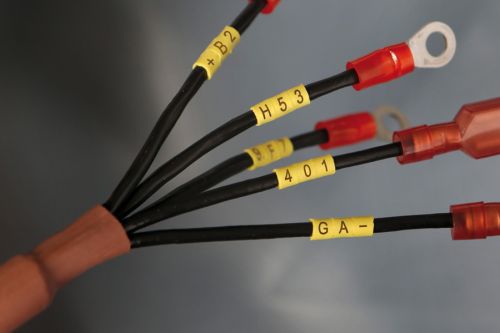
Cable identification is a central component of proper documentation and maintenance of electrical systems. These rubber identification rings support this by providing a simple yet effective marking. The yellow colour is particularly visible and can be used in combination with other colours or labelling to differentiate line functions, voltage levels or system affiliations. The use of rubber as material ensures high flexibility and shape stability, so the rings fit securely even on different cable diameters. The material choice also ensures good resistance to environmental influences, such as moisture or mechanical stress, which may occur during operation.
Applications include particularly electrical installation, IT infrastructure, automation technology, as well as maintenance and servicing of systems. In industrial environments, during installation of control systems or in data centres, such identification rings are a standard tool to avoid incorrect connections and to speed up maintenance work. The yellow colour can, for example, be used for specific voltage classes, signal or data lines, with the exact assignment determined according to the operator’s internal guidelines.
The functions and features in detail include the easy handling and installation of the rings. Due to the elastic properties of the rubber material, they can be placed around cables without tools and secured. The rings are not labelled, so they can be used either as pure colour marking or supplemented with additional labelling, depending on requirements. The packaging unit of 100 pieces provides sufficient quantity for larger projects or for use by maintenance teams.
Technology explained simply shows that the identification rings do not perform any electrical functions, but act purely mechanically and visually. The rubber material provides sufficient elasticity to adapt to the cable shape and prevents shifting or loosening during operation. The yellow colour is a visual signal that allows clear differentiation compared to other colours. The low weight of 0.016 g per ring has no impact on the mechanical load on the cable.
Compatibility and accessories refers to use with various cable types and diameters. The rings are not designed for a specific cable diameter, but adapt elastically. They can be combined with other identification systems, such as labelling devices that print directly onto the rings, or with additional coloured markings used alongside the yellow colour.
Installation and mounting is done without tools. The rings are simply slid over the cable and positioned at the desired location. Additional fastening is not required, as the material itself provides sufficient holding force. Installation is quick and can also be carried out in confined spaces.
Advantages in operation include easy application, high visibility of the yellow colour, and long durability of the rubber material. The identification rings support efficiency in maintenance and servicing work, as cable and line assignment can be done quickly. The packaging unit of 100 pieces enables economical use in larger projects.

This is an offer of:
79279 Vörstetten
https://industry-electronics.com
Tel. 07666/88499-0
Fax. 07666/88499-111
Diesen Artikel finden Sie unter:
industry-electronics.com/artikel/793567

Lieske Elektronik e.K.
Reutener Str. 1079279 Vörstetten
https://industry-electronics.com
Tel. 07666/88499-0
Fax. 07666/88499-111
Diesen Artikel finden Sie unter:
industry-electronics.com/artikel/793567