
Ses-Sterling 033400010040 LASER-ONE 0 0 YE
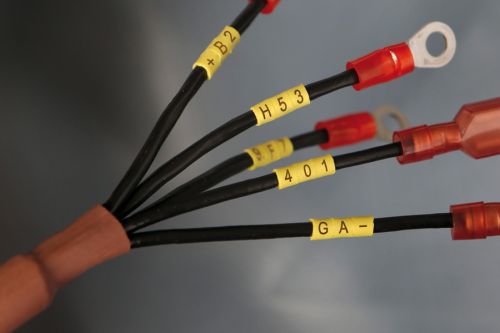
Ses-Sterling 033400010040 LASER-ONE 0 0 YE
| Lieske Part No. | 793566 |
|---|---|
| Mfg Part No | 033400010040 |
| EAN-Code | 3597470883396 |
| Manufacturer | Ses-Sterling |
| Here only | 3,63 EUR
4,32 EUR incl. VAT
|
Further information for Ses-Sterling 033400010040 LASER-ONE 0 0 YE
| General | |
| Colour | Yellow |
Identification rings made of rubber are flexible and can be easily placed around cables or lines. The choice of rubber as material ensures good elasticity and durability, so the rings retain their shape even after repeated bending or mechanical stress. The use of rubber as a material is particularly suitable for applications requiring a certain degree of flexibility and resistance to environmental influences such as moisture or temperature fluctuations.
Cable marking is an essential part of proper documentation and maintenance of electrical installations. The use of coloured identification rings supports quick identification of lines, especially in complex cabling systems. The yellow colour can be used, for example, for specific functions, voltage levels or system affiliations, with the exact assignment varying according to internal or industry-standard practices. The rings are not labelled, so they serve as pure colour markings – no labelling or coding is performed by the product itself.
The packaging unit contains 100 pieces, enabling economical and efficient handling for larger projects or series installations. The packaging weighs 0.002 kg in total, indicating a light and compact packaging that facilitates transport and storage.
Rubber as a material provides sufficient elasticity to adapt to various cable diameters without damaging the lines.
The application is performed by simply placing the rings around the cables or lines to be marked. The elastic shape of the rubber allows secure fastening without additional tools. The rings are not self-adhesive, but hold in place due to elastic tension on the line. Installation requires no tools and can be carried out quickly and without special knowledge. The use is particularly suitable in electrical installation, for maintenance of systems or for documentation of cabling systems.
The colour yellow serves visual differentiation and can be used in combination with other coloured rings or markings to create a complex marking system. The colour is consistent and not washable, so the marking remains visible even after prolonged use.
Compatibility is given for all cables or lines whose diameter falls within the elastic stretchability of the rubber. The use is exclusively as a visual marking without additional functions such as electrical insulation or mechanical stabilisation.
Storage of the rings is best done in a dry environment to maintain material integrity. The packaging protects the rings from mechanical damage and allows orderly storage until use.
Operational advantages include easy handling, quick installation and clear visual marking. The rings enable efficient documentation and maintenance of electrical installations, especially in complex systems where quick identification of lines is crucial. The use of coloured rings reduces errors during installation or maintenance, as assignment by colour can be done quickly.
The packaging unit of 100 pieces is suitable for projects involving multiple lines or for series installations. The rings are not supplied with additional components such as labelling tools, tools or instructions. The use is exclusively as visual marking without additional functions. The yellow colour remains stable throughout the service life, so the marking remains visible even after a long period.
Yellow as a colour is standardised in many marking systems and can be used, for example, for specific functions, voltage levels or system affiliations. The exact assignment is determined according to internal or industry-standard practices. The rings are not labelled, so they serve exclusively as colour markings.
The application areas include electrical installation, building automation, industrial cabling as well as maintenance and documentation of electrical installations. The use is exclusively as visual marking without additional functions.
The material properties of rubber allow flexible adaptation to various cable diameters. The rings are not self-adhesive, but hold in place due to elastic tension on the line. Installation requires no tools and can be carried out quickly and without special knowledge.
Cable marking is an essential part of proper documentation and maintenance of electrical installations. The use of coloured identification rings supports quick identification of lines, especially in complex cabling systems. The yellow colour can be used, for example, for specific functions, voltage levels or system affiliations, with the exact assignment varying according to internal or industry-standard practices. The rings are not labelled, so they serve as pure colour markings – no labelling or coding is performed by the product itself.
The packaging unit contains 100 pieces, enabling economical and efficient handling for larger projects or series installations. The packaging weighs 0.002 kg in total, indicating a light and compact packaging that facilitates transport and storage.
The application is performed by simply placing the rings around the cables or lines to be marked. The elastic shape of the rubber allows secure fastening without additional tools. The rings are not self-adhesive, but hold in place due to elastic tension on the line. Installation requires no tools and can be carried out quickly and without special knowledge. The use is particularly suitable in electrical installation, for maintenance of systems or for documentation of cabling systems.
The colour yellow serves visual differentiation and can be used in combination with other coloured rings or markings to create a complex marking system. The colour is consistent and not washable, so the marking remains visible even after prolonged use.
Compatibility is given for all cables or lines whose diameter falls within the elastic stretchability of the rubber. The use is exclusively as a visual marking without additional functions such as electrical insulation or mechanical stabilisation.
Storage of the rings is best done in a dry environment to maintain material integrity. The packaging protects the rings from mechanical damage and allows orderly storage until use.
Operational advantages include easy handling, quick installation and clear visual marking. The rings enable efficient documentation and maintenance of electrical installations, especially in complex systems where quick identification of lines is crucial. The use of coloured rings reduces errors during installation or maintenance, as assignment by colour can be done quickly.
The packaging unit of 100 pieces is suitable for projects involving multiple lines or for series installations. The rings are not supplied with additional components such as labelling tools, tools or instructions. The use is exclusively as visual marking without additional functions. The yellow colour remains stable throughout the service life, so the marking remains visible even after a long period.
Yellow as a colour is standardised in many marking systems and can be used, for example, for specific functions, voltage levels or system affiliations. The exact assignment is determined according to internal or industry-standard practices. The rings are not labelled, so they serve exclusively as colour markings.
The application areas include electrical installation, building automation, industrial cabling as well as maintenance and documentation of electrical installations. The use is exclusively as visual marking without additional functions.
The material properties of rubber allow flexible adaptation to various cable diameters. The rings are not self-adhesive, but hold in place due to elastic tension on the line. Installation requires no tools and can be carried out quickly and without special knowledge.

This is an offer of:
79279 Vörstetten
https://industry-electronics.com
Tel. 07666/88499-0
Fax. 07666/88499-111
Diesen Artikel finden Sie unter:
industry-electronics.com/artikel/793566

Lieske Elektronik e.K.
Reutener Str. 1079279 Vörstetten
https://industry-electronics.com
Tel. 07666/88499-0
Fax. 07666/88499-111
Diesen Artikel finden Sie unter:
industry-electronics.com/artikel/793566