
Ses-Sterling 033200070049 HELAVIA LASER-ONE 1bis 9 YE
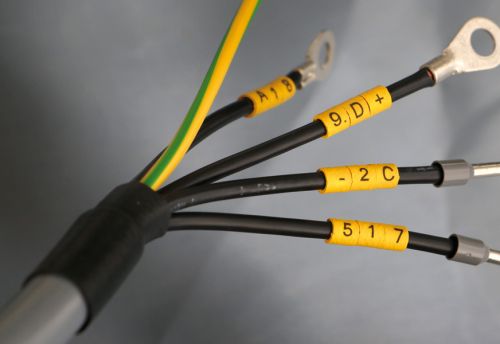
Ses-Sterling 033200070049 HELAVIA LASER-ONE 1bis 9 YE
| Lieske Part No. | 793487 |
|---|---|
| Mfg Part No | 033200070049 |
| EAN-Code | 3597470882634 |
| Manufacturer | Ses-Sterling |
| Here only | 3,98 EUR
4,74 EUR incl. VAT
|
Further information for Ses-Sterling 033200070049 HELAVIA LASER-ONE 1bis 9 YE
| General | |
| Colour | Yellow |
Applications
These identification rings are suitable for use in industrial, commercial and technical installations, particularly in areas where quick and secure identification of cables is required. They are used in electrical installations, automation technology, building automation and IT infrastructures. Typical applications include cables, lines, connectors or other electrical components, to visually mark their function, assignment or system affiliation. The colour Yellow can be part of a standardised colour-coding system specified in many technical guidelines and internal company standards.
Functions and Equipment in Detail
The identification rings are made from an elastic rubber material that offers high flexibility and shape stability. They can be easily slid over cables or lines and remain securely in place through friction. The colour Yellow is clearly visible and enables quick optical differentiation. The rings are not writable, so they can be used in combination with writable identification rings or labels to ensure double identification. The packaging unit contains 100 pieces, which is sufficient for larger projects or maintenance tasks.
Technology Explained Simply
The rings are made from an elastic rubber material characterised by its flexibility and shape stability. The material allows for easy sliding onto cables or lines, with friction between the ring and the line ensuring secure fastening. The colour Yellow is a visual feature used for quick identification. Since the rings are not writable, they are often used in combination with writable identification labels to enable both colour and text identification. The packaging unit of 100 pieces is suitable for use in larger installations or maintenance work.
Compatibility and Accessories
The identification rings are universally applicable and compatible with a wide range of cable diameters, as long as they fall within the elastic stretchability of the rubber material. They can be used in combination with writable identification rings, labels or other labelling systems to enable multi-layered identification. The colour Yellow can be part of a standardised colour-coding system defined in technical installations or company guidelines. There are no specific accessories recommended by the manufacturer as supplements.
Installation and Mounting
Mounting is done by simply sliding the ring over the cable or line. Due to the elastic properties of the rubber material, the ring can be easily moved to the desired position. Fixation is achieved through friction, keeping the ring securely in place. No tools or additional aids are required. Installation is quick and can also be performed in confined spaces or with complex cabling.
Operational Advantages
The use of identification rings in the colour Yellow enables quick and unambiguous identification of cables and lines, significantly simplifying maintenance, servicing and fault diagnosis. The elastic rubber composition ensures secure fastening without additional aids. The packaging unit of 100 pieces provides sufficient quantity for larger projects. The colour Yellow is clearly visible and can be used in standardised labelling systems to ensure uniform and understandable marking. The rings are robust and maintain their function over a long period under normal operating conditions.

This is an offer of:
79279 Vörstetten
https://industry-electronics.com
Tel. 07666/88499-0
Fax. 07666/88499-111
Diesen Artikel finden Sie unter:
industry-electronics.com/artikel/793487

Lieske Elektronik e.K.
Reutener Str. 1079279 Vörstetten
https://industry-electronics.com
Tel. 07666/88499-0
Fax. 07666/88499-111
Diesen Artikel finden Sie unter:
industry-electronics.com/artikel/793487