
Ses-Sterling 03320003004N HELAVIA LASER-ONE 2 N YE
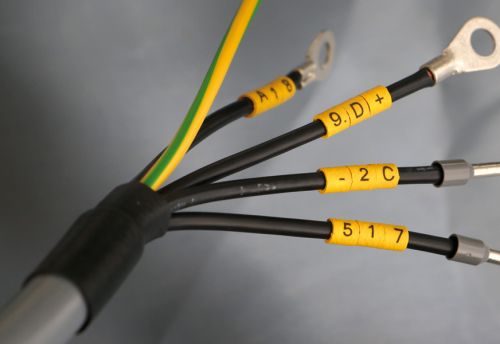
Ses-Sterling 03320003004N HELAVIA LASER-ONE 2 N YE
| Lieske Part No. | 793446 |
|---|---|
| Mfg Part No | 03320003004N |
| EAN-Code | 3597470882818 |
| Manufacturer | Ses-Sterling |
| Here only | 3,98 EUR
4,74 EUR incl. VAT
|
Further information for Ses-Sterling 03320003004N HELAVIA LASER-ONE 2 N YE
| General | |
| Colour | Yellow |
Identification rings made of rubber are available in a pack of 100, making them particularly suitable for larger projects or series installations. Each individual piece weighs 0.049 g, indicating a lightweight yet robust material. The packaging weight is 0.005 kg, highlighting the low mass of the product. The use of rubber as material provides a certain elasticity and flexibility, allowing the rings to be applied to cables of different diameters without tearing or becoming loose.
Cable identification is an essential component in electrical and IT technology to avoid errors during installation or maintenance. The rubber identification rings from Ses-Sterling support this by providing clear, colour-based differentiation. The yellow colour is particularly common in systems using colour-coded identification, for example for specific voltage levels, data lines or safety functions. The simple handling and direct attachment to the cable without additional tools or adhesives increase work efficiency.
Rubber material offers good resistance to mechanical stress and minor environmental influences. The rings are not designed for extreme environments such as high temperatures, aggressive chemicals or permanent UV radiation, unless explicitly stated in the technical data — which is not the case here.
The packaging unit contains 100 pieces, which is advantageous for projects with high identification requirements. The individual pieces are small and light, allowing them to be transported and stored in large quantities without requiring significant space. The packaging itself is not described in detail, but the stated packaging weight (0.005 kg) indicates a compact and lightweight packaging solution.
Applications include particularly electrical installation, IT infrastructure, data cabling and industrial systems where clear and durable identification of lines is required. The application is carried out by simply sliding the ring onto the cable, with the ring's shape ensuring secure fixation.
Compatibility with other identification systems is given, as the rings only provide visual marking and do not perform any electrical or mechanical functions. They can be combined with other identification methods such as labels, colour markings or digital systems to enable multi-layered identification. The yellow colour can be integrated into existing colour coding to highlight specific systems, functions or priorities.
Mounting and installation are tool-free. The rings are simply slid over the cable and fit securely due to the elasticity of the rubber. No additional fastening or adhesive is required. Handling is simple and quick, reducing work time for cable identification. The rings are not reusable, as they cannot be removed without damage after being slid on.
Operational advantages include quick identification of lines, easy handling and low weight, which facilitates storage and transport. The use of yellow as an identification colour enables clear visual differentiation, especially in systems based on colour coding. The rings are not designed for special environments such as fire resistance, high temperatures or aggressive chemicals, unless explicitly stated — which is not the case here.

This is an offer of:
79279 Vörstetten
https://industry-electronics.com
Tel. 07666/88499-0
Fax. 07666/88499-111
Diesen Artikel finden Sie unter:
industry-electronics.com/artikel/793446

Lieske Elektronik e.K.
Reutener Str. 1079279 Vörstetten
https://industry-electronics.com
Tel. 07666/88499-0
Fax. 07666/88499-111
Diesen Artikel finden Sie unter:
industry-electronics.com/artikel/793446