
Ses-Sterling 033200030044 HELAVIA LASER-ONE 2 4 YE
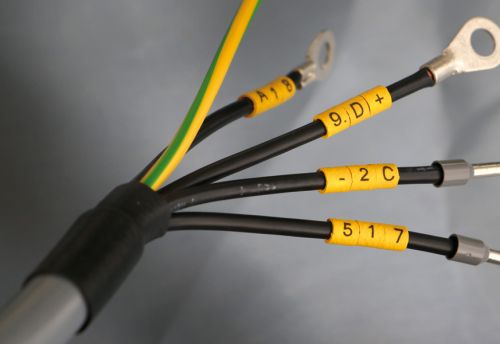
Ses-Sterling 033200030044 HELAVIA LASER-ONE 2 4 YE
| Lieske Part No. | 793410 |
|---|---|
| Mfg Part No | 033200030044 |
| EAN-Code | 3597470882986 |
| Manufacturer | Ses-Sterling |
| Here only | 3,98 EUR
4,74 EUR incl. VAT
|
Further information for Ses-Sterling 033200030044 HELAVIA LASER-ONE 2 4 YE
| General | |
| Colour | Yellow |
Applications
Rubber identification rings are used in various areas of electrical and data cabling, for example in buildings, industrial plants, server rooms or during the installation of network infrastructures. They are used to assign a unique identifier to cables, helping to avoid errors during installation, maintenance or repair. The use of coloured rings supports the standardisation of labelling systems, which are specified in many technical standards and company guidelines. The yellow colour is often designated for specific functions or systems, for example for lines with special functions or for marking emergency power supplies.
Functions and equipment in detail
The identification rings are made of an elastic rubber material that enables flexible and shape-stable fastening to cables and lines. The rings are dimensioned so that they can be easily slipped over the cable and then shrink tightly around it without damaging the cable. The material selection ensures high resistance to mechanical stresses, such as bending and tensile loads, as well as to environmental influences such as moisture or temperature fluctuations. The yellow colour is clearly visible and ensures quick optical identification during operation.
Technology explained simply
The identification rings are made of a flexible, rubber-like polymer characterised by its elasticity and shape stability. The material allows secure fastening to cables of different diameters without damaging the insulation. The use of rubber ensures long service life and resistance to wear, which is particularly advantageous in industrial or frequently maintained installations. The yellow colour is not only visually striking but also standardised in many technical applications to identify specific systems or functions.
Compatibility and accessories
The identification rings are universally applicable and compatible with a wide range of cable types, particularly with electrical lines and data cables used in electrical and IT installation. They can be combined with other labelling systems, for example with labels, colour coding or digital labelling systems, to enable multi-layer identification. Use in conjunction with a labelling system such as HELAVIA LASER-ONE 2 is possible, with the yellow ring colour serving as a visual supplement.
Installation and mounting
Mounting of the identification rings is done by simply slipping them over the cable and then tightening them. Due to the elastic properties of the rubber material, the ring automatically adapts to the cable diameter and holds securely. No additional tools or aids are required. Installation is quick and can also be carried out in confined spaces or with complex cabling. The rings can also be removed if necessary without damaging the cable.
Advantages in operation
The use of rubber identification rings in yellow provides clear and durable identification of cables in operation. The colour enables quick visual identification, which speeds up maintenance, inspection and fault repair. The material quality ensures high durability, so the labelling remains intact even under industrial conditions over a long period. The simple mounting and reusability increase efficiency during installation and maintenance of cabling.

This is an offer of:
79279 Vörstetten
https://industry-electronics.com
Tel. 07666/88499-0
Fax. 07666/88499-111
Diesen Artikel finden Sie unter:
industry-electronics.com/artikel/793410

Lieske Elektronik e.K.
Reutener Str. 1079279 Vörstetten
https://industry-electronics.com
Tel. 07666/88499-0
Fax. 07666/88499-111
Diesen Artikel finden Sie unter:
industry-electronics.com/artikel/793410