
Ses-Sterling 03320001004D HELAVIA LASER-ONE 0 D YE
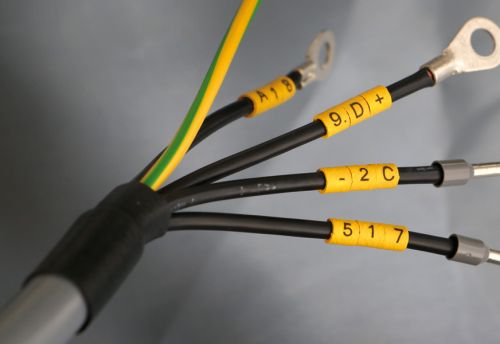
Ses-Sterling 03320001004D HELAVIA LASER-ONE 0 D YE
| Lieske Part No. | 793225 |
|---|---|
| Mfg Part No | 03320001004D |
| EAN-Code | 3597470881521 |
| Manufacturer | Ses-Sterling |
| Here only | 3,34 EUR
3,97 EUR incl. VAT
|
Further information for Ses-Sterling 03320001004D HELAVIA LASER-ONE 0 D YE
| General | |
| Colour | Yellow |
Applications
Rubber identification rings are primarily used in electrical and IT technology to clearly mark cables, lines, or other connection elements. They are particularly useful in environments with high cable density, such as server rooms, enclosures, or during the installation of security and alarm systems. The yellow color can be used as a standard color for specific functions or systems, for example, for emergency power supplies or communication lines, depending on internal company guidelines or standards. The rings are designed for indoor use and offer a simple but effective method for cable identification.
Functions and Equipment in Detail
The identification rings are made of an elastic rubber material that can be easily placed around cables or lines. The yellow color is evenly applied and ensures good visibility, even under low lighting conditions. The rings are not labeled; they are pure color markings without additional text or symbols. The packaging contains 100 individual pieces, which can be removed and used one by one. The low weight of 0.017 g per ring indicates the thin material thickness, which is still sufficient to ensure stable marking.
Technology Explained Simply
The rings are made of a flexible, rubber-like material that can be elastically stretched to enclose cables of different diameters. The elastic property allows secure fastening without damaging the cable. The yellow color is a visual feature used for quick identification. It is not a technical function, but an optical marking intended to be used in combination with an internal identification system (e.g., color coding by function, system, or area). The rings are not self-adhesive and must be manually placed around the cable.
Compatibility and Accessories
The identification rings are universally applicable and compatible with cables and lines of various diameters, as long as they are within the elasticity limits of the rubber material. They can be combined with other identification methods, such as labeled labels or colored heat shrink tubing, to enable multi-layered identification. Use is independent of specific devices or systems; these are passive identification elements. The rings are not designed for use in damp or aggressive environments, as no specific protection rating (e.g., IP) is specified.
Installation and Mounting
Installation is done by simply placing the ring around the cable. Due to the elastic nature of the material, the ring can be installed without tools or additional aids. No special preparation or mounting assistance is required. The rings can be easily removed and reused if a change in identification is needed. Handling is simple and does not require special training.
Operational Advantages
The use of rubber identification rings in yellow improves clarity and safety when working with cables. The uniform color supports quick identification of lines, speeding up maintenance, troubleshooting, and installation. The low weight and simple handling reduce workload. The rings are durable and retain their color and shape under normal use. The packaging with 100 pieces offers an economical solution for larger projects or regular maintenance work.
the yellow color serves as a visual identifier for distinguishing cables; the rings are made of rubber; they are suitable for indoor use; the packaging contains 100 pieces; the rings are elastic and can be placed around cables without tools; they are not labeled and serve exclusively as color markings.

This is an offer of:
79279 Vörstetten
https://industry-electronics.com
Tel. 07666/88499-0
Fax. 07666/88499-111
Diesen Artikel finden Sie unter:
industry-electronics.com/artikel/793225

Lieske Elektronik e.K.
Reutener Str. 1079279 Vörstetten
https://industry-electronics.com
Tel. 07666/88499-0
Fax. 07666/88499-111
Diesen Artikel finden Sie unter:
industry-electronics.com/artikel/793225