
Ses-Sterling 03010001004L SES-Markers E38 L YE
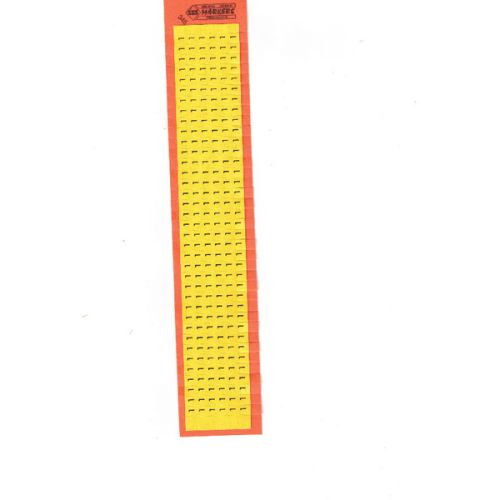
Ses-Sterling 03010001004L SES-Markers E38 L YE
| Lieske Part No. | 786675 |
|---|---|
| Mfg Part No | 03010001004L |
| EAN-Code | 3597470324332 |
| Manufacturer | Ses-Sterling |
| Here only | 1,93 EUR
2,30 EUR incl. VAT
|
Further information for Ses-Sterling 03010001004L SES-Markers E38 L YE
| General | |
| Colour | Yellow |
Cable labelling is an essential part of documentation and maintenance of installations. The use of coloured labelling cards such as the SES-Markers E96,5 cm ( 38 inch )L" enables quick and visual assignment of cables, especially in complex installations with many lines. The yellow colour can serve as a visual signal for a specific function, a particular cable category, or a specific installation area. The card is designed to be securely attached to the cable without detaching or deforming.
Labelling card is the technical term for a label or marking applied directly to the cable. The SES-Markers E96,5 cm ( 38 inch )L" is specifically designed for use in electrical and IT technology, where clear and durable labelling is required. The card is made from a robust, durable material that withstands mechanical stress and environmental influences. The stated weight of 7.6 g per piece indicates that it is a lightweight yet stable component that does not impair cable handling or installation.
Application areas include particularly the labelling of cables in enclosures, distribution boxes, server rooms, building automation systems, and other installations where structured and traceable cabling is required. The card is suitable for cable diameters up to 12 mm, making it usable for most standard cables in electrical installations and data communication. The yellow colour can have different meanings depending on the internal labelling system, such as for power supply lines, signal or data lines, or specific levels in network architecture.
The card is typically used in conjunction with other labelling elements, such as cable ties, labels, or marking pens, to create a complete labelling system. The card is packaged individually, with the packaging weight of 0.008 kg indicating a small, lightweight package.
Technology explained simply shows that the card has no electronic functions and operates purely mechanically and visually. It serves exclusively for optical labelling and is not an electronic component. The yellow colour is a visual feature for quick identification. The cable diameter specification of up to 12 mm means the card is flexible enough to be attached to cables of this size without tearing or deforming. The card is not specified for use in damp or aggressive environments, with the material properties indicating general indoor use.
Compatibility and accessories refers to the use of the card in combination with other labelling elements. The card does not come with specific accessories such as mounting clips or adhesive strips, but serves as a standalone labelling element. It can, however, be used in conjunction with other products from the manufacturer, such as additional labelling cards in different colours or sizes, to create a consistent labelling system. The card is not designed for use with electronic labelling systems or RFID technologies.
Mounting and installation is done by direct attachment to the cable. Mounting typically occurs during cable installation or maintenance to ensure unambiguous assignment. The card is designed so that it does not easily detach and maintains its position even under mechanical stress.
Operational advantages lie in the simple and quick identification of cables. The yellow colour enables visual differentiation from other cables, especially in complex installations. The card is lightweight, robust, and suitable for use in electrical and IT technology. The use of labelling cards such as the SES-Markers E96,5 cm ( 38 inch )L" contributes to efficiency in maintenance, fault finding, and documentation of installations. The card is not designed for use in explosive environments or under extreme environmental conditions, but is intended for use in normal indoor environments.

This is an offer of:
79279 Vörstetten
https://industry-electronics.com
Tel. 07666/88499-0
Fax. 07666/88499-111
Diesen Artikel finden Sie unter:
industry-electronics.com/artikel/786675

Lieske Elektronik e.K.
Reutener Str. 1079279 Vörstetten
https://industry-electronics.com
Tel. 07666/88499-0
Fax. 07666/88499-111
Diesen Artikel finden Sie unter:
industry-electronics.com/artikel/786675