
Ses-Sterling 02560010010 Helavia 15-190 BK
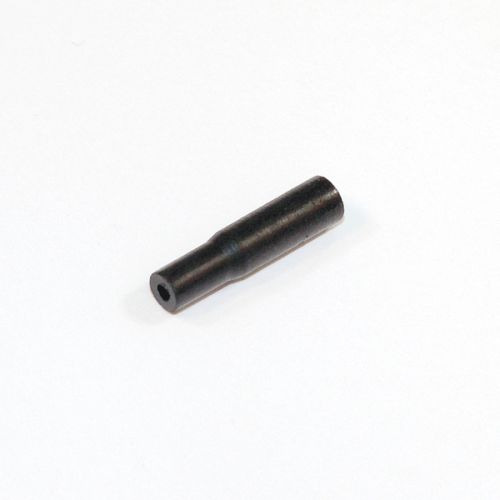
Ses-Sterling 02560010010 Helavia 15-190 BK
| Lieske Part No. | 784605 |
|---|---|
| Mfg Part No | 02560010010 |
| EAN-Code | 3597470019955 |
| Manufacturer | Ses-Sterling |
| Here only | 37,84 EUR
45,03 EUR incl. VAT
|
Further information for Ses-Sterling 02560010010 Helavia 15-190 BK
| General | |
| Colour | Black |
Applications
The Helavia 15-190 cable protectors are suitable for use in electrical installations, IT environments, and industrial plant assembly. They protect cables and lines from mechanical damage, particularly from repeated bending, pressure, or rubbing against edges. Typical applications include transitions through wall or ceiling openings, connection points of cable ducts, or when guiding cables through tight bends. The protectors are intended for indoor use, with the material composition of polychloroprene rubber ensuring high resistance to mechanical stress and environmental influences.
Functions and Equipment in Detail
The protectors are designed as shape-stable elements that can be slid over cables or lines, forming a mechanical protective layer. The material polychloroprene rubber is characterised by high elasticity and resistance to wear. The black colour is standard and corresponds to the usual colour scheme for installation components. The protectors are not equipped with additional fastening elements or adhesives, but are mounted solely by sliding them over the cable. The packaging unit contains 100 pieces, enabling economical handling for larger installations or series mounting.
Technology Explained Simply
Polychloroprene rubber is a synthetic elastomer known for its high mechanical strength, flexibility, and resistance to chemical influences as well as UV radiation. The cable protectors utilise these material properties to protect cables from bending and pressure loads. The shape of the protectors is cylindrical, allowing for easy sliding over the cable. The material density and specific shape ensure that the protectors maintain their protective function even under repeated loading. The weight specification of 0.32 g per piece indicates that the protectors are lightweight without compromising strength.
Compatibility and Accessories
The Helavia 15-190 cable protectors are universally applicable and compatible with a wide range of cables and lines used in electrical and IT installations. They are not specifically designed for certain cable types or diameters, but can be flexibly adapted to the respective cable thickness. The protectors are part of the HELAVIA product group of shaped parts made of polychloroprene rubber, which includes additional protective and guiding elements. Combination with other HELAVIA products, such as cable conduits or guiding elements, is possible to create comprehensive protective solutions.
Installation and Mounting
Mounting is done by simply sliding the protector over the cable or line. No additional tools, adhesives, or fastening elements are required. The protectors can be easily slid over the cable and fit securely without detaching on their own. Installation is therefore quick and can be carried out without special prior knowledge. The protectors are not intended for use in damp or wet environments, as no specific protection rating such as IP67 or similar is specified. Therefore, use is restricted to dry indoor areas.
Operational Advantages
The Helavia 15-190 cable protectors offer reliable mechanical protection for cables and lines, increasing the lifespan of the installation and reducing the risk of cable breaks or insulation damage. The simple mounting and high durability of the material ensure efficient and long-lasting protection. The packaging with 100 pieces enables economical use in larger projects. The protectors are not designed for outdoor use or damp environments, but for dry indoor spaces where they perform their protective function optimally.

This is an offer of:
79279 Vörstetten
https://industry-electronics.com
Tel. 07666/88499-0
Fax. 07666/88499-111
Diesen Artikel finden Sie unter:
industry-electronics.com/artikel/784605

Lieske Elektronik e.K.
Reutener Str. 1079279 Vörstetten
https://industry-electronics.com
Tel. 07666/88499-0
Fax. 07666/88499-111
Diesen Artikel finden Sie unter:
industry-electronics.com/artikel/784605