
Ses-Sterling 02530020010 Helavia 15-170 BK
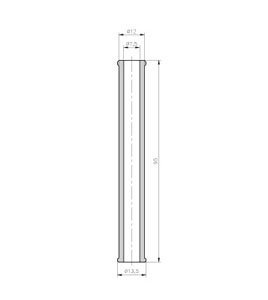
Ses-Sterling 02530020010 Helavia 15-170 BK
| Lieske Part No. | 784459 |
|---|---|
| Mfg Part No | 02530020010 |
| EAN-Code | 3597470018958 |
| Manufacturer | Ses-Sterling |
| Here only | 95,30 EUR
113,41 EUR incl. VAT
|
Further information for Ses-Sterling 02530020010 Helavia 15-170 BK
| General | |
| Colour | Black |
Cable protectors are commonly used in electrical and IT technology to extend cable lifespan and ensure the integrity of electrical connections. The Helavia 15-170 is designed for a specific diameter range, as indicated by the product designation – in this case, model 15-170, which refers to the suitable application for cables with a particular outer diameter. The exact coverage is achieved through the elastic material, which conforms to the cable's shape and simultaneously forms a stable protective sleeve.
Polychloroprene rubber is a synthetic elastomer known for its high flexibility, weather resistance, and chemical resistance. It is particularly suitable for use in industrial and technical environments where cables are exposed to various stresses. The material selection ensures a long service life for the protectors and prevents rapid failure under mechanical or thermal stress. The black color is typical for such protective elements and often serves for visual differentiation from other cable components.
The protectors are suitable for use in various industries, including electrical installation, IT infrastructure, automation technology, and industrial manufacturing. They are used in the installation of data cables, power cables, control lines, and other lines that require protection from mechanical influences. Typical applications include points where cables are bent, secured, or routed into tight spaces, to minimize the risk of cracking or severing.
Applications include particularly mounting in machines, in enclosures, during network infrastructure installation, or in vehicles. The protectors can be directly slipped over the cable and adapt to its shape, creating a secure and durable protective layer. Installation requires no tools and no additional mounting aids. The packaging unit of 100 pieces enables economical use in larger projects or during installation preparation.
Functions and features in detail include mechanical protection against bending and compression, material resistance to UV radiation, moisture, and common chemicals, as well as easy handling. The protectors are not self-adhesive but are pulled onto the cable using their elastic shape. The fit is ensured by the specific design of the Helavia model 15-170, which is tailored to a specific cable diameter range. The black color is standard and serves visual identification.
Compatibility and accessories refer to use with cables within the specified diameter range. The protectors are not intended for cables with extreme dimensions or special surface characteristics unless explicitly mentioned in the manufacturer's catalog. They are used exclusively as individual protective units.
Mounting and installation are performed by simply sliding the protectors over the cable at the desired location. No special tools are required, and the protectors can also be installed in tight spaces or with limited access. The elastic shape ensures that the protectors conform to the cable shape and form a firm yet flexible protective sleeve. Installation is quick and requires no additional fastening devices.
Operational advantages include easy handling, high material durability, and long service life. The protectors shield cables from mechanical damage, increasing the reliability of electrical connections and reducing maintenance work. The packaging of 100 pieces per unit makes them particularly suitable for series mounting or larger installations, where consistent protection quality is required. The black color is standard and supports visual differentiation in cable management.

This is an offer of:
79279 Vörstetten
https://industry-electronics.com
Tel. 07666/88499-0
Fax. 07666/88499-111
Diesen Artikel finden Sie unter:
industry-electronics.com/artikel/784459

Lieske Elektronik e.K.
Reutener Str. 1079279 Vörstetten
https://industry-electronics.com
Tel. 07666/88499-0
Fax. 07666/88499-111
Diesen Artikel finden Sie unter:
industry-electronics.com/artikel/784459