
Ses-Sterling 02520095010 DA 110/140/30 BK
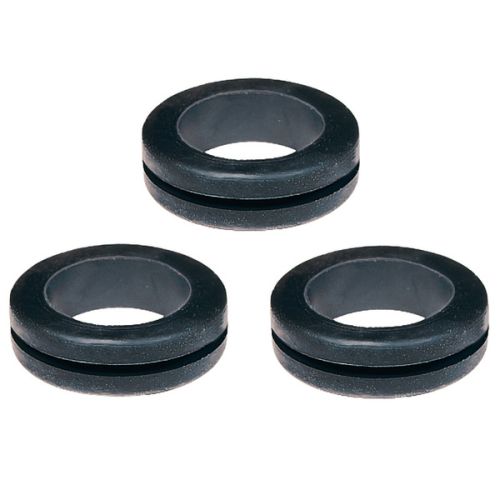
Ses-Sterling 02520095010 DA 110/140/30 BK
| Lieske Part No. | 784249 |
|---|---|
| Mfg Part No | 02520095010 |
| EAN-Code | 3597470017852 |
| Manufacturer | Ses-Sterling |
| Here only | 20,36 EUR
24,23 EUR incl. VAT
|
Further information for Ses-Sterling 02520095010 DA 110/140/30 BK
| General | |
| Colour | Black |
Cable glands are an essential component in cable installations, as they provide mechanical and electrical insulation as well as protection against environmental influences. The material used, polychloroprene rubber, is characterised by high flexibility, weather resistance, and chemical resistance, ensuring long service life and reliable performance even under demanding conditions. The glands are designed for diameters from 110 mm to 140 mm, with a total height of 30 mm. These dimensions enable universal application with various cable diameters and installation scenarios.
Applications include electrical installation, IT infrastructure, industrial automation, as well as the construction of enclosures and distribution boxes. The glands are used to safely guide cables through enclosure walls, simultaneously providing a tight seal to prevent dust, moisture, or mechanical damage. The material properties ensure that the glands maintain their function even at temperatures typical for industrial or technical environments.
Functions and features in detail include precise fit for cable diameters between 110 and 140 mm, ensuring secure and smooth cable guidance. The height of 30 mm provides sufficient insertion length to ensure stable anchoring in the penetration. The black colour is not only aesthetically neutral but also functional, as it allows optical integration into most technical environments. The glands are not equipped with additional components such as cable glands, seals, or mounting aids – they are directly inserted into the designated opening and held securely by form fit.
Technology explained simply means that the glands, due to their elastic properties from polychloroprene rubber, exhibit a self-adjusting effect during installation. The material slightly expands to securely enclose the cable and then retracts to ensure a tight fit. This prevents the glands from slipping and ensures a durable seal. The material selection also ensures high resistance to UV radiation, ozone, and industrial chemicals, making the glands suitable for outdoor use or in production environments.
Compatibility and accessories refer to use in conjunction with other shaped parts from the HELAVIA product group by Ses-Sterling. The glands can be combined with other protective and guiding elements to safely cover complex cable routes. There are no specific accessories directly associated with this type of gland, as it functions as a standalone component. The glands are used in conjunction with cables or conduits that are inserted into the designated opening.
Installation and mounting are carried out by simply inserting the glands into the designated penetration. The elastic nature of the material ensures that the glands adapt to the contour of the opening and provide secure holding. No additional fastening or tools are required. The glands are designed to be easily pushed into the opening and then form a firm, tight fit. Installation is therefore quick and requires no additional effort.
Operational advantages include easy handling, high reliability, and long service life. The glands provide a durable seal that remains intact even under mechanical stress or temperature fluctuations. The material quality ensures high resistance to environmental influences, increasing maintenance-free operation. The glands are thus ideal for applications where secure and tight cable guidance is required, without the need for additional fastening or sealing measures.

This is an offer of:
79279 Vörstetten
https://industry-electronics.com
Tel. 07666/88499-0
Fax. 07666/88499-111
Diesen Artikel finden Sie unter:
industry-electronics.com/artikel/784249

Lieske Elektronik e.K.
Reutener Str. 1079279 Vörstetten
https://industry-electronics.com
Tel. 07666/88499-0
Fax. 07666/88499-111
Diesen Artikel finden Sie unter:
industry-electronics.com/artikel/784249