
Ses-Sterling 02520017010 Helavia DA 60/90/15 black
Installation > Conduits / Cable Glands > Rubber bushings / grommets
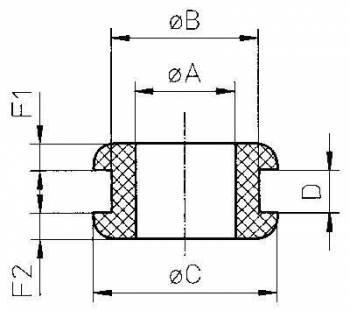
Ses-Sterling 02520017010 Helavia DA 60/90/15 black
| Lieske Part No. | 1313432 |
|---|---|
| Mfg Part No | 02520017010 |
| EAN-Code | 3597470017104 |
| Manufacturer | Ses-Sterling |
| Here only | 11,65 EUR
13,86 EUR incl. VAT
|
Further information for Ses-Sterling 02520017010 Helavia DA 60/90/15 black
| General | |
| Colour | Black |
Gland fittings are specifically designed to protect cables when passing through building components. The Helavia DA 60/90/15 black is listed in the product group Protection > HELAVIA shaped parts made of polychloroprene rubber, indicating the material quality and intended application. Polychloroprene rubber is an elastic, durable material resistant to mechanical stress, chemical influences, and UV radiation. The gland is therefore suitable for use in indoor and outdoor environments, particularly in areas with high requirements for material durability.
Functions and equipment in detail
The gland features a specific geometry that enables secure cable guidance. The designation DA 60/90/15 describes the dimensions: an outer diameter of 60 mm, an inner diameter of 90 mm, and a length of 15 mm. These dimensions are designed for use in standard installations, particularly for passing through wall or ceiling openings with corresponding drill holes. The gland is supplied in a package of 100 pieces, making it suitable for larger installations or series mounting. The weight per piece is 1.1 g, indicating a lightweight yet robust component.
Technology explained clearly
The Helavia DA 60/90/15 black is a rubber gland made of polychloroprene rubber. This material is characterised by high elasticity, resistance to mechanical stress and chemical influences. The gland is inserted into an opening in a component (e.g. wall or ceiling), with the cable passing through the inner diameter (90 mm). The outer shape (60 mm) ensures a secure fit in the component, preventing uncontrolled cable movement. The length of 15 mm allows sufficient anchoring in the opening without requiring excessive depth of installation.
Compatibility and accessories
The gland is designed for use in standard installations and fits into components with a drill hole of approximately 60 mm. It is used in conjunction with cables and lines, particularly in electrical and IT installations. The application typically involves combining it with other protective and guiding elements, such as cable protection conduits or screw clamps, to ensure a complete protection solution. The gland is not specifically designed for particular cable types but is suitable for a wide range of cables, as long as the cable diameter fits within the gland's inner diameter.
Installation and mounting
Installation is carried out by simply inserting the gland into the pre-drilled opening. The elastic structure of the polychloroprene rubber ensures that the gland adapts to the shape of the opening and provides a secure fit. The cable is guided through the inner diameter (90 mm), with the gland providing mechanical protection. Installation requires no additional tools or mounting aids. The gland is suitable for indoor and outdoor use, with the material durability of polychloroprene rubber ensuring a long service life even under demanding conditions.
Advantages in operation
The Helavia DA 60/90/15 black provides reliable protection for cables when passing through building components. The elastic structure of the material ensures a secure fit and prevents mechanical damage. The gland is lightweight yet robust, making installation easier while ensuring high functionality. The packaging of 100 pieces makes it particularly suitable for larger installations where a high number of penetrations are required. The material quality of polychloroprene rubber ensures long service life and resistance to environmental influences.

This is an offer of:
79279 Vörstetten
https://industry-electronics.com
Tel. 07666/88499-0
Fax. 07666/88499-111
Diesen Artikel finden Sie unter:
industry-electronics.com/artikel/1313432

Lieske Elektronik e.K.
Reutener Str. 1079279 Vörstetten
https://industry-electronics.com
Tel. 07666/88499-0
Fax. 07666/88499-111
Diesen Artikel finden Sie unter:
industry-electronics.com/artikel/1313432