
Ses-Sterling 02520007010 DA 40/80/10 BK
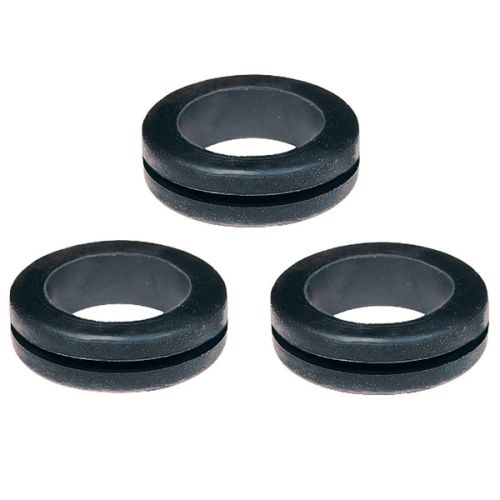
Ses-Sterling 02520007010 DA 40/80/10 BK
| Lieske Part No. | 784180 |
|---|---|
| Mfg Part No | 02520007010 |
| EAN-Code | 3597470017012 |
| Manufacturer | Ses-Sterling |
| Here only | 8,67 EUR
10,32 EUR incl. VAT
|
Further information for Ses-Sterling 02520007010 DA 40/80/10 BK
| General | |
| Colour | Black |
Applications
The DA 40/80/10 cable gland is used in installations requiring mechanical and electrical protection. This includes, for example, machine construction, electrical installations, enclosures or cabling systems where a tight and strain-resistant cable guidance through enclosure walls is required. The gland protects cables from mechanical stresses such as friction or pressure, and prevents dust, moisture or other environmental influences from entering the protected area. Due to its material composition, it is also suitable for applications requiring a certain level of chemical resistance.
Functions and Equipment in Detail
The gland is designed as a flat, ring-shaped component that is inserted into a pre-defined opening. The inner side is shaped to securely enclose cables with a diameter between 40 mm and 80 mm. The total height of 10 mm enables a shallow installation, which is advantageous in many installation scenarios. The black colour is standard and blends well into most technical environments. The gland is supplied in a pack of 100 pieces, making it suitable for large-scale installations or series mounting.
Technology Explained Simply
The material polychloroprene rubber (PCP) is a synthetic elastomer characterised by high elasticity, weather resistance and chemical resistance. It is commonly used in the electrical and machine industry to protect cables and conduits against mechanical and chemical influences. The gland itself serves as mechanical and electrical protection by creating a tight fit between cable and enclosure wall. The design ensures that the cable is not damaged, while simultaneously being protected from environmental influences. The gland is not self-adhesive, but is installed by mechanical pressing or with the help of mounting aids into the opening.
Compatibility and Accessories
The DA 40/80/10 cable gland is designed for cables with a diameter of 40 mm to 80 mm. It is part of the HELAVIA product line from Ses-Sterling, which includes various form parts for protection applications. The gland is used in conjunction with suitable enclosures, enclosures or wall openings, where the hole in the enclosure must have an appropriate size to securely insert the gland.
Installation and Mounting
Installation is carried out by inserting the gland into a pre-drilled hole in the enclosure. The hole should have a diameter matching the outer diameter of the gland to ensure a secure fit. The gland is pressed into the opening, where the material elastically adapts and creates a tight fit. Cables are then routed through the inner side of the gland. Additional fastening, such as screws or adhesive, is not required, as the elastic design of the gland is sufficient to ensure a secure and tight connection.
Advantages in Operation
The DA 40/80/10 cable gland offers a reliable and durable solution for protecting cables in technical installations. The material quality ensures a long service life, even under stress from temperature fluctuations, mechanical loads or chemical influences. The simple installation and high precision fit reduce installation time and increase the reliability of the installation. The gland is available in a pack of 100 pieces, making it particularly economically attractive for series applications. The black colour ensures discreet integration into technical environments.

This is an offer of:
79279 Vörstetten
https://industry-electronics.com
Tel. 07666/88499-0
Fax. 07666/88499-111
Diesen Artikel finden Sie unter:
industry-electronics.com/artikel/784180

Lieske Elektronik e.K.
Reutener Str. 1079279 Vörstetten
https://industry-electronics.com
Tel. 07666/88499-0
Fax. 07666/88499-111
Diesen Artikel finden Sie unter:
industry-electronics.com/artikel/784180