
Ses-Sterling 02100053003 Helavia A1bis GN
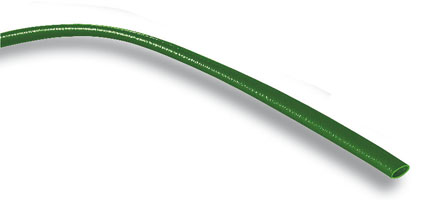
Ses-Sterling 02100053003 Helavia A1bis GN
| Lieske Part No. | 783460 |
|---|---|
| Mfg Part No | 02100053003 |
| EAN-Code | 3597470013915 |
| Manufacturer | Ses-Sterling |
| Here only | 140,65 EUR
167,37 EUR incl. VAT
|
Further information for Ses-Sterling 02100053003 Helavia A1bis GN
| General | |
| Colour | Green |
Applications
The hose is suitable for use in industrial, commercial and technical installations where mechanical protection for cables and lines is required. It can be used, for example, for laying control lines, data cables or signal connections, particularly in environments where a certain degree of movement or flexibility of the lines is necessary. Use indoors is typical, with specific environmental conditions such as temperature, humidity or mechanical stress determining suitability. The green colour supports assignment to specific cable types or systems according to internal or industry-standard labelling rules.
Functions and Equipment in Detail
The Helavia A1bis hose features an elastic structure that allows easy installation and adaptation to different diameters. The elastic property ensures that the hose can be easily pulled over cables or lines, providing secure guidance. The green colour is consistent throughout the entire length of the packaging, enabling uniform visual identification. The packaging contains 100 metres of hose, which is sufficient for larger projects or longer laying distances. The stated weight of 10 grams per metre serves as a reference value for transport and storage planning, without directly indicating the mechanical properties or load capacity of the hose.
Technology Explained Simply
The hose is made of an elastic elastomer designed for high flexibility and resistance to mechanical stress. The elastic structure allows the hose to be pulled over cables without damaging them. The green colour is not only aesthetic but also serves visual differentiation in technical operation. The packaging length of 100 metres provides sufficient quantity for typical installations, with the exact length varying according to project requirements. The weight of 10 g per metre is a technical specification that can be considered during transport and installation planning.
Compatibility and Accessories
The Helavia A1bis hose is suitable for use with cables and lines of various diameters, with the elastic structure enabling adaptation to different cross-sections. It is not specifically designed for a particular cable type or standard, but serves as a universal protective hose. Use in combination with other protection systems, such as cable protection conduits or cable ducts, is possible, provided mechanical and geometric requirements are met. There are no specific accessories designated by the manufacturer as mandatory or recommended.
Installation and Mounting
Installation is performed by simply sliding the hose over the cables or lines to be protected. The elastic structure allows easy handling, with the packaging length (100 metres) enabling continuous laying over long distances. Installation does not require special tools or aids, as the hose can be used without additional fastening elements. The green colour facilitates identification during and after installation, particularly in complex installations with multiple cable types.
Operational Advantages
The hose provides reliable mechanical protection for cables and lines, thereby extending the service life of the installed components. The elastic structure ensures easy installation and adaptation to different diameters, accelerating the installation process. The green colour supports visual identification and simplifies maintenance and inspection during operation. The packaging length of 100 metres provides sufficient quantity for typical projects, avoiding additional cutting or connection operations. The low weight of 10 g per metre reduces transport effort and storage load.

This is an offer of:
79279 Vörstetten
https://industry-electronics.com
Tel. 07666/88499-0
Fax. 07666/88499-111
Diesen Artikel finden Sie unter:
industry-electronics.com/artikel/783460

Lieske Elektronik e.K.
Reutener Str. 1079279 Vörstetten
https://industry-electronics.com
Tel. 07666/88499-0
Fax. 07666/88499-111
Diesen Artikel finden Sie unter:
industry-electronics.com/artikel/783460