
Samsung MZQL215THBLA-00A07 SSD PM9A3 U.2 NVMe 15.36TB
Computer-Components > Hard Drives > SSD PCIe
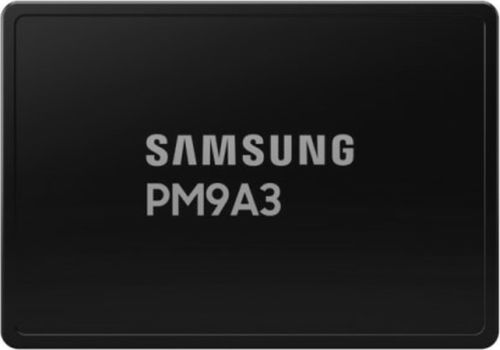
Samsung MZQL215THBLA-00A07 SSD PM9A3 U.2 NVMe 15.36TB
| Lieske Part No. | 2519370 |
|---|---|
| Mfg Part No | MZQL215THBLA-00A07 |
| EAN-Code | |
| Manufacturer | Samsung |
| Here only | 7.765,20 EUR
9.240,59 EUR incl. VAT
|
Further information for Samsung MZQL215THBLA-00A07 SSD PM9A3 U.2 NVMe 15.36TB
| Features | |
| NVMe version | 1.4 |
| SSD capacity | 15 TB |
| SSD form factor | 2.5" |
| Interface | PCI Express 4.0 |
| Memory type | V-NAND TLC |
| Component for | Server/workstation |
| Read speed | 6900 MB/s |
| Random write (4KB) | 200000 IOPS |
| NVMe | |
| Hardware encryption | |
Applications
The SSD is primarily intended for server and workstation environments where high data throughput rates and a high number of I/O operations per second are required. The high storage capacity of 15 TB makes it particularly suitable for applications processing large data volumes, such as databases, virtualization environments, or large file servers. The support for 1DWPD (1 Drive Write Per Day) throughout the warranty period indicates that the SSD is designed for continuous, intensive use.
Features and Specifications in Detail
The SSD features hardware encryption based on AES-XTS 256-bit, ensuring secure data processing. The encryption is performed at the hardware level, meaning data is encrypted during writing and does not impose additional software load on the host system. Additionally, the SSD is equipped with Enhanced Power-Loss Data Protection, ensuring no data loss occurs in the event of a sudden power failure by safely storing temporary data in a protected memory area.
Technology Explained Simply
The PCI Express 4.0 x4 interface enables high bandwidth, necessary for processing large data volumes in a short time. The NVMe interface (Non-Volatile Memory Express) was specifically developed for SSDs and leverages the parallel processing capability of modern storage media to minimize latency and maximize I/O performance. The V-NAND TLC technology offers high storage density, where TLC (Triple-Level Cell) means each memory cell stores three bits, increasing storage capacity, although this results in fewer write cycles per cell compared to MLC or SLC. However, the lifespan is sufficiently secured through specific architecture and power-loss protection features.
Compatibility and Accessories
The SSD is available in the 6,3 cm ( 2,5 inch ) form factor and can be installed in standard server and workstation systems with corresponding U.2 or NVMe slots. Compatibility with PCIe 4.0 systems is ensured, although maximum performance is only achieved with supporting motherboards and systems. The SSD is part of the PM9A3 series, which is also available in other form factors such as E1.S and M.2; however, the variant described here is exclusively available in the 6,3 cm ( 2,5 inch ) format.
t
Installation and Mounting
Installation takes place in a suitable 6,3 cm ( 2,5 inch ) drive bay, where the SSD is connected to the system via the U.2 interface. Physical mounting is done using screws or a mounting mechanism provided in the respective server or system. The SSD requires no additional drivers or software, as the NVMe interface is standardized and supported by modern operating systems.
Operational Advantages
The SSD offers a high read speed of up to 5,200 MB/s and a write speed of up to 4,000 MB/s, ensuring fast data access. The random read and write operations (4KB) reach up to 850,000 IOPS (read) and 160,000 IOPS (write), providing high I/O performance in data-intensive applications. The 5-year manufacturer warranty with a TBW (Terabytes Written) of 28,032 TB and a workload of 1 DWPD (Drive Write Per Day) demonstrates the high reliability and lifespan of the SSD. The combination of high speed, high I/O performance, and integrated hardware encryption makes the SSD a powerful component for professional IT infrastructures.

This is an offer of:
79279 Vörstetten
https://industry-electronics.com
Tel. 07666/88499-0
Fax. 07666/88499-111
Diesen Artikel finden Sie unter:
industry-electronics.com/artikel/2519370

Lieske Elektronik e.K.
Reutener Str. 1079279 Vörstetten
https://industry-electronics.com
Tel. 07666/88499-0
Fax. 07666/88499-111
Diesen Artikel finden Sie unter:
industry-electronics.com/artikel/2519370