
Rittal 9686538 SV PE/PEN busbar 30x10 mm 700 mm
Industrial Material > Enclosures / Chassis > Power distribution components
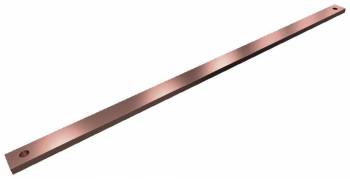
Rittal 9686538 SV PE/PEN busbar 30x10 mm 700 mm
| Lieske Part No. | 1989027 |
|---|---|
| Mfg Part No | 9686538 |
| EAN-Code | 4028177934764 |
| Manufacturer | Rittal |
| Here only | 135,97 EUR
161,80 EUR incl. VAT
|
Further information for Rittal 9686538 SV PE/PEN busbar 30x10 mm 700 mm
| General | |
| Material | E-Cu |
| Ø hole size | 11,5 mm |
| Length | 700 mm |
| Suitable for | Width: = 800 mm |
| Cross section | 30 mm x 10 mm |
| Copper content (kg/piece) | 1,86 |
Applications
The busbar is designed for enclosures with a width of 800 mm or greater. It is used in industrial electrical installations, distributors, and enclosures where a reliable and conductive connection for the protective earth conductor is required. The use of E-Cu ensures high electrical conductivity and mechanical stability, which is crucial for the safety and reliability of the installation.
Functions and Equipment in Detail
The PE/PEN busbar features a uniform cross-sectional area of 30 mm x 10 mm, ensuring sufficient current-carrying capacity and thermal stability. The integrated perforations with a diameter of 11.5 mm allow for direct and secure connection of cables and conductors without additional mounting aids. The length of 700 mm is designed for standard enclosure widths and allows for flexible positioning within the enclosure.
Technology Explained Simply
The designation E-Cu stands for electrolytic copper, a high-purity copper with excellent electrical conductivity and mechanical strength. This material is commonly used in electrical engineering for conductors and busbars, as it offers high reliability and longevity. The integrated perforations reduce installation time and increase safety by ensuring precise and secure connections. The busbar is designed for use in enclosures with a width of at least 800 mm, making it suitable for many industrial applications.
Compatibility and Accessories
The busbar is specifically designed for use in enclosures of type VX from Rittal. As compatible accessories, a PE/PEN mounting bracket for VX 9686350 is offered, enabling secure fixation of the busbar within the enclosure. Additionally, a SV PE/PEN baying strip E-Cu, W x H: 30x10 mm, L: 180 mm is available, suitable for extending or connecting multiple busbars. These components enable flexible and modular design of enclosure installations.
Installation and Mounting
Mounting is carried out by securing the busbar to the designated mounting points within the enclosure, using the integrated perforations for connection terminals. The use of suitable mounting brackets or baying strips facilitates installation and ensures stable positioning. The busbar is designed for use in enclosures with a width of 800 mm or greater, providing universal applicability in many industrial environments.
Operational Advantages
The use of a PE/PEN busbar made of E-Cu ensures high electrical conductivity and mechanical stability, increasing the safety and reliability of the entire installation. The integrated perforations reduce installation time and minimize error sources during installation. The busbar is suitable for use in enclosures according to DIN EN 13 601, ensuring compliance with European standards. The packaging unit includes 2 pcs, which is advantageous for larger installations or replacement needs.
The busbar is equipped with a copper content of 1.86 kg per piece, highlighting the material quality and performance. The use of E-Cu ensures long service life and high reliability in industrial applications. The busbar is designed for use in enclosures with a width of 800 mm or greater, making it suitable for many industrial applications. The integrated perforations with a diameter of 11.5 mm enable secure and easy connection of cables and conductors.

This is an offer of:
79279 Vörstetten
https://industry-electronics.com
Tel. 07666/88499-0
Fax. 07666/88499-111
Diesen Artikel finden Sie unter:
industry-electronics.com/artikel/1989027

Lieske Elektronik e.K.
Reutener Str. 1079279 Vörstetten
https://industry-electronics.com
Tel. 07666/88499-0
Fax. 07666/88499-111
Diesen Artikel finden Sie unter:
industry-electronics.com/artikel/1989027