
Rittal 9685006 busbar E-Cu tinned perforated 50×10 mm 585 mm
Industrial Material > Enclosures / Chassis > Power distribution components
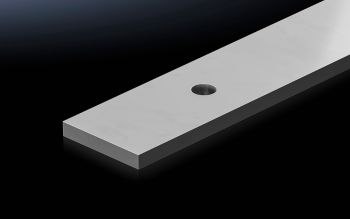
Rittal 9685006 busbar E-Cu tinned perforated 50×10 mm 585 mm
| Lieske Part No. | 895303 |
|---|---|
| Mfg Part No | 9685006 |
| EAN-Code | 4069196000788 |
| Manufacturer | Rittal |
| Here only | 85,93 EUR
102,26 EUR incl. VAT
|
Further information for Rittal 9685006 busbar E-Cu tinned perforated 50×10 mm 585 mm
| General | |
| Material | E-Cu, tinned |
| Cross section | 50 mm x 10 mm |
| Hole diameter | 11,5 mm |
| Width | 50 mm |
| Height | 10 mm |
| Length | 585 mm |
| Copper content (kg/piece) | 2,6 |
Busbar
The busbar is made of electrolytic copper (E-Cu), a material with high electrical conductivity and mechanical strength, widely used in industrial electrical engineering. The tinning of the surface improves contact quality and protects the copper surface from oxidation, increasing the busbar's lifespan and reliability. The integrated perforations with a diameter of 11.5 mm allow for easy mounting and fastening of screws or terminals, enabling flexible use in various enclosure configurations.
Applications
The busbar is intended for use in industrial enclosures, distribution boxes, and power distribution systems. It is commonly used in electrical installations, machine and plant construction, as well as in automation technology, where reliable and conductive power distribution is required. The dimensions of 50 mm width, 10 mm height, and 585 mm length conform to common standards and allow integration into standard enclosure constructions.
Functions and Equipment in Detail
The integrated perforations with a diameter of 11.5 mm are evenly spaced and allow for secure fastening of terminals, screws, or other connection elements. The tinning of the surface ensures good electrical conductivity and prevents oxidation, which is particularly beneficial in humid or corrosive environments.
Technology Explained Simply
The use of E-Cu as material ensures high electrical conductivity, meaning the resistance of the busbar is low, thus minimizing losses during power transmission. The tinning protects the copper surface from corrosion and ensures a stable electrical contact, even during frequent mounting and dismounting operations. The integrated perforations simplify installation, as no additional drilling is required, reducing installation time and minimizing the risk of material damage.
Compatibility and Accessories
The busbar is compatible with standard enclosure components and can be combined with various terminals, screw connections, and other power distribution elements. It is designed for use in enclosures constructed according to common standards. The exact compatibility with specific accessories is not specified, but the dimensions conform to common industrial standards.
Mounting and Installation
Mounting is done by fastening to suitable brackets or enclosure walls using the integrated perforations. The busbar can be secured with screws or terminals, with the perforations having a diameter of 11.5 mm. Installation does not require additional drilling, as the perforations are pre-drilled. The busbar is designed for fixed mounting to withstand vibrations and mechanical loads during operation.
Operational Advantages
The use of a tinned E-Cu busbar offers high electrical conductivity, long service life, and easy installation. The integrated perforations reduce installation time and increase installation safety. The busbar is designed for use in industrial environments where reliability and ease of maintenance are important. The material quality and tinning ensure a stable electrical connection even under demanding operating conditions.
The busbar has a net weight of 2.5 kg and a gross weight of 2.608 kg. The copper content is 2.6 kg per piece. The packaging unit includes a single piece. The tariff code is 74071000. The busbar is UL- and C-UL-certified, confirming compliance with safety standards in the USA and Canada.
Approvals
The busbar is approved with UL and C-UL (listed) certifications, confirming compliance with safety requirements in the USA and Canada. These approvals are relevant for use in industrial and commercial installations where compliance with safety standards is required.
Material and Construction
The busbar is made of electrolytic copper (E-Cu), a material with high purity, known for its high electrical conductivity and mechanical strength. The tinning of the surface protects the copper from corrosion and improves contact quality. The dimensions of 50 mm width, 10 mm height, and 585 mm length are designed for standard applications in electrical engineering. The integrated perforations with a diameter of 11.5 mm allow for flexible mounting and fastening.

This is an offer of:
79279 Vörstetten
https://industry-electronics.com
Tel. 07666/88499-0
Fax. 07666/88499-111
Diesen Artikel finden Sie unter:
industry-electronics.com/artikel/895303

Lieske Elektronik e.K.
Reutener Str. 1079279 Vörstetten
https://industry-electronics.com
Tel. 07666/88499-0
Fax. 07666/88499-111
Diesen Artikel finden Sie unter:
industry-electronics.com/artikel/895303