
Rittal 9666707 SV 9666707 mounting profile 7 HE
Industrial Material > Enclosures / Chassis > Power distribution components
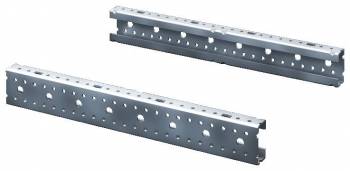
Rittal 9666707 SV 9666707 mounting profile 7 HE
| Lieske Part No. | 1134315 |
|---|---|
| Mfg Part No | 9666707 |
| EAN-Code | 4028177691537 |
| Manufacturer | Rittal |
| Here only | 20,70 EUR
24,63 EUR incl. VAT
|
Further information for Rittal 9666707 SV 9666707 mounting profile 7 HE
| General | |
| Material | steel sheet |
| Surface protection | Zinc-plated |
| Height | 1.050 mm |
| Construction size | Height units (HE) at 150 mm: 7 |
| PCF/VE (Cradle-to-Gate) | 9.4 kg CO2 eq (Cat B) |
| Note on PCF class | Category B: PCF value (Cradle-to-Gate) approximately calculated based on product weight and self-declared |
Applications
This mounting profile serves to structurally divide the interior of the enclosure, ensuring an orderly installation of modules, switching devices, or other components. It is particularly used in enclosures from the Rittal TS, SE, and VX series, where clear separation of mounting levels is required. Typical applications include industrial electrical engineering, installation of control and distribution systems, and automation technology.
Functions and Features in Detail
The profile is designed as ISV (Installation Support Vertical) and enables vertical mounting of devices or mounting plates within the enclosure. It is inserted into the frame rail to divide the mounting surface into multiple sections. The zinc-coated surface provides enhanced resistance to environmental influences, especially in damp or slightly corrosive environments. The precise fit to the standard dimensions of Rittal enclosure series ensures secure and smooth installation.
Technical Explanation
The mounting profile is made of sheet steel, which receives a protective layer through zinc coating to prevent rust formation. The height of 1,050 mm corresponds exactly to 7 HE, where one HE equals 150 mm — the standard unit in enclosure technology. The designation ISV refers to vertical mounting support inserted into the frame rail to fix devices or mounting plates at defined heights. The packaging unit includes two identical profiles, which is advantageous when planning enclosure builds with multiple partitions.
Compatibility and Accessories
The profile is specifically designed for the TS, SE, and VX enclosure series and conforms to the standard dimensions of these series. As a compatible accessory, the SV 9666740 connector (ISV) 1=4 device carrier for mounting profile for TS SE is available, enabling expanded mounting capacity. Combining this connector with the profile allows mounting multiple devices on a single profile, increasing installation efficiency.
Mounting and Installation
Installation is performed by inserting the profile into the designated frame rail of the enclosure. Vertical alignment is ensured by the precise fit. No additional fastening is required, as the profile is held securely by the shape of the frame rail. Installation is tool-free, and the zinc coating supports mechanical stability and long-term durability.
Operational Advantages
The clear partitioning of the enclosure interior by the mounting profile improves the clarity and maintainability of installed components. The standardized height of 7 HE enables easy planning and integration into existing enclosure configurations. The zinc-coated surface ensures longer service life, especially in environments with increased humidity or low corrosion exposure. The packaging unit with two pieces simplifies planning for enclosures with multiple partitions.
PCF Value and Environmental Information
The product category footprint (PCF) is 9.4 kg CO2 equivalents per packaging unit (Cradle-to-Gate). This value is classified in category B and is based on product weight, with the calculation being approximate and self-declared. The information serves to provide transparency regarding environmental impact throughout the product lifecycle up to completion.

This is an offer of:
79279 Vörstetten
https://industry-electronics.com
Tel. 07666/88499-0
Fax. 07666/88499-111
Diesen Artikel finden Sie unter:
industry-electronics.com/artikel/1134315

Lieske Elektronik e.K.
Reutener Str. 1079279 Vörstetten
https://industry-electronics.com
Tel. 07666/88499-0
Fax. 07666/88499-111
Diesen Artikel finden Sie unter:
industry-electronics.com/artikel/1134315