
Rittal 9650330 connection plate for laminated copper bars
Industrial Material > Enclosures / Chassis > Power distribution components
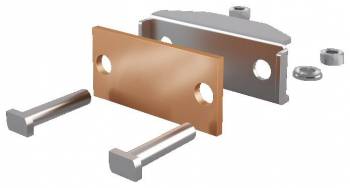
Rittal 9650330 connection plate for laminated copper bars
| Lieske Part No. | 1013496 |
|---|---|
| Mfg Part No | 9650330 |
| EAN-Code | 4028177239517 |
| Manufacturer | Rittal |
| Here only | 58,48 EUR
69,59 EUR incl. VAT
|
Further information for Rittal 9650330 connection plate for laminated copper bars
| General | |
| Material | Connection plate: E-Cu, pressure part: stainless steel |
| Scope of delivery | Including mounting hardware |
| Suitable for busbars | Maxi-PLS 60 |
| Terminal space for laminated copper busbars (B x H) | 32 x 20 mm |
| Copper content (kg/piece) | 0,13 |
Applications
The connection plate is used in industrial electrical engineering, particularly in enclosures, distribution boxes, and power supply systems where laminated copper busbars serve as main conductors. It is suitable for applications requiring a secure and durable connection between busbars and other components, for example, when mounting fuses, power switches, or other switching devices. The connection plate is typically used in the installation of power distribution components, where the busbars are connected to devices via the connection plate.
Functions and Equipment in Detail
The connection plate features a clamp space with dimensions 32 mm (width) × 20 mm (height), specifically designed for laminated copper busbars. This clamp space allows secure fastening of busbars in the Maxi-PLS 60 format, with busbars having a maximum thickness of 10 mm and a width of 32 mm. The connection plate is made of E-Cu (electro-copper), a highly conductive material preferred in electrical engineering for its electrical and mechanical properties. The pressure piece is made of stainless steel, ensuring high corrosion resistance and mechanical strength. The combination of copper and stainless steel ensures a reliable electrical connection and mechanical stability under load.
Technology Explained Simply
The connection plate functions as a mechanical and electrical transition between the laminated copper busbar and the connected device. The copper plate ensures low transition resistance, which is important for efficient current transmission. The stainless steel pressure piece securely presses the busbar into the clamp space, creating a firm connection. The use of E-Cu ensures high electrical conductivity, while stainless steel guarantees mechanical load capacity and long-term stability. The connection plate is dimensioned to securely hold the busbars without loosening or loss of contact.
Compatibility and Accessories
The connection plate is specifically designed for Maxi-PLS 60 busbar systems, commonly used in industrial electrical engineering. It is compatible with laminated copper busbars in the format 2x10x32x1 mm, indicating a maximum busbar thickness of 10 mm and a width of 32 mm. The connection plate is supplied with fastening material required for mounting in the enclosure. This material enables secure attachment of the connection plate to the enclosure wall or other mounting surfaces.
t
Mounting and Installation
Mounting is done by securing the connection plate at the desired location in the enclosure, for example, on the wall or on a mounting profile. Then, the laminated copper busbar is inserted into the clamp space and secured with the stainless steel pressure piece. Fastening is done using the included material, with the exact mounting method depending on the specific enclosure construction. The connection plate is designed to allow easy and quick installation without requiring additional tools or materials.
Advantages in Operation
The connection plate provides a reliable and durable connection for laminated copper busbars, which are exposed to high electrical and mechanical loads in industrial installations. The use of E-Cu and stainless steel ensures high conductivity and corrosion resistance, extending the service life of the connection plate. The integrated fastening enables quick and secure installation, reducing installation time. The connection plate is designed for use in power distribution systems, where stable and secure power distribution is critical.

This is an offer of:
79279 Vörstetten
https://industry-electronics.com
Tel. 07666/88499-0
Fax. 07666/88499-111
Diesen Artikel finden Sie unter:
industry-electronics.com/artikel/1013496

Lieske Elektronik e.K.
Reutener Str. 1079279 Vörstetten
https://industry-electronics.com
Tel. 07666/88499-0
Fax. 07666/88499-111
Diesen Artikel finden Sie unter:
industry-electronics.com/artikel/1013496