
Rittal 8660082 base panel side H 200 mm
Industrial Material > Enclosures / Chassis > System Accessories
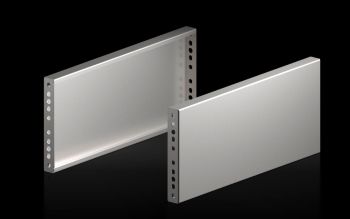
Rittal 8660082 base panel side H 200 mm
| Lieske Part No. | 877371 |
|---|---|
| Mfg Part No | 8660082 |
| EAN-Code | 4028177037762 |
| Manufacturer | Rittal |
| Here only | 138,51 EUR
164,83 EUR incl. VAT
|
Further information for Rittal 8660082 base panel side H 200 mm
| General | |
| Material | Stainless steel 1.4301 (AISI 304) |
| Surface protection | Linear grind, grit 400 |
| Scope of delivery | Including mounting hardware |
| Note | Components of the 1st generation of the socket system cannot be combined with components of the 2nd generation of the socket system. |
| Height | 200 mm |
| Suitable for | Cabinet type: VX, VX SE, TS, PC, Depth: = 600 mm |
| Type rating according to UL 50E | Type 1, Type 3R, Type 4, Type 4X, Type 12 |
Applications
The plinth trim panel is used in industrial environments where an aesthetic and functional finishing cover on the sides of enclosures or cabinets is required. It is particularly used in installations with high requirements for corrosion resistance and mechanical durability, as stainless steel 1.4301 offers high resistance to moisture, salt spray, and chemical influences. Its use in combination with plinth systems enables modular and flexible cabinet design, especially in production environments where a clean and professional appearance is important.
Functions and Equipment in Detail
The panel primarily serves as a side closure for a plinth unit, preventing dust, moisture, or foreign objects from entering along the side edges. The use of stainless steel 1.4301 ensures high corrosion resistance and long service life, even under harsh operating conditions. The surface treatment with brushed finish, grit 400, provides an even, slightly textured appearance that integrates well in industrial environments.
Technology Explained Simply
The plinth trim panel is made of stainless steel 1.4301 (AISI 304), a non-rusting steel widely used in industry, especially in environments with high humidity or aggressive chemicals. The brushed surface (grit 400) is a mechanical finish that creates an even, slightly textured surface, which is both visually appealing and easy to clean. The height of 200 mm is matched to standard plinth system heights to ensure a precise fit. The panel is designed for a depth of 600 mm, making it suitable for a wide range of standard enclosure sizes.
Compatibility and Accessories
The panel is compatible with enclosure types VX, VX SE, TS and PC, provided the depth is 600 mm. Components of the 1st generation plinth system cannot be combined with those of the 2nd generation, which must be considered during planning and component selection. The type rating according to UL 50E includes categories Type 1, Type 3R, Type 4, Type 4X and Type 12, indicating a high protection class, particularly regarding protection against dust, water, and mechanical impacts. These certifications make the panel suitable for use in indoor and outdoor environments, especially in settings with increased environmental requirements.
Installation and Mounting
Mounting is carried out on the sides of the plinth unit using the included fastening material. The panel is secured at the designated mounting points to ensure a secure and tight connection. Installation is simple and typically requires no additional tools.
Operational Advantages
Using the plinth trim panel improves the aesthetic appearance of enclosures and prevents environmental contaminants from entering along the side edges. The corrosion resistance of stainless steel ensures long service life, even under harsh operating conditions. The standardized fit for enclosures with 600 mm depth enables easy integration into existing systems. The certifications according to UL 50E ensure a high protection class, increasing operational safety in various industrial environments. The simple installation and included fastening material reduce installation effort and the need for additional components.

This is an offer of:
79279 Vörstetten
https://industry-electronics.com
Tel. 07666/88499-0
Fax. 07666/88499-111
Diesen Artikel finden Sie unter:
industry-electronics.com/artikel/877371

Lieske Elektronik e.K.
Reutener Str. 1079279 Vörstetten
https://industry-electronics.com
Tel. 07666/88499-0
Fax. 07666/88499-111
Diesen Artikel finden Sie unter:
industry-electronics.com/artikel/877371