
Rittal 8619410 VX 8619.410 cable retention strip angle profile 600 mm
Industrial Material > Enclosures / Chassis > System Accessories
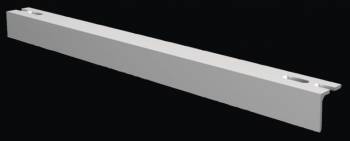
Rittal 8619410 VX 8619.410 cable retention strip angle profile 600 mm
| Lieske Part No. | 1441180 |
|---|---|
| Mfg Part No | 8619410 |
| EAN-Code | 4028177921931 |
| Manufacturer | Rittal |
| Here only | 33,81 EUR
40,23 EUR incl. VAT
|
Further information for Rittal 8619410 VX 8619.410 cable retention strip angle profile 600 mm
| General | |
| Material | Steel |
| Surface protection | Zinc-plated |
| Scope of delivery | Including mounting hardware |
| Mounting options VX | In cabinet width 600 mm, on floor |
| Mounting options VX SE | In cabinet width 600 mm, on floor |
| Mounting options AX | In enclosure width 600 mm, in combination with the AX internal mounting rail and AX floor mounting rail |
| Mounting options AX stainless steel | In housing width 600 mm in combination with the rail for interior construction with floor construction rail |
| PC mounting options | In cabinet width 600 mm, on floor |
| Installation options IW | In cabinet width 600 mm, on floor |
| Mounting options VX socket | In base width/depth 600 mm, in combination with retention/distance piece |
| Mounting options VX socket, stainless steel | In socket width 600 mm, in combination with a mother M8 |
| Installation options AX socket | In socket width 600 mm |
| Suitable for | Socket system AX, Socket system VX, Socket system VX, Stainless steel |
| Length | 554 mm |
| Suitable for width | = 600 mm |
Applications
The cable strain relief rail is used in various Rittal systems, including VX, VX SE, AX, PC, IW, as well as in plinth systems such as VX plinth, AX plinth, and VX plinth stainless steel. It is particularly suitable for enclosures and console sub-assemblies where secure and orderly cable guidance at the base or within the horizontal enclosure profile is required. The depth-variable mounting allows optimal adaptation to the respective enclosure depth, minimizing cable stress and ensuring proper cabling.
Functions and Equipment in Detail
The rail primarily serves tension relief, reducing mechanical stress on cables and connection points. This extends cable lifespan and prevents damage caused by pulling or torsion. The angle profile geometry enables stable mounting and efficient cable guidance into the enclosure depth. The rail length is 554 mm, sufficient for the standard width of 600 mm to ensure secure fastening along the entire enclosure width.
Technology Explained Simply
The depth-variable mounting on a 25 mm grid means the rail can be mounted at various positions along the enclosure depth, with spacing in multiples of 25 mm. This allows precise adaptation to the specific installation. The galvanized steel surface provides high protection against corrosion, especially in humid or aggressive environments, which is typical for industrial applications.
Compatibility and Accessories
The cable strain relief rail is compatible with various Rittal systems, including VX, VX SE, AX, PC, IW, as well as plinth systems such as VX plinth, AX plinth, and VX plinth stainless steel. As suitable accessories, the VX plinth expansion angle plinth trim panel in heights of 100 mm and 200 mm is offered, enabling additional coverage of cable routing.
Mounting and Installation
Mounting is performed on the horizontal enclosure profile or in the plinth area, with depth-variable fastening on a 25 mm grid allowing flexible adaptation to the respective enclosure depth. The rail is fastened using the mounting material included in the delivery scope.
Operational Advantages
The cable strain relief rail ensures secure and orderly cable routing, reducing mechanical stress on cables. This leads to increased system reliability and extended cable lifespan. The depth-variable mounting and compatibility with various Rittal systems enhance installation flexibility and simplify integration into existing enclosure configurations. The galvanized steel surface ensures high resistance to corrosion, securing the product’s long-term stability in industrial environments.

This is an offer of:
79279 Vörstetten
https://industry-electronics.com
Tel. 07666/88499-0
Fax. 07666/88499-111
Diesen Artikel finden Sie unter:
industry-electronics.com/artikel/1441180

Lieske Elektronik e.K.
Reutener Str. 1079279 Vörstetten
https://industry-electronics.com
Tel. 07666/88499-0
Fax. 07666/88499-111
Diesen Artikel finden Sie unter:
industry-electronics.com/artikel/1441180