
Rittal 7010150 differential pressure sensor housing RAL 7035
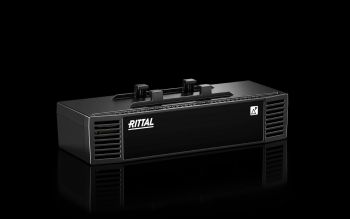
Rittal 7010150 differential pressure sensor housing RAL 7035
| Lieske Part No. | 1028162 |
|---|---|
| Mfg Part No | 7010150 |
| EAN-Code | 4069196000702 |
| Manufacturer | Rittal |
| Here only | 259,23 EUR
308,48 EUR incl. VAT
|
Further information for Rittal 7010150 differential pressure sensor housing RAL 7035
| General | |
| Model | Differential pressure sensor |
| Applications | Monitoring of cabinets in IT, industry and building technology. Monitoring of cabinets, rooms and containers in IT environment. |
| Function principle | Settings can be made via the CMC III Processing Unit, the PDU or via the IoT Interface. The differential pressure sensor measures air pressure at two points in the room and displays the pressure difference between the measurement points. The two points in the room are defined using a thin tube connected to the sensor. |
| Material | Plastic |
| Surface protection | Front: smooth, Housing: textured |
| Colour | RAL 9005 |
| Scope of delivery | Sensor, mounting plate, including fastening material |
| Connection to CAN bus | Direct |
| Interfaces | 2 x RJ45 CAN-bus |
| Width | 110 mm |
| Height | 30 mm |
| Depth | 40 mm |
| Operating temperature range | 0 °C...45 °C |
| Humidity (non-condensing) | 0...95 % |
Applications
The sensor is primarily used for monitoring enclosures in IT infrastructures, industrial plants and building technology. It is suitable for detecting pressure differences within enclosure rows or in containers, which is relevant for example when monitoring ventilation or climate control concepts. The application is in environments where continuous monitoring of air pressure conditions is required to ensure the functionality of cooling or ventilation systems.
Functions and Equipment in Detail
The differential pressure sensor measures air pressure at two defined points and displays the difference between them. The measurement points are defined via a thin hose connected to the sensor. Settings can be made via the CMC III Processing Unit, the PDU or via the IoT Interface. The interfaces consist of two RJ45 connectors for the CAN-Bus, enabling direct and flexible integration into existing systems. Automatic detection and quick connection are achieved via Plug & Play, simplifying commissioning.
Technology Explained Simply
The technology is based on measuring air pressure at two points in the space, with the difference between these points being output as the measurement value. Power supply is via the CAN-Bus interface, simplifying installation as no additional power supply is required. Communication occurs via CAN-Bus, allowing the sensor to be directly connected to embedded devices such as CMC III, PDU or IoT Interface. The sensors can also be used in series as a bus, enabling expansion of the monitoring infrastructure.
Compatibility and Accessories
The sensor is compatible with embedded devices CMC III, PDU and IoT Interface. Connection is via the CAN-Bus interface, ensuring direct communication. The sensors can be used in series as a bus, enabling expansion of the monitoring structure. Use is in enclosure rows, with connection via CAN-Bus.
Mounting and Installation
The sensor is supplied with a mounting plate and fastening materials, enabling easy installation at the desired location. Dimensions are 110 mm (width) × 30 mm (height) × 40 mm (depth), allowing integration into standardised enclosure environments. Mounting is carried out at the designated location within the enclosure, with the hose connection to the measurement points established.
Advantages in Operation
The sensor provides reliable and continuous monitoring of pressure conditions in enclosures and containers. Power supply via CAN-Bus reduces the number of required cables and simplifies installation. Plug-&-Play functionality enables quick commissioning, while compatibility with CMC III, PDU and IoT Interface ensures flexible integration into existing systems. Operating temperature ranges from 0 °C to 45 °C, and relative humidity (non-condensing) is 0 to 95 %, enabling broad applicability in various environments.

This is an offer of:
79279 Vörstetten
https://industry-electronics.com
Tel. 07666/88499-0
Fax. 07666/88499-111
Diesen Artikel finden Sie unter:
industry-electronics.com/artikel/1028162

Lieske Elektronik e.K.
Reutener Str. 1079279 Vörstetten
https://industry-electronics.com
Tel. 07666/88499-0
Fax. 07666/88499-111
Diesen Artikel finden Sie unter:
industry-electronics.com/artikel/1028162