
PNY VCNRTXPRO6000-SB Graphics Card 96GB GDDR7
Computer-Components > Graphics Cards > PCI Express
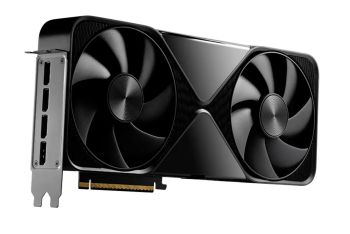
PNY VCNRTXPRO6000-SB Graphics Card 96GB GDDR7
| Lieske Part No. | 451682 |
|---|---|
| Mfg Part No | VCNRTXPRO6000-SB |
| EAN-Code | 3536403403331 |
| Manufacturer | PNY |
| Here only | 16.799,45 EUR
19.991,35 EUR incl. VAT
|
Further information for PNY VCNRTXPRO6000-SB Graphics Card 96GB GDDR7
| General | |
| Memory interface | 512 Bit |
| Power consumption | 600 W |
Applications
This graphics card is designed for professional users working with highly complex workloads. This includes engineers performing physical simulations, artificial intelligence developers fine-tuning large models, and creative professionals rendering photorealistic visualizations or highly detailed 3D environments. The card also supports processing of LLMs (Large Language Models) and enables efficient handling of AI models through integrated Tensor Cores. The support for Multi-Instance GPU (MIG) allows the GPU to be divided into multiple isolated instances, enabling multiple users or applications to access the resources simultaneously without interfering with each other.
Features and Specifications in Detail
The card includes 4 DisplayPort connectors, enabling flexible multi-monitor configurations. The DisplayPorts support version 2.1b, allowing high resolution and refresh rates across multiple monitors. The GPU is based on the NVIDIA Blackwell architecture, specifically developed for processing AI workloads. The 5th generation Tensor Cores support FP4 precision, accelerating AI model processing and reducing memory requirements. The 4th generation Ray Tracing Cores enable detailed geometry processing and a higher number of ray-traced triangles, which is crucial for photorealistic rendering. The integrated 9th generation NVENC and 6th generation NVDEC video engines support 4:2:2 encoding and decoding, which is relevant for professional video production environments.
Technology Explained Simply
The 96 GB GDDR7 memory provides sufficient space for large 3D models, simulations, or AI models that need to be stored in memory. The 512-bit bus width ensures fast data transfer between memory and the GPU, which is essential for smooth workflows. The PCI Express 5.0 x16 interface offers high bandwidth, necessary for data exchange with the system, especially when handling large files or real-time rendering. The active dual-slot cooling system uses two fans to draw air through the card, efficiently cooling the GPU and memory. This prevents overheating and ensures stable performance even during long work cycles. The 600 W power consumption requires a power supply capable of delivering at least this amount to safely operate the card.
Compatibility and Accessories
The card is designed for workstation systems and requires a corresponding PCIe 5.0 x16 slot on the motherboard. The power supply must deliver at least 600 W, although higher power is recommended to account for other system components. An accessory power cable (4x PCIe 8-pin to 1x CEM 16-pin) is available for powering the card, but it is not included in the package and must be purchased separately. The card is compatible with systems supporting the NVIDIA RTX PRO 6000 Blackwell Workstation Edition and can be used in environments utilizing MIG (Multi-Instance GPU) to use GPU resources more efficiently.
Installation and Mounting
Installation involves inserting the card into an available PCIe 5.0 x16 slot on the motherboard. The card has a dual-slot form factor, so sufficient space inside the chassis must be available. Power is supplied via the aforementioned cable, connecting the power supply to the graphics card. The card is designed for use in professional workstation systems and requires an appropriate system configuration to fully utilize its performance.
Operational Advantages
The card offers high computational power for AI and simulation tasks, supports multiple monitors simultaneously, and enables parallel GPU resource usage via MIG. The high memory capacity and bandwidth ensure smooth workflows with large datasets. The cooling design maintains stable temperatures even during extended work cycles, increasing reliability. Support for modern video and rendering technologies makes the card suitable for professional applications in media production and engineering sciences.

This is an offer of:
79279 Vörstetten
https://industry-electronics.com
Tel. 07666/88499-0
Fax. 07666/88499-111
Diesen Artikel finden Sie unter:
industry-electronics.com/artikel/451682

Lieske Elektronik e.K.
Reutener Str. 1079279 Vörstetten
https://industry-electronics.com
Tel. 07666/88499-0
Fax. 07666/88499-111
Diesen Artikel finden Sie unter:
industry-electronics.com/artikel/451682