
Phoenix Contact 2907928 surge protection device Type 3
Energy > Surge Protection
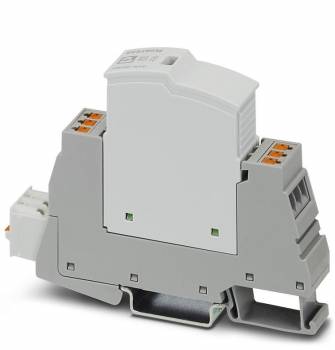
Phoenix Contact 2907928 surge protection device Type 3
| Lieske Part No. | 1014848 |
|---|---|
| Mfg Part No | 2907928 |
| EAN-Code | 4055626257655 |
| Manufacturer | Phoenix Contact |
| Here only | 131,57 EUR
156,57 EUR incl. VAT
|
Further information for Phoenix Contact 2907928 surge protection device Type 3
| General | |
| Protection type | Type 2/3 |
| Nominal voltage | 230 V AC/DC |
| Connection system | Push-in connection |
| Status indicator | Integrated |
| Accessories | CLIPFIX 35 end holder |
| Remote signaling | |
Applications
The surge protection device is designed for use in single-phase networks, particularly in installations that require protection against transient overvoltages such as lightning strikes or inductive voltage spikes. Typical applications include machine controls, industrial automation systems, building automation technology, and other electrical installations where high availability and protection of connected devices are required. The combination of Type 2 and Type 3 protection allows for flexible integration into existing protection concepts, with Type 3 primarily responsible for end protection against transient overvoltages.
Functions and Equipment in Detail
The device is equipped with a push-in connection, enabling quick and secure connection of cables without requiring additional tools. The integrated status indicator visually displays the operating status of the protection device, ensuring a quick overview of its functionality. The remote signaling function enables transmission of status information to a higher-level control or monitoring system, allowing for centralized diagnosis and alarm triggering in case of failure. This function is particularly useful in installations that require monitoring without the need for physical access to the device.
Technology Explained Simply
The surge protection device operates on the principle of diverting overvoltages through a diversion resistor or diodes, which activate when the rated voltage is exceeded and divert the energy to the earth conductor. The classification as Type 2/3 means that the device is designed for diverting medium overvoltages (Type 2) as well as transient, short voltage spikes (Type 3). The rated voltage of 230 V AC/DC covers the standard voltage in many European networks. The remote signaling function is based on an electrical signal transmitted via a separate cable or an integrated signal to report the status to an external system.
Compatibility and Accessories
The device is designed for use in single-phase networks and can be used in combination with other protection devices in a multi-stage surge protection configuration. Suitable accessories include the CLIPFIX 35 end holder (article number 3022218), which allows secure mounting of the device on standard 35 mm rails. This end holder enables stable fixation and is suitable for use in enclosures and distribution boards.
Mounting and Installation
Mounting is done using the CLIPFIX 35 end holder on a standard 35 mm rail. Connections are made via the push-in connection, where cables are simply inserted into the connection openings. The remote signaling function requires connecting an additional cable to a monitoring system, with the exact wiring to be taken from the device’s technical documentation. Installation typically takes place in enclosures or distribution boards, where the device is protected from mechanical stress and environmental influences.
Advantages in Operation
The surge protection device provides reliable protection against transient overvoltages caused by lightning strikes or electrical disturbances. The integrated status indicator and remote signaling function enable quick fault detection and localization, which can reduce downtime and maintenance costs. The push-in technology reduces installation time and minimizes errors during cabling. The device is designed for use in industrial environments and supports the safety and stability of electrical installations.

This is an offer of:
79279 Vörstetten
https://industry-electronics.com
Tel. 07666/88499-0
Fax. 07666/88499-111
Diesen Artikel finden Sie unter:
industry-electronics.com/artikel/1014848

Lieske Elektronik e.K.
Reutener Str. 1079279 Vörstetten
https://industry-electronics.com
Tel. 07666/88499-0
Fax. 07666/88499-111
Diesen Artikel finden Sie unter:
industry-electronics.com/artikel/1014848