
Phoenix Contact 2906253 monitoring relay EMD-BL-PTC-PT
Industrial Material > Industrial relays and contactors > Switching units / measuring, control relay
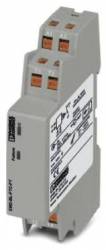
Phoenix Contact 2906253 monitoring relay EMD-BL-PTC-PT
| Lieske Part No. | 1264164 |
|---|---|
| Mfg Part No | 2906253 |
| EAN-Code | 4055626053745 |
| Manufacturer | Phoenix Contact |
| Here only | 91,39 EUR
108,75 EUR incl. VAT
|
Further information for Phoenix Contact 2906253 monitoring relay EMD-BL-PTC-PT
| General | |
| Product type | Monitoring relay |
| Function | temperature monitoring of motor winding |
| Maximum number of monitorable PTC sensors | 6 |
| Compatibility | PTC thermistors according to DIN 44081 and DIN 44082 |
| Connection system | Push-in |
| Short-circuit monitoring | |
Applications
This device is used in industrial electrical engineering, particularly in systems with electric motors, such as in manufacturing, process engineering, or machine building. It serves a protective function, triggering a shutdown or warning message when a critical temperature is reached. The device is typically installed in enclosures or control systems where motor windings are monitored via PTC sensors. Integration into existing control systems is achieved via relay contacts, which switch when the preset temperature threshold is exceeded.
Functions and Features in Detail
The EMD-BL-PTC-PT monitors not only temperature but also the condition of the thermistor circuit. It detects a short circuit in the sensor circuit, which may indicate a defective or damaged connection. This feature increases the reliability of monitoring, as a faulty sensor will not trigger false alarms. Connections are made using push-in technology, enabling quick and secure connections without additional tools. This connection method is widely used in industrial electrical engineering, as it speeds up installation and ensures reliable contact.
Technology Explained Simply
The relay operates with PTC thermistors, whose resistance increases with rising temperature. At a specific temperature, the resistance reaches a threshold value detected by the relay, triggering a switching function where the relay contacts operate. Short-circuit monitoring checks whether the resistance in the sensor circuit suddenly drops to a very low value, indicating a short circuit. The push-in terminals allow for simple and reliable wire connections without requiring screw terminals or crimp connections.
Compatibility and Accessories
The device is specifically designed for PTC thermistors according to DIN 44081 and DIN 44082. These standards define the electrical characteristics of the sensors, ensuring compatibility. The maximum number of sensors that can be monitored is six, making it suitable for motors with multiple windings.
Mounting and Installation
Mounting is performed in standard enclosures or control cabinets. The push-in terminals simplify wiring, as no additional tools are required. Installation is typically carried out by qualified electricians who connect the sensor terminals and relay contacts according to the circuit diagram specifications. The exact mounting position depends on the specific system, but the device should be installed in a dry, protected environment to ensure proper function.
Advantages in Operation
Continuous monitoring of motor windings enables early detection of overheating risks. Short-circuit monitoring prevents false alarms caused by defective sensors. The push-in technology reduces installation time and increases connection reliability. The device is therefore a reliable component in industrial systems, where the availability and safety of drives are critical.

This is an offer of:
79279 Vörstetten
https://industry-electronics.com
Tel. 07666/88499-0
Fax. 07666/88499-111
Diesen Artikel finden Sie unter:
industry-electronics.com/artikel/1264164

Lieske Elektronik e.K.
Reutener Str. 1079279 Vörstetten
https://industry-electronics.com
Tel. 07666/88499-0
Fax. 07666/88499-111
Diesen Artikel finden Sie unter:
industry-electronics.com/artikel/1264164