
Perle 04031260
Computer-Components > Controller > Serial/Parallel
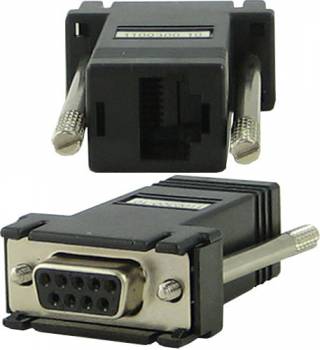
Perle 04031260
| Lieske Part No. | 458657 |
|---|---|
| Mfg Part No | 04031260 |
| EAN-Code | 0734660312608 |
| Manufacturer | Perle |
| Here only | 128,82 EUR
153,30 EUR incl. VAT
|
Further information for Perle 04031260
| General | |
| Connection 1 | RJ45F |
| Connection 2 | DB-9F |
| Type of device | DTE |
| Wiring | Crossover |
| Scope of delivery | 8-pack |
Crossover adapters are commonly used in industrial and IT infrastructures where legacy devices with serial interfaces need to be connected to modern networks. The use of RJ45 connectors enables a compact and standardized connection to switches, routers, or IOLAN modules, while the DB-9 connector represents the classic serial interface (RS-232). Thus, these adapters serve as a bridge between old and new systems, especially in industrial automation, network device monitoring, or remote machine maintenance.
Functions and features in detail
These adapters are passive cables without integrated power supply or electronic components. They consist of an RJ45 connector (female) on one side and a DB-9 connector (female) on the other. The internal wiring is configured as a crossover, meaning the data lines (e.g., TX and RX) are connected according to DTE logic to enable direct communication between two DTE devices. The use of DB-9F (female) on the serial side is typical for devices functioning as data terminal equipment (DTE), such as PCs, terminals, or certain network devices. The RJ45F (female) connection allows attachment to IOLAN modules or other network devices equipped with an RJ45 port.
Technology explained simply
The crossover wiring is necessary because, with two DTE devices, the transmit line (TX) of one device must be connected to the receive line (RX) of the other to enable bidirectional communication. A standard network cable would connect identical pins (e.g., TX to TX), which would result in communication failure. These adapters perform this function passively, without additional power supply or signal amplification. The connection is purely mechanical and electrical, relying on correct pin assignment. The adapters are not designed for power transmission (e.g., PoE) but exclusively for data transmission over serial interfaces.
Compatibility and accessories
The adapters are specifically developed for use with IOLAN products from Perle, which integrate serial devices into Ethernet networks. They enable the connection of serial devices to IOLAN modules equipped with an RJ45 port. Their use is typical in environments where legacy devices need to be remotely controlled or monitored over a network. The adapters are not suitable for other applications such as PoE connections or data transmission over long distances without signal amplification.
Installation and mounting
Installation is performed by simply plugging the RJ45 connector into the corresponding port on the IOLAN module or network device, and the DB-9 connector into the serial port of the device to be connected. No additional tools or configurations are required. The connection is immediately functional once the physical link is established.
Operational advantages
Using these adapters enables simple and cost-efficient integration of serial devices into existing networks without requiring additional hardware or complex configurations. The passive design ensures a reliable and maintenance-free connection. The standardization of connectors (RJ45 and DB-9) simplifies handling and interchangeability. The adapters are available in an 8-pack, which is advantageous for larger installations or for replacing defective units. When used in combination with IOLAN modules, they enable remote maintenance and monitoring of serial devices over Ethernet networks.

This is an offer of:
79279 Vörstetten
https://industry-electronics.com
Tel. 07666/88499-0
Fax. 07666/88499-111
Diesen Artikel finden Sie unter:
industry-electronics.com/artikel/458657

Lieske Elektronik e.K.
Reutener Str. 1079279 Vörstetten
https://industry-electronics.com
Tel. 07666/88499-0
Fax. 07666/88499-111
Diesen Artikel finden Sie unter:
industry-electronics.com/artikel/458657