
Moxa TCC-82 optical isolator RS232
Medical Technology > Electrical Insulation
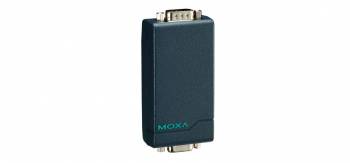
Moxa TCC-82 optical isolator RS232
| Lieske Part No. | 851508 |
|---|---|
| Mfg Part No | TCC-82 |
| EAN-Code | |
| Manufacturer | Moxa |
| Here only | 78,00 EUR
92,82 EUR incl. VAT
|
Further information for Moxa TCC-82 optical isolator RS232
| General | |
| Insulation duration | 1 Minute |
Applications
The TCC-82 is designed for systems where two RS-232 devices communicate via a serial connection but must be galvanically separated. This is especially important when the devices have different ground potentials or when there is a risk of interference from electrical overvoltages. Application areas include medical devices, industrial controls, measurement systems, and communication infrastructures where high immunity to interference and reliability are required.
Functions and Features in Detail
The isolator not only separates the data lines TxD and RxD, but also protects the handshake lines RTS and CTS on both D-connectors. This ensures complete galvanic isolation of all relevant signals. The auto-baud rate detection enables automatic adaptation to the transmission rate of the connected device, eliminating the need for manual settings. The compact design makes the TCC-82 suitable for installation in limited spaces, such as enclosures or device housings.
Technology Explained Simply
Galvanic isolation is achieved via optical couplers that convert electrical signals into light signals and then back into electrical signals on the other side. This avoids any direct electrical contact between the two sides of the connection. The isolation voltage of 4 KV RMS for 1 minute means that the isolator remains stable even under short-term high-voltage loads, such as those occurring during lightning strikes or short circuits. Additionally, the TCC-82 offers overvoltage protection of 15 KV ESD, protecting it against electrostatic discharges.
Compatibility and Accessories
The TCC-82 is designed for use with RS-232 devices. Power supply is provided via the RS-232 interface itself, using the TxD lines and RTS/DTR handshake lines as the power source. Alternatively, external power sources such as USB power supplies or 5 to 12 V DC adapters can be used if the integrated power supply is insufficient. When using external power supplies, it is important to ensure that they are isolated power supplies to maintain galvanic isolation. If both sides of the isolator require external power, two separate, isolated power supplies are required.
Installation and Mounting
The TCC-82 is connected between two RS-232 devices. The connection is made via D-connectors, and all signal lines, especially output signals, should be connected, as the isolator draws power from these signals. It is recommended to design the power supply so that it operates independently of data transmission to ensure uninterrupted communication. Installation does not require special tools, but correct wiring and the use of appropriate power sources must be ensured.
Operational Advantages
The TCC-82 reduces the risk of ground loops, which can cause data loss or device damage. The integrated power supply via the RS-232 interface reduces the need for external power supplies, simplifying installation and reducing system complexity. The high isolation voltage and overvoltage protection increase system reliability, especially in industrial or medical environments with high electrical loads. The auto-baud rate detection reduces configuration effort and enables quick commissioning.
Scope of Delivery
The scope of delivery for the TCC-82 includes the isolator itself and the necessary connection cables.

This is an offer of:
79279 Vörstetten
https://industry-electronics.com
Tel. 07666/88499-0
Fax. 07666/88499-111
Diesen Artikel finden Sie unter:
industry-electronics.com/artikel/851508

Lieske Elektronik e.K.
Reutener Str. 1079279 Vörstetten
https://industry-electronics.com
Tel. 07666/88499-0
Fax. 07666/88499-111
Diesen Artikel finden Sie unter:
industry-electronics.com/artikel/851508