
Lindner K214576 Fuse Insert gG DIII 50A white
Installation > Securing material > D-Fuses and Accessories
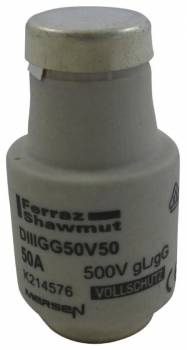
Lindner K214576 Fuse Insert gG DIII 50A white
| Lieske Part No. | 293285 |
|---|---|
| Mfg Part No | K214576 |
| EAN-Code | 4086500054237 |
| Manufacturer | Lindner |
| Here only | 9,21 EUR
10,96 EUR incl. VAT
|
Further information for Lindner K214576 Fuse Insert gG DIII 50A white
| General | |
| Utilization category | gG |
| Size | DIII |
| Nominal voltage | 500 V |
| Nominal current | 50 A |
| Norm | DIN VDE 0636-30 |
| Application range | Low-voltage installations |
D-fuse system is an established technology available in various sizes such as NDZ, DII, DIII, DIV, and DV. The fuse insert described here belongs to size DIII, designed for specific rated currents and voltages. The fuse is used in low-voltage installations where protection functions for conductors and electrical equipment are important. The operating class gG indicates that the fuse is suitable for protecting electrical installations and equipment, including withstanding the electrodynamic effects during high short-circuit currents.
Functions and equipment in detail include the ability to safely interrupt excessive overcurrents and short-circuit currents. The fuse responds to currents exceeding the rated value and interrupts the circuit to prevent damage to the installation or conductors. The operating class gG ensures that the fuse functions reliably even under high short-circuit conditions and dampens the electrodynamic forces generated by high currents. This is particularly important in installations where sudden current surges may occur.
Technology explained simply refers to the construction of the fuse, which is based on a screw principle. The fuse is screwed into a corresponding fuse socket, creating a secure electrical connection. The gG fuse design means it is suitable for general protection in low-voltage installations, including protection of conductors and equipment. The standard DIN VDE 0636-30 defines the technical requirements for these fuse types and ensures compliance with safety and performance standards.
Compatibility and accessories refers to use in installations compatible with the D-fuse system. The fuse is designed for size DIII, meaning it can be used in fuse sockets of this size. Use in low-voltage installations requires compliance with the standards and regulations applicable to the specific application.
Mounting and installation are carried out by inserting the fuse into the corresponding fuse socket and then screwing it in. Mounting requires no special tools, as the fuse mechanically fits into the socket and is secured by a screw connection. Installation takes place in electrical installations where the fuse is accessible to allow replacement if necessary. The fuse is designed for use in low-voltage installations, with exact mounting instructions following the respective installation design and applicable regulations.
The fuse in operation provides reliable protection against overloads and short circuits. The operating class gG ensures that the fuse functions reliably even under extreme conditions, such as high short-circuit currents. This contributes to the safety of the installation and the personnel involved. Compliance with the standard DIN VDE 0636-30 ensures that the fuse meets the required technical and safety requirements. Use in installations where non-experts can replace the fuse requires clear marking and easy handling, which is ensured by the screw system.
Fuse insert is a central component of the D-fuse system and serves to protect electrical installations. The operating class gG is intended for general protection in low-voltage installations. The standard DIN VDE 0636-30 defines the technical requirements. The size DIII is designed for specific rated values. The protection function includes safeguarding against overcurrents and short circuits. The screw connection enables easy mounting and maintenance. Low-voltage installations are the typical field of application.

This is an offer of:
79279 Vörstetten
https://industry-electronics.com
Tel. 07666/88499-0
Fax. 07666/88499-111
Diesen Artikel finden Sie unter:
industry-electronics.com/artikel/293285

Lieske Elektronik e.K.
Reutener Str. 1079279 Vörstetten
https://industry-electronics.com
Tel. 07666/88499-0
Fax. 07666/88499-111
Diesen Artikel finden Sie unter:
industry-electronics.com/artikel/293285