
Klauke Q2225 press insert 25 mm²
Tools > Pliers > Dies
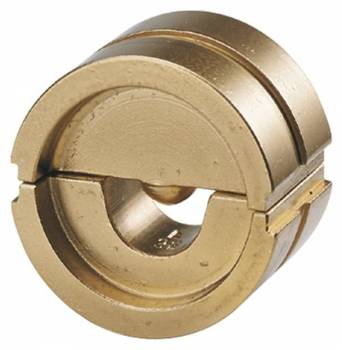
Klauke Q2225 press insert 25 mm²
| Lieske Part No. | 496142 |
|---|---|
| Mfg Part No | Q2225 |
| EAN-Code | 4012078030625 |
| Manufacturer | Klauke |
| Here only | 219,16 EUR
260,80 EUR incl. VAT
|
Further information for Klauke Q2225 press insert 25 mm²
| General | |
| Series | 22 - |
| Cable cross-section | 25 mm² |
| Potting method | Arbour clamping - |
| Suitable for | crimp cable lugs (DIN 46234), pin cable lugs (DIN 46230), crimp connectors (DIN 46341) - |
Applications
The Q2225 crimping die is used in electrical contracting and industrial electrical installation, where a secure and durable connection between cable and cable lug is required. It is particularly suitable for work in the field of power engineering, where cable cross-sections of 25 mm² are processed. Use is typically with crimping tools compatible with series 22, to ensure uniform and standardized processing. Standards DIN 46230, DIN 46234, and DIN 46341 define the geometric and mechanical requirements for cable lugs that can be processed with this crimping die.
Functions and Equipment in Detail
The crimping die is designed for pin crimping, in which the crimp pin penetrates the cable lug and fixes it to the cable through plastic deformation. This method ensures a mechanically stable and electrically conductive connection. The fit of the crimping die is matched to the standardized dimensions of cable lugs, enabling flawless crimping without over- or under-crimping. Processing is done with crimping tools supporting series 22, with exact device compatibility determined by the crimping tool manufacturer.
Technology Explained Simply
Pin crimping is a proven method for connecting cables with cable lugs. The crimp pin is inserted into the cable lug and pressed, causing the lug material to deform plastically and securely clamp around the cable. This prevents cable movement within the lug and ensures a stable electrical connection. The Q2225 crimping die is specifically shaped for securely crimping standardized cable lugs with a 25 mm² cross-section. Use of standards such as DIN 46230, DIN 46234, and DIN 46341 ensures uniform and reliable connections in practice.
Compatibility and Accessories
The Q2225 crimping die is designed for processing crimp cable lugs (DIN 46234), pin cable lugs (DIN 46230), and crimp connectors (DIN 46341). These standards define the geometric and mechanical requirements for cable lugs that can be processed with this die. Compatibility with crimping tools from series 22 is assumed, with exact device compatibility determined by the respective crimping tool manufacturer.
Installation and Mounting
The crimping die is inserted into a compatible crimping tool from series 22. Mounting is done by inserting the die into the designated position in the tool, with exact mounting instructions depending on the crimping tool manufacturer. Crimping is performed by actuating the crimping tool, where the crimp pin penetrates the cable lug and plastically deforms it. Processing is carried out in accordance with standards DIN 46230, DIN 46234, and DIN 46341 to ensure a flawless connection.
Operational Advantages
Using the Q2225 crimping die ensures a reliable and durable connection between cable and cable lug. Crimping is performed according to standardized specifications, increasing the quality and safety of the connection. Pin crimping prevents cable movement within the lug and ensures stable electrical conductivity. Use of standards such as DIN 46230, DIN 46234, and DIN 46341 ensures uniform processing results across the entire electrical contracting industry. Compatibility with crimping tools from series 22 enables standardized processing, proven in practice.

This is an offer of:
79279 Vörstetten
https://industry-electronics.com
Tel. 07666/88499-0
Fax. 07666/88499-111
Diesen Artikel finden Sie unter:
industry-electronics.com/artikel/496142

Lieske Elektronik e.K.
Reutener Str. 1079279 Vörstetten
https://industry-electronics.com
Tel. 07666/88499-0
Fax. 07666/88499-111
Diesen Artikel finden Sie unter:
industry-electronics.com/artikel/496142