
Klauke 8R16 Pipe Terminal 95 mm² M16
Installation > Terminals > Cable lugs, connectors, blank - isolated
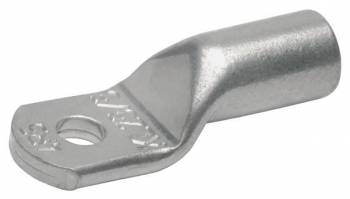
Klauke 8R16 Pipe Terminal 95 mm² M16
| Lieske Part No. | 547735 |
|---|---|
| Mfg Part No | 8R16 |
| EAN-Code | 4012078002356 |
| Manufacturer | Klauke |
| Here only | 3,77 EUR
4,49 EUR incl. VAT
|
Further information for Klauke 8R16 Pipe Terminal 95 mm² M16
| General | |
| Material | Cu in accordance with EN 13600 |
| Material condition | annealed |
| Surface treatment | Galvanic tinned |
| Vibration testing | DIN EN 61373 Class 1 B |
| Application | Stranded round conductors, compressed stranded sector conductors |
| Application range | Switchgear construction |
| Article identification | On the cable lug |
| Contact surface | flat |
| End processing | precise |
Applications
The cable lug 8R16 is primarily intended for use in enclosure construction, where a secure and durable connection between conductors and connection points is required. It is particularly suitable for applications involving multi-strand round conductors or round-compressed sector conductors, as commonly used in industrial electrical engineering and machine building. The use of annealed copper and galvanic protection ensures high electrical conductivity and mechanical stability, even under difficult operating conditions.
Functions and Equipment in Detail
The cable lug features a flat contact surface that ensures even distribution of crimping force, thus creating an optimal contact area between the cable and the lug. The precise end finishing facilitates cable insertion and reduces the risk of conductor damage. The article identification marking on the cable lug enables quick identification and sorting, especially in complex installations. The galvanic tin plating provides effective corrosion protection, helping to maintain electrical conductivity throughout the entire service life of the cable lug.
Technology Explained Simply
The cable lug is made of copper (Cu) specified according to EN 13600. This material offers high electrical conductivity and mechanical strength. The annealed material improves crimpability, meaning the cable lug does not crack or deform unevenly during crimping. The galvanic tin plating protects the copper from oxidation and corrosion, which is especially important when the cable lug is used in moist or chemically aggressive environments. Vibration testing according to DIN EN 61373 Class 1 B confirms that the cable lug functions reliably even under dynamic loads, such as those occurring in machines or vehicles.
Compatibility and Accessories
The cable lug 8R16 is suitable for multi-strand round conductors, for example VDE 0295 Class 2, as well as for round-compressed multi-strand sector conductors. It is specifically designed for use in enclosure construction and can be processed with appropriate crimping tools.
Installation and Mounting
Installation is carried out by crimping with a suitable tool, which securely and durably connects the cable lug to the conductor. The flat contact surface and precise end finishing facilitate cable insertion and ensure an even crimp connection. The article identification marking aids in identification during installation. It is important to use the correct crimping tool to ensure an optimal connection.
Operational Advantages
The cable lug 8R16 offers high reliability and longevity due to the use of annealed copper and galvanic tin plating. Vibration testing according to DIN EN 61373 Class 1 B ensures a stable connection even under dynamic loads. The simple installation, enabled by the flat contact surface and precise end finishing, reduces installation time and minimizes errors. The article identification marking facilitates maintenance and identification during operation.

This is an offer of:
79279 Vörstetten
https://industry-electronics.com
Tel. 07666/88499-0
Fax. 07666/88499-111
Diesen Artikel finden Sie unter:
industry-electronics.com/artikel/547735

Lieske Elektronik e.K.
Reutener Str. 1079279 Vörstetten
https://industry-electronics.com
Tel. 07666/88499-0
Fax. 07666/88499-111
Diesen Artikel finden Sie unter:
industry-electronics.com/artikel/547735