
JUNG LC1740241 cover with rotary knob
Installation > Switch Material > Switch flush surface
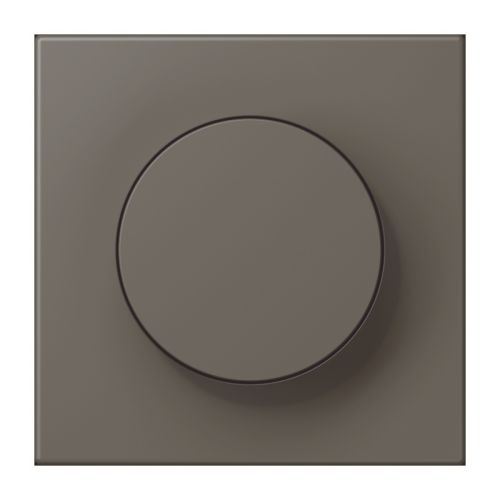
JUNG LC1740241 cover with rotary knob
| Lieske Part No. | 872141 |
|---|---|
| Mfg Part No | LC1740241 |
| EAN-Code | 4011377298774 |
| Manufacturer | JUNG |
| Here only | 33,65 EUR
40,04 EUR incl. VAT
|
Further information for JUNG LC1740241 cover with rotary knob
| General | |
| Compatibility | Rotary dimmer 1730 DD, 1731 DD, 1735 DD, 211 GDE; Substation 1733 DNE; Rotary controller 1-10 V 240-10; DALI rotary controllers 1740 DSTE, 1741 DSTE, 1745 DSTE, 1746 DSTE; Speed controller 1735 DS |
| Product type | Cover with rotary knob |
| Function | Control element for control devices |
Applications
The LC1740241 cover is intended for use in residential and commercial buildings where discreet and functional control of lighting or drive systems is required. It is mounted in flush installations, where the control device is concealed within the wall plaster, leaving only the cover with the rotary knob visible. The cover is particularly used in rooms with high design and operating comfort requirements, such as living rooms, offices, or hotel rooms, where intuitive control of lighting or fans via a rotary knob is desired.
Functions and Equipment in Detail
The cover features an integrated rotary knob that serves as the operating element for the installed devices. The rotary knob enables precise and intuitive control of connected devices, such as brightness adjustment for dimmers or speed control for fans. The cover itself is made from a material suitable for indoor use and matches the visual design of other JUNG products. Installation is carried out by inserting the cover into a corresponding flush-mounted box, where it forms the front face of the device.
Technology Explained Simply
The LC1740241 cover is not an active control device but a passive front element that enables operation of a device installed behind it. The rotary knob transfers mechanical movement to the underlying device, which performs the electrical control (e.g., brightness adjustment, speed control). The cover itself has no electrical functions such as power supply or signal generation. It serves exclusively as a mechanical operating element and visual cover. Compatibility with various devices is ensured by mechanical fit and connection geometry.
Compatibility and Accessories
The cover is specifically designed for use with a range of JUNG devices. These include rotary dimmers of types 1730 DD, 1731 DD, 1735 DD, and 211 GDE, suitable for controlling light sources. It is also intended for the auxiliary station 1733 DNE, which functions as an additional control station for a main device. The cover is also suitable for controlling devices with a 1–10 V interface (part no. 240-10) and DALI rotary control devices (part nos. 1740 DSTE, 1741 DSTE, 1745 DSTE, 1746 DSTE). Additionally, it can be combined with the speed controller 1735 DS to regulate the speed of fans or ventilators. The cover is not intended for other devices or systems not listed.
Installation and Mounting
Installation is carried out in a flush-mounted box already installed in the wall plaster. The cover is slid over the device inside and locks into place via a mechanical locking mechanism. Installation requires no additional tools or components, as the cover is simply placed directly onto the device. The electrical connection is made via the installed device, which must already be installed and connected.
Operational Advantages
The LC1740241 cover offers clear and intuitive operation via the rotary knob, enabling precise control. Its visual design matches the JUNG product line, ensuring a uniform appearance in the installation. Use as a replacement or addition allows flexible adaptation of existing systems without replacing the entire device. Mechanical stability and precise fit ensure safe and long-lasting operation.

This is an offer of:
79279 Vörstetten
https://industry-electronics.com
Tel. 07666/88499-0
Fax. 07666/88499-111
Diesen Artikel finden Sie unter:
industry-electronics.com/artikel/872141

Lieske Elektronik e.K.
Reutener Str. 1079279 Vörstetten
https://industry-electronics.com
Tel. 07666/88499-0
Fax. 07666/88499-111
Diesen Artikel finden Sie unter:
industry-electronics.com/artikel/872141