
ifm Electronic PS3617 pressure probe 0...1 bar 4...20 mA IP68
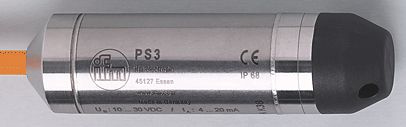
ifm Electronic PS3617 pressure probe 0...1 bar 4...20 mA IP68
| Lieske Part No. | 510731 |
|---|---|
| Mfg Part No | PS3617 |
| EAN-Code | 4021179267601 |
| Manufacturer | Ifm Electronic |
| Here only | 653,97 EUR
778,22 EUR incl. VAT
|
Further information for ifm Electronic PS3617 pressure probe 0...1 bar 4...20 mA IP68
| Accuracy / Deviations | |
| Repeatability | < 0.1; (with temperature variations < 10 K) % of span |
| Characteristic deviation | < 0.5 (BFSL) /1; (including linearity, zero point and span error (limit point setting)) % of span |
| Linearity deviation | < 0.2 (BFSL) % of span |
| Long-term stability | < 0.2; (per year) % of span |
| Temperature coefficient zero point | < ± 0.2; (0...50 °C) % of span / 10 K |
| Temperature coefficient range | < ± 0.2; (0...50 °C) % of span / 10 K |
| Approvals / tests | |
| MTTF | 403 years |
| Printer directive | Good engineering practice; suitable for fluids of group 2; fluids of group 1 on request |
| Electrical connection | |
| Cable | 30 m, PUR, Ø 7.5 mm |
| Electrical data | |
| Operating voltage | 10...30 DC V |
| Protection class | III |
| Reverse polarity protection | |
| Environmental conditions | |
| Ambient temperature | -10...50 °C |
| Storage temperature | -30...80 °C |
| Degree of protection | IP 68 |
| Field of application | |
| Model | with capillary tube for pressure equalization |
| Application | for industrial use |
| Media | liquid media |
| Medium temperature | -10...50 °C |
| Min. bursting pressure | 6 bar / 87 psi / 600 kPa |
| Compressive strength | 5 bar / 72.5 psi / 500 kPa |
| Pressure type | Gauge pressure |
| Mechanical data | |
| Housing | Cylindrical |
| Dimensions | Ø 27 / L = 100 mm |
| Materials | 1.4571 (stainless steel / 316Ti); PA |
| Outputs | |
| Total number of outputs | 1 |
| Output signal | Analog signal |
| Number of analogue outputs | 1 |
| Analog output current | 4...20 mA |
| Max. load | 700; (Ub = 24 V; (Ub - 10 V) / 20 mA) Ω |
| Short-circuit protection | |
| Product features | |
| Number of inputs and outputs | Number of analog outputs: 1 |
| Measuring range | 0...1 bar / 0...1000 mbar / 0...14.5 psi / 0...401.5 inH2O / 0...100 kPa |
Applications
The level probe PS3617 is intended for industrial use in systems with liquid media, for example in water supply, wastewater treatment, process industry, or chemical industry. The measurement ranges include 0...1 bar, 0...1000 mbar, 0...14.5 psi, 0...401.5 inH2O, and 0...100 kPa, making it suitable for applications with low to medium pressure differences. The medium temperature range is -10...50 °C, allowing use in cool to moderately warm environments. The probe is designed for liquid media and is not intended for gases or solids.
Functions and Equipment in Detail
The probe operates as a two-wire current loop, reducing wiring effort. The output signal is an analog current signal of 4...20 mA, transmitted via a 30 m long PUR cable with a diameter of 7.5 mm. The cable is equipped with a capillary tube for pressure equalization, establishing an internally ventilated connection to the measurement point and thus enabling stable pressure measurement. The probe includes reverse polarity protection and short-circuit protection, enhancing operational safety. The maximum load is 700 Ω at an operating voltage of 24 V.
Technology Explained Simply
Measurement is performed via hydrostatic pressure measurement: the pressure acting on the probe within the medium is proportional to the liquid height. The probe converts this pressure into an electrical signal, transmitted via the integrated cable. The probe's accuracy is defined by several parameters: repeatability is less than 0.1 % of span with temperature fluctuations under 10 K, linearity deviation is less than 0.5 % of span (BFSL), and linearity deviation is under 0.2 % of span. Long-term stability is less than 0.2 % of span per year, enabling reliable long-term measurement. Temperature coefficients for zero point and span are each under ±0.2 % of span per 10 K, indicating low temperature dependence of the measurement values.
Compatibility and Accessories
The probe is designed for use with liquid media and requires no additional components for operation. The operating voltage is between 10 and 30 V DC, enabling flexible integration into existing control systems. The protection class III and approval under the Pressure Equipment Directive (Good Engineering Practice, suitable for media of fluid group 2) allow use in corresponding industrial applications. The probe is not intended for media of fluid group 1, but available upon request.
Mounting and Installation
Installation is performed by immersing the probe into the medium to be measured. The 30 m long PUR cable allows flexible positioning of the connection point. The probe is designed for direct installation in the medium, with mechanical strength and sealing ensured by the stainless steel housing and IP 68 protection rating. Installation requires no additional mounting aids, as the probe is self-positioned within the medium.
Operational Advantages
The PS3617 offers high overall accuracy and long-term stability, enabling reliable and low-maintenance level measurement. The integrated pressure equalization solution via the capillary tube ensures stable measurement, even under fluctuating environmental conditions. The robust construction from stainless steel 1.4571 and the IP 68 protection rating make the probe suitable for use in harsh industrial environments. The MTTF (mean time to failure) is 403 years, indicating high operational safety and long service life. Simple installation and reduced wiring effort due to two-wire technology reduce installation costs and time.

This is an offer of:
79279 Vörstetten
https://industry-electronics.com
Tel. 07666/88499-0
Fax. 07666/88499-111
Diesen Artikel finden Sie unter:
industry-electronics.com/artikel/510731

Lieske Elektronik e.K.
Reutener Str. 1079279 Vörstetten
https://industry-electronics.com
Tel. 07666/88499-0
Fax. 07666/88499-111
Diesen Artikel finden Sie unter:
industry-electronics.com/artikel/510731