
ifm Electronic LR2050 level sensor PNP/NPN IO-Link rod
Industrial Material > Industrial relays and contactors > Switching units / measuring, control relay
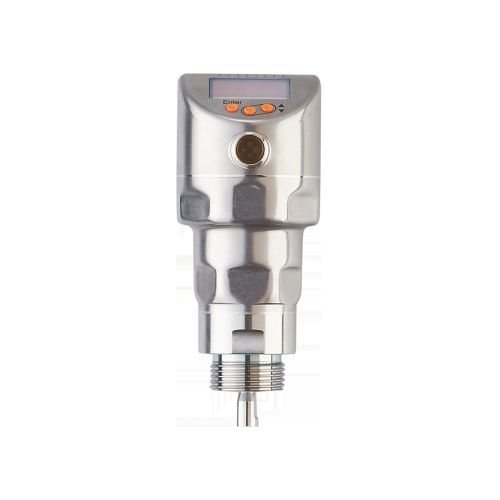
ifm Electronic LR2050 level sensor PNP/NPN IO-Link rod
| Lieske Part No. | 695032 |
|---|---|
| Mfg Part No | LR2050 |
| EAN-Code | 4021179291941 |
| Manufacturer | Ifm Electronic |
| Here only | 688,51 EUR
819,33 EUR incl. VAT
|
Further information for ifm Electronic LR2050 level sensor PNP/NPN IO-Link rod
| Accuracy / Deviations | |
| Measurement error | ± 7 mm |
| Offset error | 5 mm |
| Resolution | 1 mm |
| Zero signal current | 4,0 mA |
| Full signal current | 20 mA |
| Temperature influence per 10 K | ± 0,2 % |
| Approvals / tests | |
| EMC | DIN EN 61000-6-2; DIN EN 61000-6-3 / : in closed metal enclosure; DIN EN 61000-6-4 / : in plastic or open metal enclosure |
| Shock resistance | DIN EN 60068-2-27 / 50 g (11 ms) / 20 g (6 ms) with reference bar 0.5 m |
| Vibration resistance | DIN EN 60068-2-6 / 20 g (10...2000 Hz) / 1 g (5...200 Hz) with reference bar 0.5 m |
| MTTF | 216 years |
| Displays / controls | |
| Indication | Display unit / 3 x LED, green; Switching state / 2 x LED, yellow; Fill level / alphanumeric display, 4-digit; Parameterization / alphanumeric display, 4-digit |
| Electrical connection | |
| Plug connection | 1 x M12; Coding: A; Contacts: 4, gold-plated |
| Electrical data | |
| Operating voltage | 18...30 DC V |
| Electricity consumption | < 50 mA |
| Protection class | III |
| Standby delay time | < 3 s |
| Measurement principle | Guided microwave |
| Reverse polarity protection | |
| Environmental conditions | |
| Ambient temperature | -40...80 °C |
| Storage temperature | -40...100 °C |
| Degree of protection | IP 68; IP 69K |
| Field of application | |
| Special feature | Gold-plated contacts |
| Application | for industrial use |
| Media | liquid media |
| Dielectric constant of medium | ≥ 1.8; (for media with DK 1.8...5 (e.g. oils) a coaxial tube is required for operation) |
| Recommended media | Water; water-based media; oils; oil-based media |
| Process temperature | -20...100; (see note under Remarks) °C |
| Compressive strength | 16 bar / 1.6 MPa |
| Vacuum tightness | -1000 mbar / -0.1 MPa |
| MAWP for applications according to CRN | 16 bar |
| Interfaces | |
| Communication interface | IO-Link |
| Transmission type | COM2 (38.4 kBaud) |
| IO-Link revision | 1.1 |
| SDCI standard | IEC 61131-9 |
| Profiles | Smart Sensor - SSP 0 / Generic Profiled Sensor; Function / Device identification; Function / Process data variable; Function / Device diagnosis |
| Required master port class | A |
| Analog process data | 1 |
| Process data binary | 2 |
| Min. process cycle time | 2,3 ms |
| Supported DeviceIDs | Operation mode / DeviceID; default / 479 |
| SIO mode | |
| Measurement / adjustment range | |
| Active area A | L-40 (L-60); (when set to oil and oil-based media) mm |
| Inactive zone I1 / I2 | 30 / 10 (30); (when set to oil and oil-based media) mm |
| Measurement frequency | 4 Hz |
| Switching point SP | 15...L-30 mm |
| Switching point SP note | when set to oil and oil-based media: 35...L-30 |
| Reverse switch point rP | 10... L-35 mm |
| Note on reverse switching point rP | when set to oil and oil-based media: 30...L-35 |
| In steps of | 1 mm |
| Hysteresis | > 5 mm |
| Mechanical data | |
| Dimensions | Ø 50 / L = 119 mm |
| Materials | 1.4404 (stainless steel / 316L); PEI; PFA; PBT; FKM |
| Materials in contact with the medium | 1.4404 (stainless steel / 316L); 1.4435 (stainless steel / 316L); PTFE; FKM |
| Outputs | |
| Total number of outputs | 2 |
| Output signal | Switching signal; Analogue signal; IO-Link |
| Electrical version | PNP/NPN |
| Number of digital outputs | 1 |
| Output function | Normally open contact (NO) / Normally closed contact (NC); (configurable) |
| Max. voltage drop switching output DC | 2,5 V |
| Continuous current rating of switching output DC | 150; (200 (...60 °C)) mA |
| Number of analogue outputs | 1 |
| Analog output current | 4...20, reversible; (scalable) mA |
| Max. load | 500 Ω |
| Short-circuit protection type | timed |
| Short-circuit protection | |
| Overload resistant | |
| Product features | |
| Number of inputs and outputs | Number of digital outputs: 1; Number of analog outputs: 1 |
| Rod length L | 150...2000 mm |
| Process connection | threaded connection G 3/4 male thread |
| Remarks | |
| Notes | For high process temperatures: The relevant temperature is at the process connection. The actual medium temperature may be higher. |
Applications include level measurement in industrial plants, particularly in environments with high requirements for reliability and robustness. The sensor is designed for process temperatures from -20 °C to 100 °C, with the process temperature at the process connection being decisive. The pressure rating is 16 bar, and the sensor is also suitable for vacuum conditions down to -1000 mbar. The protection rating IP 68 and IP 69K makes it suitable for outdoor use as well as in damp or splash-water-exposed environments.
Functions and equipment in detail include a digital switching output (PNP/NPN) and an analog output (4...20 mA, invertible and scalable). The digital output can be parameterized as a make or break contact and is rated for a continuous current load of 150 mA (up to 60 °C: 200 mA). The analog output supports a maximum load of 500 Ω and is equipped with short-circuit protection (pulsed) and overload resistance. The readiness delay time is less than 3 seconds, and the sensor features reverse polarity protection.
Technology explained simply is based on guided microwave, where a microwave pulse is transmitted along a metallic probe rod. The signal's travel time to the liquid surface and back is measured to determine the fill level. The measurement frequency is 4 Hz, the resolution is 1 mm, and the measurement error is ±7 mm. The hysteresis is greater than 5 mm, ensuring a stable switching operation. For media with a dielectric constant between 1.8 and 5 (e.g., oils), a coaxial tube is required to ensure measurement accuracy.
Compatibility and accessories include support for IO-Link (COM2, 38.4 kBaud, Revision 1.1) with SIO mode and a required Master port class A. The interface enables transmission of process data (1 analog, 2 binary) and use of profiles such as Smart Sensor (SSP 0) and Generic Profiled Sensor. Supported DeviceIDs include the standard ID 479. Communication is via a plug connection, enabling easy installation and maintenance.
Mounting and installation are performed via the G 3/4 external thread, with the probe length adjustable according to container height. The evaluation unit features a 4-digit alphanumeric display, LEDs to indicate the switching state, and programming buttons for parameter adjustment. The operating voltage is between 18 V and 30 V DC, and the current consumption is less than 50 mA. The protection class III ensures electrical safety.
Operational advantages include high reliability, easy parameterization, and integration into IO-Link networks. The gold-plated contacts increase service life and prevent corrosion. The robust construction with shock resistance (50 g/11 ms, 20 g/6 ms) and vibration resistance (20 g/10–2000 Hz) makes the sensor suitable for demanding industrial environments. The ambient temperature range is from -40 °C to 80 °C, and the storage temperature can reach up to 100 °C.

This is an offer of:
79279 Vörstetten
https://industry-electronics.com
Tel. 07666/88499-0
Fax. 07666/88499-111
Diesen Artikel finden Sie unter:
industry-electronics.com/artikel/695032

Lieske Elektronik e.K.
Reutener Str. 1079279 Vörstetten
https://industry-electronics.com
Tel. 07666/88499-0
Fax. 07666/88499-111
Diesen Artikel finden Sie unter:
industry-electronics.com/artikel/695032