
ifm Electronic IIS248 inductive sensor M30x1,5 Sn=15mm
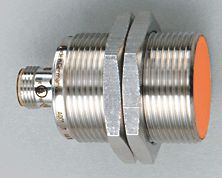
ifm Electronic IIS248 inductive sensor M30x1,5 Sn=15mm
| Lieske Part No. | 512478 |
|---|---|
| Mfg Part No | IIS248 |
| EAN-Code | 4021179276719 |
| Manufacturer | Ifm Electronic |
| Here only | 85,93 EUR
102,26 EUR incl. VAT
|
Further information for ifm Electronic IIS248 inductive sensor M30x1,5 Sn=15mm
| Accessories | |
| Scope of delivery | Fastening nuts: 2 |
| Accuracy / Deviations | |
| Correction factor | Steel: 1 / Stainless steel: 0.7 / Brass: 0.5 / Aluminium: 0.4 / Copper: 0.3 |
| Hysteresis | 3...15 % of Sr |
| Switching point drift | -10...10 % of Sr |
| Approvals / tests | |
| EMC | EN 61000-4-2 ESD / 4 kV CD / 8 kV AD; EN 61000-4-3 RF radiated / 10 V/m; EN 61000-4-4 Burst / 2 kV; EN 61000-4-6 RF conducted / 10 V; EN 55011 / Class B |
| Vibration resistance | EN 60068-2-6 Fc / 20 g (10...3000 Hz) / 50 frequency cycles, 1 octave/minute, in 3 axes |
| Shock resistance | EN 60068-2-27 Ea / 100 g 11 ms half-sine; 3 shocks in each direction of the 3 coordinate axes |
| Continuous shock resistance | EN 60068-2-27 / 40 g 6 ms; 4000 shocks in each direction of the 3 coordinate axes |
| Rapid temperature change | EN 60068-2-14 Na / TA = -40 °C; TB = 85 °C; t1 = 30 min; t2 = < 10 s; 50 cycles |
| Salt spray test | EN 60068-2-52 Kb / severity level 5 (4 test cycles) |
| MTTF | 1594 years |
| UL approval | Ta / -25...70 °C; Enclosure type / Type 1; Power supply / Limited Voltage/Current; UL approval number / A001; UL file number / E174191 |
| Embedded software included | |
| Detection range | |
| Real switching distance Sr | 15 ± 10 % mm |
| Working distance | 0...12,15 mm |
| Increased switching distance | |
| Displays / controls | |
| Indication | Switching state / 4 x LED, yellow |
| Electrical connection - Plug | |
| Plug connection | 1 x M12; coding: A; contacts: 3, gold-plated |
| Electrical data | |
| Operating voltage | 10...30 DC V |
| Electricity consumption | < 10 mA |
| Protection class | III |
| Reverse polarity protection | |
| Environmental conditions | |
| Ambient temperature | -40...85 °C |
| Degree of protection | IP 65; IP 66; IP 67; IP 68; IP 69K |
| Field of application | |
| Special feature | Gold-plated contacts; Increased switching gap |
| Application | Use in industrial, mobile, cooling and lubricant applications; Industrial applications / factory automation |
| Mechanical data | |
| Mounting type | Flush-mountable |
| Thread designation | M30 x 1.5 |
| Materials | Housing: Brass white bronze-coated; LED window: PEI; Mounting nuts: Brass white bronze-coated; active surface: PBT orange |
| Outputs | |
| Max. voltage drop switching output DC | 2,5 V |
| Continuous current rating of switching output DC | 100 mA |
| Switching frequency DC | 100 Hz |
| Short-circuit protection | |
| Overload resistant | |
| Product features | |
| Electrical version | NPN |
| Output function | Breaker contact |
| Switching distance | 15 mm |
| Housing | Threaded design |
| Dimensions | M30 x 1,5 / L = 50 mm |
Applications
The sensor is designed for applications involving high mechanical and thermal loads as well as aggressive environmental conditions. It is used in industrial and factory automation, where it reliably detects metallic objects, for example in conveyor systems, presses, or assembly systems. Applications in mobile technology, such as construction machinery or vehicles, as well as in cooling and lubrication systems, where high temperatures and humidity prevail, are also intended. The high protection rating IP 65 to IP 69K ensures that the sensor remains functional even under direct water spray, short-term submersion, or steam jet cleaning.
Functions and Equipment in Detail
The sensor detects metallic objects starting at a switching distance of 15 mm, with the actual switching distance being 15 ± 10 % mm. The operating distance ranges from 0 to 12.15 mm. Detection occurs via an increased switching distance, enhancing mounting flexibility. Sensitivity varies depending on the material: steel is detected with a correction factor of 1, stainless steel with 0.7, brass with 0.5, aluminium with 0.4, and copper with 0.3. The hysteresis is 3 to 15 % of the actual switching distance, and the switching point drift is between -10 and +10 % of the actual switching distance. These values ensure stable and reproducible switching performance under varying conditions.
Technology Explained Simply
The sensor operates inductively, i.e., it generates an electromagnetic field that is disturbed by the approach of a metallic object. This disturbance is detected as a switching impulse and transmitted via the NPN open collector output. The output is rated for 100 mA continuous current, with a maximum voltage drop of 2.5 V. Power supply is via a 3-pole M12 connector system with coding A, where the contacts are gold-plated to prevent corrosion and contact loss. The LED indicator with four yellow LEDs visually signals the switching state.
Compatibility and Accessories
The sensor is equipped with an M12 connector, widely used in industrial automation. The coding A and 3-pole configuration enable easy integration into existing control systems. The delivery includes two mounting nuts for secure installation of the sensor in the threaded hole. The housing materials (brass, white bronze-coated) and the active surface (PBT orange) are designed for high mechanical strength and corrosion resistance.
Mounting and Installation
The sensor is flush-mountable and is inserted into a suitable threaded hole M30 x 1.5. Mounting is done using the supplied nuts. The electrical connection is made via the M12 connector. Installation is carried out in environments with temperatures from -40 to +85 °C. Mechanical load capacities are covered by certifications according to EN 60068-2-6 (vibration resistance), EN 60068-2-27 (shock resistance), and EN 60068-2-14 (temperature cycling). EMC tests according to EN 61000-4-2 to -4-6 and EN 55011 Class B ensure functionality in electromagnetically disturbed environments.
Operational Advantages
The sensor offers high reliability due to gold-plated contacts and a long service life, specified with an MTTF of 1594 years. The high protection rating IP 65 to IP 69K allows use in harsh environments, including steam jet cleaning. The wide operating temperature range of -40 to +85 °C expands application possibilities. Integrated embedded software supports functionality, and UL certification (Ta -25...70 °C, Enclosure Type 1) extends application possibilities in the USA. The combination of increased switching distance and low tolerances reduces inventory requirements and increases application flexibility.
Protection Rating and Environmental Conditions
The protection rating IP 65 to IP 69K means the sensor is dust-tight and waterproof, remaining functional even under steam jet cleaning (IP 69K) and short-term submersion (IP 68). The ambient temperature range of -40 to +85 °C allows use in extreme climatic conditions. Tests according to EN 60068-2-52 (salt spray test, severity level 5) confirm resistance to corrosive environments.
Certifications and Tests
The sensor meets EMC requirements according to EN 61000-4-2 to -4-6 and EN 55011 Class B. Mechanical load capacities are verified by tests according to EN 60068-2-6 (vibration resistance), EN 60068-2-27 (shock resistance), and EN 60068-2-14 (temperature cycling). UL certification (A001, File E174191) confirms suitability for use in the USA under specified conditions.
Materials and Construction
The housing is made of brass, white bronze-coated, providing high corrosion resistance and mechanical strength. The LED window is made of PEI (polyetherimide), a high-temperature resistant plastic. The active surface is made of PBT (polybutylene terephthalate) in orange, ensuring good electrical insulation and mechanical stability. The mounting nuts are also made of white bronze-coated brass to prevent corrosion.
Indication and Diagnostics
The switching state is indicated by four yellow LEDs, visually signaling the operating status. This facilitates diagnostics and maintenance, especially during commissioning or in case of faults.

This is an offer of:
79279 Vörstetten
https://industry-electronics.com
Tel. 07666/88499-0
Fax. 07666/88499-111
Diesen Artikel finden Sie unter:
industry-electronics.com/artikel/512478

Lieske Elektronik e.K.
Reutener Str. 1079279 Vörstetten
https://industry-electronics.com
Tel. 07666/88499-0
Fax. 07666/88499-111
Diesen Artikel finden Sie unter:
industry-electronics.com/artikel/512478