
ifm Electronic IER206 inductive sensor M8x1 Sn=2mm flush DC PNP/NPN
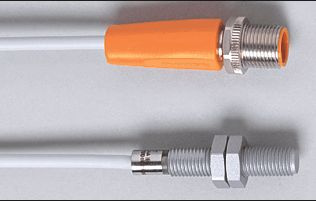
ifm Electronic IER206 inductive sensor M8x1 Sn=2mm flush DC PNP/NPN
| Lieske Part No. | 505723 |
|---|---|
| Mfg Part No | IER206 |
| EAN-Code | 4021179253475 |
| Manufacturer | Ifm Electronic |
| Here only | 105,43 EUR
125,46 EUR incl. VAT
|
Further information for ifm Electronic IER206 inductive sensor M8x1 Sn=2mm flush DC PNP/NPN
| Accessories | |
| Scope of delivery | Fastening nuts: 2 |
| Accuracy / Deviations | |
| Correction factor | steel: 1 / stainless steel: 0.6 / brass: 0.4 / aluminium: 0.3 / copper: 0.2 |
| Hysteresis | 1...20 % of Sr |
| Approvals / tests | |
| EMC | EN 61000-4-2 ESD / 4 kV CD / 8 kV AD; EN 61000-4-3 RF radiated / 10 V/m; EN 61000-4-4 Burst / 2 kV; EN 61000-4-6 RF conducted / 10 V; EN 55011 / Class B |
| Impact strength | 1 J |
| MTTF | 1460 years |
| UL approval | Ta / 0...40 °C; Enclosure type / Type 1; Power supply / Limited Voltage/Current; File Number UL / E174191 |
| Detection range | |
| Working distance | 0...1,6 mm |
| Increased switching distance | |
| Displays / controls | |
| Indication | Switching state / 1 x LED, green; Adjustment aid / 1 x LED, red |
| Optical alignment aid | |
| Electrical connection - Plug | |
| Cable | 0.3 m, PUR; 2 x 0.34 mm² |
| Plug connection | 1 x M12; Coding: A; Contacts: 2, gold-plated |
| Electrical data | |
| Operating voltage | 10...36 DC V |
| Protection class | III |
| Reverse polarity protection | |
| Environmental conditions | |
| Ambient temperature | -25...70 °C |
| Degree of protection | IP 67 |
| Field of application | |
| Special feature | Gold-plated contacts; increased switching gap; all-metal housing; optical adjustment aid |
| Application | For use in confined installation conditions; Use in welding area |
| Compressive strength | 50 bar |
| Note on pressure resistance | active surface |
| Mechanical data | |
| Mounting type | Flush-mountable |
| Thread designation | M8 x 1 |
| Materials | Housing: 1.4404 (stainless steel / 316L) anti-adhesive coated; active surface: 1.4404 (stainless steel / 316L) anti-adhesive coated; mounting nuts: 1.4404 (stainless steel / 316L) anti-adhesive coated |
| All-metal housing | |
| Outputs | |
| Max. voltage drop switching output DC | 4,5 V |
| Minimum load current | 2 mA |
| Max. residual current | 0,75 mA |
| Continuous current rating of switching output DC | 100 mA |
| Switching frequency DC | 150 Hz |
| Short-circuit protection type | timed |
| Short-circuit protection | |
| Overload resistant | |
| Product features | |
| Electrical version | PNP/NPN |
| Output function | Normally open contact |
| Switching distance | 2 mm |
| Housing | Threaded design |
| Dimensions | M8 x 1 / L = 45 mm |
Applications
The sensor is suitable for applications in machine tools and metalworking, where high reliability and resistance to mechanical stress are required. The applications include particularly areas with welding processes, where the anti-adhesive coating prevents contamination of the sensor unit. The compact design enables integration in tight mounting conditions, for example in machine controls or automation systems.
Functions and Equipment in Detail
The IER206 operates as a switch with an electrical configuration in PNP/NPN technology. The switching distance is 2 mm, with the operating distance ranging between 0 and 1.6 mm. The increased switching distance ensures higher system availability, as the sensor unit reliably responds even at small distances from metallic objects. The accuracy varies depending on the material: steel (factor 1), stainless steel (0.6), brass (0.4), aluminium (0.3), and copper (0.2). The hysteresis is between 1 and 20 % of the switching distance, ensuring stable switching behaviour under fluctuating distances.
Technology Explained Simply
The sensor detects metallic objects inductively, without physical contact. The operating voltage is in the range of 10 to 36 V DC, enabling flexible integration into existing control systems. The protection class III and integrated reverse polarity protection increase safety. The outputs are overload-resistant and feature a pulsed short-circuit protection, ensuring the sensor's lifespan is protected even under faulty conditions. The maximum voltage drop at the switching output is 4.5 V, the continuous current load capacity is 100 mA, and the switching frequency is 150 Hz. The ambient temperature can range from -25 °C to 70 °C, enabling use in climatically varying production environments.
Compatibility and Accessories
The sensor is equipped with a 0.3 m long PUR cable, comprising two conductors with a cross-section of 0.34 mm². The electrical connection is made via an M12 connector with coding A and two gold-plated contacts, ensuring a reliable and corrosion-resistant connection. The optical adjustment aid with a red LED enables easy alignment of the sensor, while the green LED indicates the switching state. The delivery includes two mounting nuts made of stainless steel 1.4404, also anti-adhesive coated.
Mounting and Installation
The sensor is flush-mountable and can be installed in bores with M8 x 1 thread. Mounting is done using the supplied nuts. The cable connection is made via the M12 connector, with coding A ensuring only compatible connectors are used.
Operational Advantages
The IER206 is characterised by a high service life, confirmed by an MTTF of 1460 years. The protection rating IP 67 ensures dust-tight and water-tight operation, enabling use in outdoor or moist production environments. EMC tests according to EN 61000-4-2 to -4-6 and EN 55011 Class B ensure reliable operation in electromagnetically stressed environments. The UL approval for temperatures from 0 to 40 °C and Enclosure Type 1 confirms suitability for use in the USA and Canada. The combination of robust all-metal housing, anti-adhesive coated surface, and high switching frequency makes the sensor a reliable solution for demanding industrial applications.
Protection Rating and Environmental Conditions
The protection rating IP 67 means the sensor is dust-tight and protected against temporary immersion in water, making it suitable for use in moist or wet environments. The ambient temperature range of -25 to 70 °C enables use in climatically varying production environments. The impact resistance of 1 J ensures mechanical stability under mechanical stress.
Approvals and Tests
The sensor meets EMC requirements according to EN 61000-4-2 (ESD), EN 61000-4-3 (RF radiated), EN 61000-4-4 (Burst), EN 61000-4-6 (RF conducted), and EN 55011 Class B. The UL approval includes temperature class Ta (0...40 °C), Enclosure Type 1, and limited voltage/current supply (Limited Voltage/Current), with file number E174191. The impact resistance of 1 J and the MTTF of 1460 years underline the high reliability of the product.
Indicators and Control Elements
Two LEDs are integrated for visual monitoring of the operating status: a green LED indicates the switching state, while a red LED serves as an optical adjustment aid. These features facilitate commissioning and maintenance of the sensor, especially when adjusting the switching distance.
Materials and Construction
The housing, active surface, and mounting nuts are made of stainless steel 1.4404 (316L) and are anti-adhesive coated to prevent contamination from welding spatter or other metallic particles. The all-metal housing ensures high mechanical stability and resistance to external influences.
Electrical Connection
The connection is made via a 0.3 m long PUR cable with two conductors (0.34 mm²) and an M12 connector with coding A. The contacts are gold-plated, ensuring high corrosion resistance and reliable electrical connection. The operating voltage is in the range of 10 to 36 V DC, with protection class III and reverse polarity protection providing additional safety.
Accessories and Scope of Delivery
The scope of delivery includes two mounting nuts made of stainless steel 1.4404, anti-adhesive coated, intended for mounting the sensor in threaded bores. The cable and connector are already integrated and require no additional connection components.
Application-Specific Advantages
The sensor is particularly suitable for applications in metalworking and machine tools, where high mechanical stress, welding spatter, and tight mounting conditions prevail. The combination of high switching frequency (150 Hz), stable output performance (100 mA), and long service life (MTTF 1460 years) makes it a reliable component in automated production environments.

This is an offer of:
79279 Vörstetten
https://industry-electronics.com
Tel. 07666/88499-0
Fax. 07666/88499-111
Diesen Artikel finden Sie unter:
industry-electronics.com/artikel/505723

Lieske Elektronik e.K.
Reutener Str. 1079279 Vörstetten
https://industry-electronics.com
Tel. 07666/88499-0
Fax. 07666/88499-111
Diesen Artikel finden Sie unter:
industry-electronics.com/artikel/505723