
ifm Electronic E80382 ID-TAG 13,56 MHz
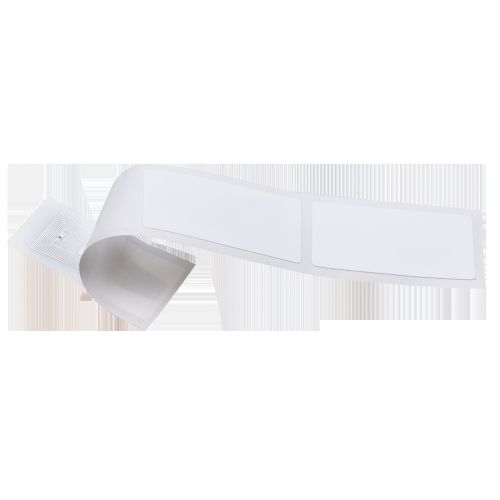
ifm Electronic E80382 ID-TAG 13,56 MHz
| Lieske Part No. | 513240 |
|---|---|
| Mfg Part No | E80382 |
| EAN-Code | 4021179280341 |
| Manufacturer | Ifm Electronic |
| Here only | 1.491,09 EUR
1.774,40 EUR incl. VAT
|
Further information for ifm Electronic E80382 ID-TAG 13,56 MHz
| Approvals / tests | |
| Radio approval | ISO 15693 |
| Electrical data | |
| Operating frequency | 13.56 MHz |
| Memory size | 896 bit |
| Memory type | EEPROM |
| Chip type | ICODE SLIX |
| Number of blocks | 28 |
| Block size | 4 bytes |
| Unique Identification Number (UID) | 8 bytes |
| RFID standard | ISO 15693 |
| Max. read cycles | unlimited |
| Max. write cycles | 100000 |
| Environmental conditions | |
| Ambient temperature | -40...85 °C |
| Storage temperature | -20...50 °C |
| Field of application | |
| Operating temperature (active) | -40...85 °C |
| Peak temperature (passive) | 50 °C |
| Mechanical data | |
| Mounting method | Mounting on non-metal; (self-adhesive) |
| Dimensions | 30 x 65 x 0,1 mm |
| Materials | PP; adhesive: HL2 |
Applications
The RFID tag is designed for use in environments where high operating temperatures and mechanical stresses occur. The operating temperature (active) ranges from -40 °C to 85 °C, enabling use in demanding industrial environments. The peak temperature (passive) is 50 °C, describing the thermal load capacity during short-term overheating. The storage temperature is between -20 °C and 50 °C, ensuring stability even when stored under cool conditions. The ambient temperature corresponds to the operating temperature, highlighting its suitability for continuously operated facilities.
Functions and Equipment in Detail
The label features a memory of 896 bit, divided into 28 blocks of 4 bytes each. The memory type is EEPROM, allowing electrical read and write access without physical damage. The chip type ICODE SLIX is specifically developed for industrial applications and offers high reliability. Each label has a unique Unique Identification Number (UID) of 8 bytes, ensuring individual identification. The maximum number of read cycles is unlimited, while write cycles are limited to 100,000, which is sufficient for long service life in dynamic production environments.
Technology Explained Simply
The technology is based on the ISO 15693 standard, defined for passive high-frequency transponders. This standard enables contactless data transmission over short distances, with the energy for chip operation supplied via inductive coupling with a reader device. The frequency of 13.56 MHz is internationally standardized and used in many industrial and logistics applications. The self-adhesive feature allows for simple and quick mounting without additional fastening tools, although mounting is only possible on non-metallic surfaces, as metal would impair the RFID signal functionality.
Compatibility and Accessories
The label is compatible with various reader devices, such as ANT410, DTI110, DTI410, ANT411, DTI111, DTI411, ANT420, DTI120, DTI420, DTI124, DTI424, DTM424, DTM426, ANT421, DTI121, DTI421, DTI125, DTI425, DTM425, DTM427, ANT430, DTI130, DTI430, DTI134, DTI434, DTM434, DTM436, ANT431, DTI131, DTI431, DTI135, DTI435, DTM435, DTM437, ANT513, DTI213, DTI513, DTC510, ANT515, DTI215, DTI515, ANT516, DTI216, DTI516, ANT600, DTI600. Reading distances vary depending on the device, with for example ANT600/DTI600 achieving a distance of 130 mm. The exact reading distance depends on the antenna used and the mounting environment.
Mounting and Installation
Mounting is done via self-adhesive attachment on non-metallic surfaces. The HL2 adhesive ensures secure adhesion under industrial conditions. The flat design (0.1 mm thickness) allows unobtrusive integration into existing production processes. It is important to ensure the surface is clean and free of grease to guarantee optimal adhesion. Mounting requires no tools and is therefore quick and easy to perform.
Advantages in Operation
The RFID tag offers high reliability in identifying workpieces and products. The unlimited number of read cycles and the high write cycle endurance (100,000) ensure long service life. The unique UID enables precise and error-free identification. The operating temperature range of -40 °C to 85 °C makes the label suitable for a wide range of industrial applications, including cold or hot production environments. The self-adhesive mounting reduces installation effort and enables quick integration into existing systems. The packaging unit of 500 pieces is suitable for large-scale applications and reduces the cost per label.
The materials consist of PP (polypropylene), a robust plastic suitable for industrial applications. The HL2 adhesive is specifically developed for mounting on non-metallic surfaces and ensures durable adhesion under industrial conditions.

This is an offer of:
79279 Vörstetten
https://industry-electronics.com
Tel. 07666/88499-0
Fax. 07666/88499-111
Diesen Artikel finden Sie unter:
industry-electronics.com/artikel/513240

Lieske Elektronik e.K.
Reutener Str. 1079279 Vörstetten
https://industry-electronics.com
Tel. 07666/88499-0
Fax. 07666/88499-111
Diesen Artikel finden Sie unter:
industry-electronics.com/artikel/513240