
HP JD325A switch 24x TP PoE
Networks > Switches
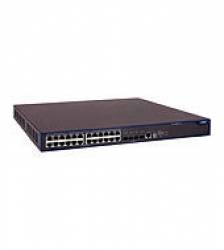
HP JD325A switch 24x TP PoE
| Lieske Part No. | 250020 |
|---|---|
| Mfg Part No | JD325A |
| EAN-Code | 0885631184288 |
| Manufacturer | HP |
| Here only | 952,00 EUR
1.132,88 EUR incl. VAT
|
Further information for HP JD325A switch 24x TP PoE
| General | |
| Number of RJ-45 ports | 24 |
| Port type | autosensing 10/100 PoE |
| PoE standard | IEEE 802.3af |
| Number of SFP ports | 4 |
| SFP transmission rate | 1000 Mbit/s |
| Media Type | Auto-MDIX |
| Duplex mode | half or full |
| Console port | RJ-45 serial |
| Construction type | rack-mountable |
Applications
The switch is designed for use in networks requiring reliable, secure, and scalable connectivity. It is particularly suitable for environments where PoE end devices are used, such as in security surveillance systems, IP telephony, or wireless networks. The integrated management function enables central control and monitoring of network resources, enhancing network operational safety and efficiency. The rack-mountable design makes it suitable for use in server racks or data centres.
Functions and Equipment in Detail
In addition to the 24 PoE ports, the switch features four SFP ports designed for 1000 Mbit/s (Gigabit Ethernet). These ports allow connection to other switches, routers, or servers via fibre optic or copper cables, depending on the SFP transceiver modules used. An integrated RJ-45 serial console port enables direct configuration and maintenance of the switch, for example, during initial setup or network faults, when no network connection is available.
Technology Explained Simply
The PoE technology (Power over Ethernet) according to IEEE 802.3af enables simultaneous data and power transmission over a single Ethernet cable. The SFP ports offer flexible expansion possibilities, as they are compatible with various transceiver modules designed for single-mode or multi-mode fibre, copper connections, or different transmission distances. The Auto-MDIX function eliminates the need to distinguish between crossover and straight-through cables, as the switch automatically establishes the correct connection.
Compatibility and Accessories
These modules enable connection via fibre optic cables with different transmission distances. Additionally, various patch cables in CAT5e and CAT6 are available, suitable for connecting to end devices or other network components. The use of CAT6 cables (250 MHz) offers higher bandwidth and lower signal interference compared to CAT5e (100 MHz). The cables are available in various lengths, with specific lengths and types (e.g. S-STP, FTP) varying by model.
Mounting and Installation
The switch is rack-mountable, meaning it can be mounted in standard 19-inch racks. Installation requires connecting the RJ-45 ports to end devices or other network components using appropriate patch cables. Configuration is performed via the serial console interface or network management tools, with the exact procedure described in the manufacturer’s documentation. The PoE function requires no additional power supply for connected end devices, as long as the PoE power limits of the switch are not exceeded.
Operational Advantages
The combination of PoE, SFP ports, and management functions provides a flexible and scalable network architecture. The PoE function reduces installation costs and simplifies the placement of end devices. The SFP ports enable high-performance connections over longer distances or with higher bandwidth. The management functions support network operational safety, monitoring of network traffic, and prioritisation of data streams, which is particularly beneficial for converged networks with voice and video traffic. The rack-mountable design ensures orderly placement in the network room and facilitates maintenance.

This is an offer of:
79279 Vörstetten
https://industry-electronics.com
Tel. 07666/88499-0
Fax. 07666/88499-111
Diesen Artikel finden Sie unter:
industry-electronics.com/artikel/250020

Lieske Elektronik e.K.
Reutener Str. 1079279 Vörstetten
https://industry-electronics.com
Tel. 07666/88499-0
Fax. 07666/88499-111
Diesen Artikel finden Sie unter:
industry-electronics.com/artikel/250020