
HP 4M9Y1AA MEM 16GB DDR5 4800 U ECC UDIMM
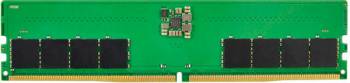
HP 4M9Y1AA MEM 16GB DDR5 4800 U ECC UDIMM
| Lieske Part No. | 1122201 |
|---|---|
| Mfg Part No | 4M9Y1AA |
| EAN-Code | 0196068961183 |
| Manufacturer | HP |
| Here only | 1.320,41 EUR
1.571,29 EUR incl. VAT
|
Further information for HP 4M9Y1AA MEM 16GB DDR5 4800 U ECC UDIMM
| Features | |
| Internal memory | 16 GB |
| Memory layout (modules x size) | 1 x 16 GB |
| Internal memory type | DDR5 |
| Memory clock speed | 4800 MHz |
| Memory form factor | 288-pin DIMM |
| ECC | |
| Other features | |
| UNSPSC-code | 32101602 |
| Country of origin | South Korea |
| Total carbon footprint (kg of CO2e) | 20 |
| Packaging data | |
| Package width | 159 mm |
| Package depth | 235 mm |
| Package height | 25.4 mm |
| Package weight | 90.7 g |
| Technical details | |
| General Product Safety Regulation (GPSR) URL | https://support.hp.com/us-en/document/ish_6126692-6126777-16?openCLC=true |
| Weight & dimensions | |
| Width | 133.3 mm |
| Depth | 31.2 mm |
| Height | 2.67 mm |
| Weight | 16 g |
Applications
This memory module is intended for use in desktop computers and workstations that support a DDR5 memory socket with 288 pins. It is suitable for systems requiring high bandwidth and fast data access, such as office applications, multimedia production, or light gaming systems. The clock frequency of 4800 MHz enables efficient data transfer between CPU and memory, which is particularly beneficial for multitasking-intensive applications. The specification as UDIMM without ECC makes it suitable for use in standard PCs, but not for server or critical computing applications where error correction is required.
Functions and Features in Detail
The module has a memory capacity of 16 GB, which is sufficient for most current applications to ensure smooth multitasking and use of demanding software solutions. The clock frequency of 4800 MHz corresponds to a modern standard for DDR5 modules and enables high data rates. The module is designed as a 288-pin DIMM, ensuring physical compatibility with corresponding motherboards. The designation UDIMM" means it is an unbuffered module that connects directly to the CPU's memory controller, resulting in lower latency. The specification "ECC mentioned in the product name is confirmed as not present in the technical data, meaning no error correction function is integrated.
Technology Explained Simply
DDR5 is the current generation of memory, offering higher clock rates, larger capacities, and improved energy efficiency compared to DDR4. The clock frequency of 4800 MHz indicates how often the memory transfers data per second – the higher the frequency, the faster the communication with the CPU. The 288-pin DIMM format is the standard for desktop PCs and allows use in common motherboards. The module is designed as UDIMM, meaning it communicates directly with the memory controller without an intermediate stage (buffer), resulting in lower latency. The specification ECC mentioned in the product name is confirmed as not present in the technical features, meaning no error correction function is integrated.
Compatibility and Accessories
The module is designed for systems that support a 288-pin DIMM memory socket. It is specifically designed for desktop computers and workstations using DDR5 memory. Compatibility depends on the motherboard platform and supported memory frequency. It is not intended for server or industrial systems that require ECC memory. The designation ECC MEM in the product name is confirmed as not present in the technical data, meaning no error correction function is integrated.
Installation and Mounting
Installation is performed by inserting the module into the corresponding DIMM slot on the motherboard. The slots are equipped with clips that securely hold the module in place. The physical fit (288-pin DIMM) ensures correct alignment. Installation requires no additional tools or software. After insertion, the module is immediately operational, provided the system supports the specifications.
Operational Advantages
The module provides a memory capacity of 16 GB, sufficient for most applications. The clock frequency of 4800 MHz ensures fast data transfer, which is particularly beneficial for multitasking and demanding applications. The use of DDR5 technology enables higher bandwidth and energy efficiency compared to older memory standards. The UDIMM design ensures direct communication with the CPU, resulting in lower latency. The specification ECC mentioned in the product name is confirmed as not present in the technical data, meaning no error correction function is integrated.

This is an offer of:
79279 Vörstetten
https://industry-electronics.com
Tel. 07666/88499-0
Fax. 07666/88499-111
Diesen Artikel finden Sie unter:
industry-electronics.com/artikel/1122201

Lieske Elektronik e.K.
Reutener Str. 1079279 Vörstetten
https://industry-electronics.com
Tel. 07666/88499-0
Fax. 07666/88499-111
Diesen Artikel finden Sie unter:
industry-electronics.com/artikel/1122201