
HellermannTyton 935-11033 KÄLTE 75 400 ML Coolant Spray
Installation > Isolation / Identification > Servicesprays
HellermannTyton 935-11033 KÄLTE 75 400 ML Coolant Spray
| Lieske Part No. | 155147 |
|---|---|
| Mfg Part No | 935-11033 |
| EAN-Code | 5412386068706 |
| Manufacturer | HellermannTyton |
| Here only | 47,30 EUR
56,29 EUR incl. VAT
|
Further information for HellermannTyton 935-11033 KÄLTE 75 400 ML Coolant Spray
| General | |
| Cooling effect | -52 °C |
| Evaporation | residue-free |
| Flammability | non-flammable |
| Volume | 400 ml |
| Application | thermal fault detection, function test, shock freezing |
| Dosing system | balanced, prevents splashing |
| Product type | cold spray |
| Packaging | Aerosol can |
Applications
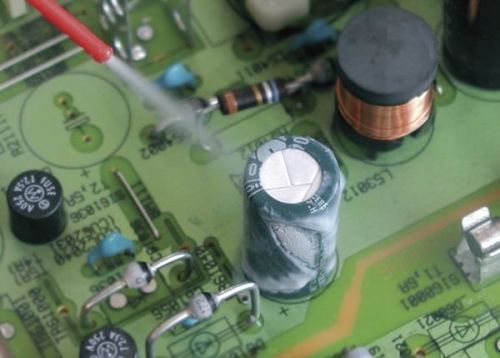
Coolant sprays such as the KÄLTE 75 400 ML are used in various technical testing and maintenance processes. They are frequently employed in thermal fault detection on electrical components, for example to identify defective transistors, capacitors, or circuit board areas that overheat under load. The spray is also used for functional testing of thermostats and temperature sensors, simulating temperature changes. In assembly and maintenance, it is used for shock-freezing rubber or plastic parts to facilitate removal, as well as for removing adhesive residues, which become brittle due to sudden temperature reduction.
Functions and Features in Detail
The spray operates on the basis of a volatile refrigerant mixture, which absorbs heat from the surrounding environment during evaporation, thus creating local cooling. The spray can is equipped with a dosing system that ensures controlled and even distribution of the spray mist. This enables targeted application on small areas or specific components without uncontrolled cooling of the entire work area. The residue-free evaporation ensures no deposits or contamination remain on surfaces, which is particularly advantageous in clean working environments.
Technology Explained Simply
The cooling effect of the spray is based on the physical principle of evaporative cooling. The volatile refrigerant evaporates quickly, absorbing thermal energy from the surrounding surface. This results in a local temperature reduction of up to -52 °C. The rapid evaporation ensures the cooling effect is short-term, and after the spray mist dissipates, the surface returns to ambient temperature. The product is non-flammable, and according to safety testing, there is no risk of ignition or explosion when used as intended.
Compatibility and Accessories
The coolant spray is universally applicable and can be used on various materials such as metal, plastic, rubber, and electronic components. It is not specifically developed for particular devices or systems, but serves as a general-purpose aid in technical maintenance and testing. It is typically used without additional accessories or tools, as application is performed directly from the spray can. The can itself provides the necessary application function, so no additional tools are required.
Mounting and Installation
Application is performed by directly spraying onto the surface to be cooled. No mounting or installation is required, as the product is delivered as a ready-to-use item in the can. The can is simply held and the trigger activated to release the spray mist. Application is typically carried out in short, targeted bursts to control the cooling effect and avoid overcooling.
Operational Advantages
The use of the coolant spray enables fast and precise cooling, which is indispensable in many technical testing procedures. The residue-free evaporation prevents contamination, and the non-flammable composition increases safety during use. The high efficiency of the dosing system ensures the can can be used over a long period without material waste. The simple handling makes the product suitable even for technical personnel without specialized training.

This is an offer of:
79279 Vörstetten
https://industry-electronics.com
Tel. 07666/88499-0
Fax. 07666/88499-111
Diesen Artikel finden Sie unter:
industry-electronics.com/artikel/155147

Lieske Elektronik e.K.
Reutener Str. 1079279 Vörstetten
https://industry-electronics.com
Tel. 07666/88499-0
Fax. 07666/88499-111
Diesen Artikel finden Sie unter:
industry-electronics.com/artikel/155147