
HellermannTyton 130-00012 Cable Ties 150x12.5 black
Installation > Fixing hardware > Cable Ties
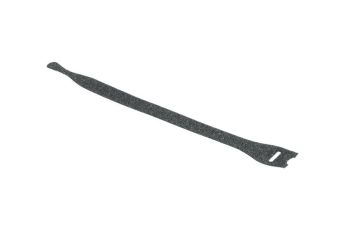
HellermannTyton 130-00012 Cable Ties 150x12.5 black
| Lieske Part No. | 172150 |
|---|---|
| Mfg Part No | 130-00012 |
| EAN-Code | 4031026271705 |
| Manufacturer | HellermannTyton |
| Here only | 13,47 EUR
16,03 EUR incl. VAT
|
Further information for HellermannTyton 130-00012 Cable Ties 150x12.5 black
| General | |
| Product type | Cable tie |
| Material | Polyamide 66 / Polypropylene |
| Repeatability | up to 400 times |
| Application range | Interior and exterior area |
| Colour | Black |
| Resistance | Resistant to ageing, corrosion-free |
| Mounting | by hand |
| Cable bundling | gentle bundling |
| Application | for sensitive cables such as telephone cables, fibre optic and network cables |
Applications
This cable tie is frequently used in areas requiring temporary or frequently changed cable arrangements. Examples include stage technology, outdoor events, prototype manufacturing, and applications in office and private environments. The ability to open and close the cable tie up to 400 times makes it especially suitable for applications requiring repeated adjustment of cable bundling. The colour coding also allows for visual identification of cable bundles, simplifying cable management.
Functions and Features in Detail
The TEXTIE-S-PA/PP-BK-X1 is a hook-and-loop cable tie based on Velcro® technology. The top side consists of a hard, rough hook surface, which locks with a soft, fluffy loop surface on the underside. This principle enables repeatable fastening without mechanically damaging the cables. The maximum reusability of 400 opening and closing cycles is achieved through high-quality materials and the special structure of the hook-and-loop surfaces. The black colour is available, with sources indicating various other colours for identification purposes.
Technical Explanation
The materials polyamide 66 and polypropylene offer high mechanical strength and weather resistance. Polyamide 66 provides good abrasion resistance and temperature resistance, while polypropylene ensures high chemical resistance and low density. The combination of both materials enables long service life and reliable performance even under challenging environmental conditions. The hook-and-loop structure is designed to ensure secure locking without damaging the cables.
Compatibility and Accessories
The cable tie is designed for bundling cables and wires that are sensitive to pressure or friction. It is not specifically designed for use with other fastening systems or accessories, as it functions as a standalone fastening element.
Installation and Mounting
Installation is done manually, without tools. The cable tie is wrapped around the cable bundle, the hook-and-loop surfaces are locked together, and the fastening is secured by pressure or slight pulling. The fastening is permanent but can be released when needed without damaging the cable. Handling is simple and does not require special training.
Operational Advantages
The cable tie provides a flexible and reusable fastening solution that does not damage cables. The high reusability of up to 400 cycles enables long-term use, even with frequent adjustments. Resistance to ageing and corrosion ensures reliable performance over a long period. Colour coding supports visual identification, simplifying maintenance and cable bundle identification. Use in both indoor and outdoor environments significantly expands the range of applications.
Protection Rating and Environmental Conditions
The cable tie is designed for indoor and outdoor use. The materials are resistant to ageing and corrosion-free, ensuring long service life even under weather influences.
Identification and Colour Coding
The cable ties are available in various colours, with the variant described here being black. Colour coding serves not only for visual distinction but also enables systematic identification of cable bundles, for example by function, location, or system affiliation. This is particularly advantageous in complex installations.

This is an offer of:
79279 Vörstetten
https://industry-electronics.com
Tel. 07666/88499-0
Fax. 07666/88499-111
Diesen Artikel finden Sie unter:
industry-electronics.com/artikel/172150

Lieske Elektronik e.K.
Reutener Str. 1079279 Vörstetten
https://industry-electronics.com
Tel. 07666/88499-0
Fax. 07666/88499-111
Diesen Artikel finden Sie unter:
industry-electronics.com/artikel/172150