
Franconian Pipes 25995050 E-Ku-E 50 End Cap Grey
Installation > Pipes > PVC - Conduit Accessories
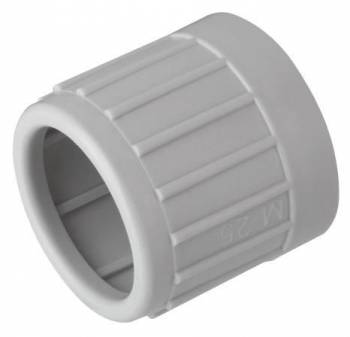
Franconian Pipes 25995050 E-Ku-E 50 End Cap Grey
| Lieske Part No. | 537886 |
|---|---|
| Mfg Part No | 25995050 |
| EAN-Code | 4013960181432 |
| Manufacturer | Fränkische Rohrwerke |
| Here only | 4,08 EUR
4,86 EUR incl. VAT
|
Further information for Franconian Pipes 25995050 E-Ku-E 50 End Cap Grey
| Delivery form | |
| Outer diameter | 52 mm |
| Inner diameter | 50 mm |
| Minimum quantity | 25 |
| Pallet content | 2000 |
| Base unit quantity | Piece |
| Technical data | |
| Material | Plastic |
| Material quality | Polyethylene (PE) |
| Surface protection | Untreated |
| Quality of surface coating | Uncoated |
| Model | Plug-in |
| Colour | Grey |
| UV resistant | |
| Surface polished | |
| Surface brushed | |
| Separable | |
Applications
The end cap is intended for use in various areas of electrical installation, including machine construction, in screed, in prefabricated construction, outdoors, in concrete, on wood, in soil, under plaster, and on plaster. Its application is particularly aimed at preventing injuries caused by sharp edges on pipe lines. Outdoor use is possible, however, the end cap is not UV-resistant, which may lead to material changes with prolonged outdoor exposure.
Functions and Equipment in Detail
The E-Ku-E 50 protects the edges of metal and rod pipes, thereby reducing the risk of cuts or damage to the pipe surface. The end cap is simply inserted into the pipe and remains fixed in place due to its snug fit. The material composition of polyolefin ensures sufficient strength and shape stability. The end cap is not suitable for use in environments with aggressive chemicals, as it is not resistant to exhaust gases containing hydrochloric acid and sulfuric acid, ammonia, gasoline, diesel fuel, fertiliser salts, vinegar, antifreeze, heating oil, seawater, methanol, mineral oil, oils, petroleum, propane, hydrochloric acid, sulfuric acid, and detergents. It is conditionally resistant to benzene, chlorine (gaseous, dry), nitric acid, and turpentine.
Technology Explained Simply
The end cap is made of polyethylene (PE), a thermoplastic material suitable for its mechanical strength and chemical resistance in certain application areas. The standard grey colour (RAL 7035) corresponds to common colour standards in the electrical installation sector. The non-flame propagating and halogen-free properties comply with the requirements of standards VDE 0605 and DIN EN 61386-21, which apply to electrical installation pipe systems. These standards ensure the safety and functionality of products in electrical installations.
Compatibility and Accessories
The E-Ku-E 50 is specifically designed for pipes with an inner diameter of 50 mm. Compatible accessories include end cap models such as the M50 end cap for pipe D50mm PE RAL7035 light grey, the 129 TB M50 pipe end cap separable metric light grey polyethylene PE, and the BFM-ET M50 pipe end cap RAL7035 LGR. These accessories can be combined according to project requirements to ensure a consistent and safe installation.
Installation and Mounting
Mounting is done by simply inserting the end cap into the open end of the pipe. The snug fit ensures secure anchoring without additional fastening elements. The end cap is not separable, so it is used as a single piece. Installation typically takes place during pipe laying to protect the edges immediately after installation.
Operational Advantages
The use of the E-Ku-E 50 reduces the risk of injury during handling of pipes and protects the pipe surface from mechanical damage. The materials comply with standards VDE 0605 and DIN EN 61386-21, ensuring safety in electrical installations. The end cap is suitable for use in various environments, including in screed, concrete, and soil, with the non-UV resistance needing consideration for outdoor applications. The use of halogen-free and non-flame propagating materials contributes to fire safety requirements, which are often required in installations.

This is an offer of:
79279 Vörstetten
https://industry-electronics.com
Tel. 07666/88499-0
Fax. 07666/88499-111
Diesen Artikel finden Sie unter:
industry-electronics.com/artikel/537886

Lieske Elektronik e.K.
Reutener Str. 1079279 Vörstetten
https://industry-electronics.com
Tel. 07666/88499-0
Fax. 07666/88499-111
Diesen Artikel finden Sie unter:
industry-electronics.com/artikel/537886