
Frankische Rohrwerke 22210032 FPKu-EM-F 32 Plastic Conduit M32
Installation > Pipes > PVC - Conduit
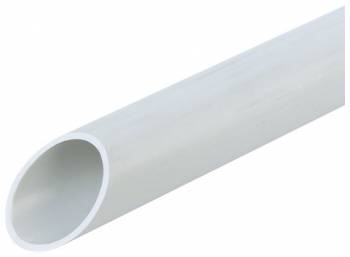
Frankische Rohrwerke 22210032 FPKu-EM-F 32 Plastic Conduit M32
| Lieske Part No. | 299675 |
|---|---|
| Mfg Part No | 22210032 |
| EAN-Code | 4013960179835 |
| Manufacturer | Fränkische Rohrwerke |
| Here only | 13,20 EUR
15,71 EUR incl. VAT
|
Further information for Frankische Rohrwerke 22210032 FPKu-EM-F 32 Plastic Conduit M32
| Delivery form | |
| Minimum quantity | 57 |
| Pallet content | 2052 |
| Base unit quantity | Metre |
| Technical data | |
| Material | Polyvinyl chloride (PVC) |
| Bending strength | Rigid |
| Pressure resistance class per EN 61386-1 | medium (Class 3, 750 N) |
| Impact resistance class per EN 61386-1 | medium (Class 3, 750 N) |
| Inner diameter | 28.6 mm |
| Outer diameter | 32 mm |
| Colour | Grey |
| RAL-number | 7035 |
| UV resistant | |
| With sleeve | |
| Flush-mounted installation | |
| Surface mounting | |
| Suitable for installation on wood | |
| Suitable for hollow wall installation | |
| Suitable for concrete installation | |
| Machine and plant installation | |
| Suitable for subsurface installation (screed)) | |
| Outdoor installation | |
| Suitable for underground installation | |
| High conducting inner coating | |
Applications
This conduit is designed for mounting on wood and in hollow walls. It can also be laid in screed, but is not suitable for installation in concrete, soil, or outdoor environments. Outdoor use is explicitly excluded, as the material is not UV-resistant. Therefore, applications are limited to indoor and protected areas where there is no direct sunlight or soil contact.
Functions and Features in Detail
The FPKu-EM-F 32 features medium pressure resistance (Class 3, 750 N) and medium impact resistance (Class 3, 750 N), making it suitable for standard applications in electrical installation technology. Its high corrosion resistance ensures good durability against aggressive substances, particularly against exhaust gases containing hydrochloric acid and sulphuric acid, ammonia, gasoline, diesel fuel, mineral oil, oils, propane, nitric acid, hydrochloric acid, sulphuric acid, turpentine, and detergents. However, it is not resistant to chlorine (gaseous, dry) and benzene. Electrical insulation is ensured by the material properties of the PVC.
Technical Explanation
The conduit complies with standards DIN EN 61386-1 and DIN EN IEC 61386-21, which define general and specific requirements for electrical installation conduit systems. The minimum pressure resistance is 750 N over a length of 5 cm, ensuring sufficient mechanical load capacity for typical installation conditions. Temperature resistance ranges from -25 °C to +60 °C, allowing use under normal indoor conditions. The material is halogen-free and produces minimal smoke when exposed to fire, enhancing safety during use.
Compatibility and Accessories
Various accessories are available for this conduit to facilitate installation. These include the socket coupling SMSKu-E 32, the end cap E-Ku-E 32 in grey, the clamp clipfix 32, and the black, UV-resistant end cap E-Ku-E 32. Additionally, a plastic elbow for rigid plastic conduits is available, enabling flexible connections. These components are specifically designed for use with the FPKu-EM-F 32 and ensure secure and durable installation.
Installation and Mounting
Installation is possible both in recessed and surface-mounted applications. The one-sided formed socket allows easy connection to other conduit sections. Laying in screed is possible, but the conduit is not intended for concrete installations. Installation does not require special tools, although the use of suitable accessories such as clamps or end caps is recommended to ensure secure fastening.
Operational Advantages
The high corrosion resistance of the PVC material ensures long service life, especially in environments with chemical exposure. The non-flame-propagating property enhances fire safety. The stable mechanical strength ensures reliable installation that remains intact even under load. Use in machine and plant engineering as well as in prefabricated construction enables flexible and expandable electrical installations that can be extended later without significant effort.

This is an offer of:
79279 Vörstetten
https://industry-electronics.com
Tel. 07666/88499-0
Fax. 07666/88499-111
Diesen Artikel finden Sie unter:
industry-electronics.com/artikel/299675

Lieske Elektronik e.K.
Reutener Str. 1079279 Vörstetten
https://industry-electronics.com
Tel. 07666/88499-0
Fax. 07666/88499-111
Diesen Artikel finden Sie unter:
industry-electronics.com/artikel/299675